
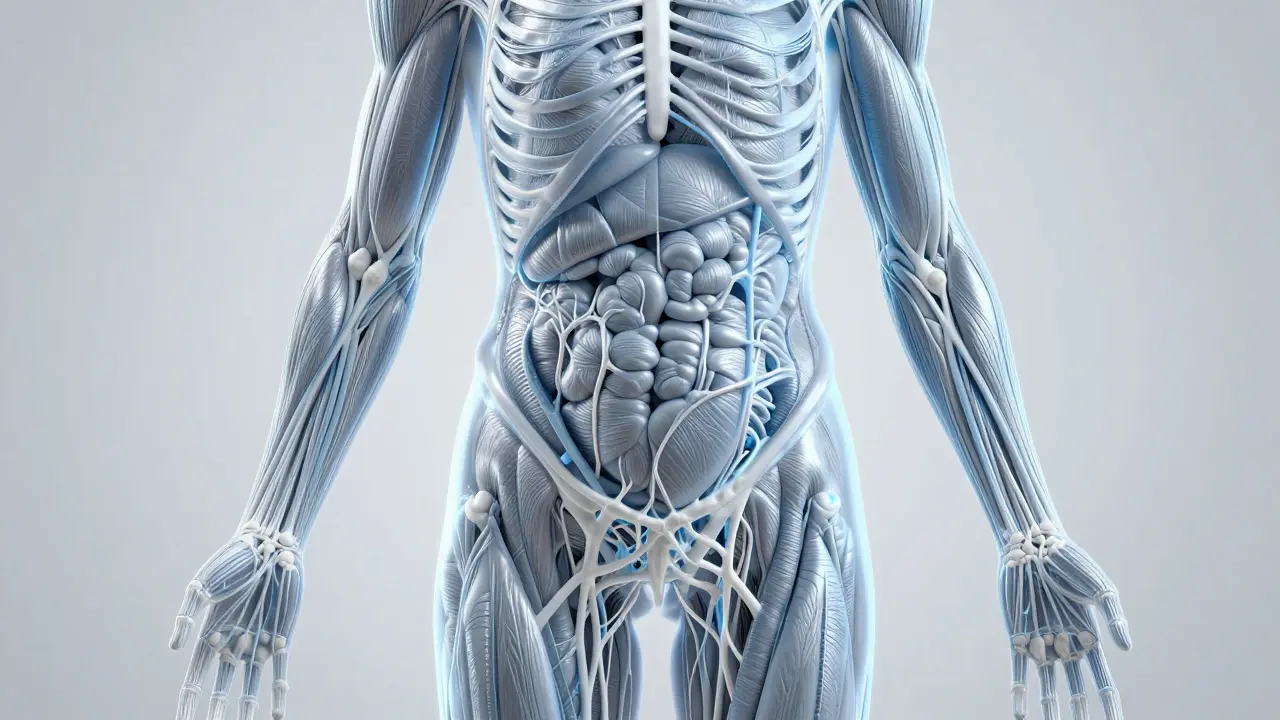
If you have ever felt stiff despite doing traditional yoga stretches, the issue might not be your muscles at all. It could be your fascia. Most people think flexibility comes from lengthening muscle fibers, but true mobility often depends on the health of the connective tissue wrapping those muscles. Fascia stretching targets this often-overlooked layer, offering a different path to pain relief and greater movement freedom than standard static stretching.
What Is Fascia and Why Does It Get Stiff?
To understand why you need specific techniques for fascia, you first need to visualize what it actually is. Imagine an orange. The skin is like your skin. The segments inside are your muscles. But what holds those segments together? That white, web-like netting is fascia. It wraps every single muscle fiber, bundles them into groups, and connects them to neighboring muscles, bones, and even internal organs.
Fascia is made primarily of collagen and elastin. Collagen provides strength and structure, while elastin allows for stretch and recoil. In a healthy state, fascia is hydrated, slippery, and pliable. It glides smoothly over muscle surfaces. Problems arise when this tissue dehydrates or becomes inflamed. This process is called fibrosis. When fascia undergoes fibrosis, the collagen fibers cross-link and stick together, creating adhesions or "knots." These adhesions restrict movement and can cause chronic pain conditions like lower back pain or shoulder tension.
Several factors contribute to fascial stiffness:
- Dehydration: Fascia requires water to remain pliable. Chronic low fluid intake leads to sticky, rigid tissue.
- Sedentary Behavior: Prolonged sitting causes the fascia in the hips and chest to shorten and adhere.
- Repetitive Motion: Jobs or sports involving repeated movements create localized stress patterns that thicken fascia.
- Injury and Surgery: Scar tissue forms as part of healing, often creating restrictive bands of tight fascia.
Fascia Stretching vs. Traditional Muscle Stretching
Most people confuse stretching muscle with stretching fascia. They are two different mechanical actions. Traditional static stretching-holding a pose for 30 seconds-primarily targets the muscle spindle and Golgi tendon organ within the muscle belly. It works well for lengthening the contractile tissue itself. However, it does little to change the viscosity or sliding capability of the surrounding connective tissue.
Fascia stretching, often referred to as myofascial release or deep tissue stretching, operates on different principles. It focuses on applying sustained, gentle pressure to break up adhesions and encourage the ground substance (the gel-like matrix within fascia) to flow again. Think of it like separating layers of dried pasta. You don't pull them apart quickly; you apply steady pressure until they slide free.
| Feature | Traditional Muscle Stretching | Fascia Stretching |
|---|---|---|
| Primary Target | Muscle fibers and tendons | Connective tissue sheaths |
| Mechanism | Elongation via tension | Viscosity reduction via pressure/time |
| Duration | 15-60 seconds per stretch | 2-5 minutes per area |
| Sensation | Tension or mild discomfort | Deep pressure, sometimes tender |
| Best For | Immediate range of motion | Long-term tissue health and pain relief |
The key difference lies in time and pressure. Fascia responds slowly to mechanical loading. Research suggests it takes at least 90 seconds of sustained pressure to begin altering the viscoelastic properties of the tissue, and up to several minutes to achieve significant release. Quick, bouncy stretches can actually trigger the fascia's protective reflex, causing it to tighten further rather than relax.
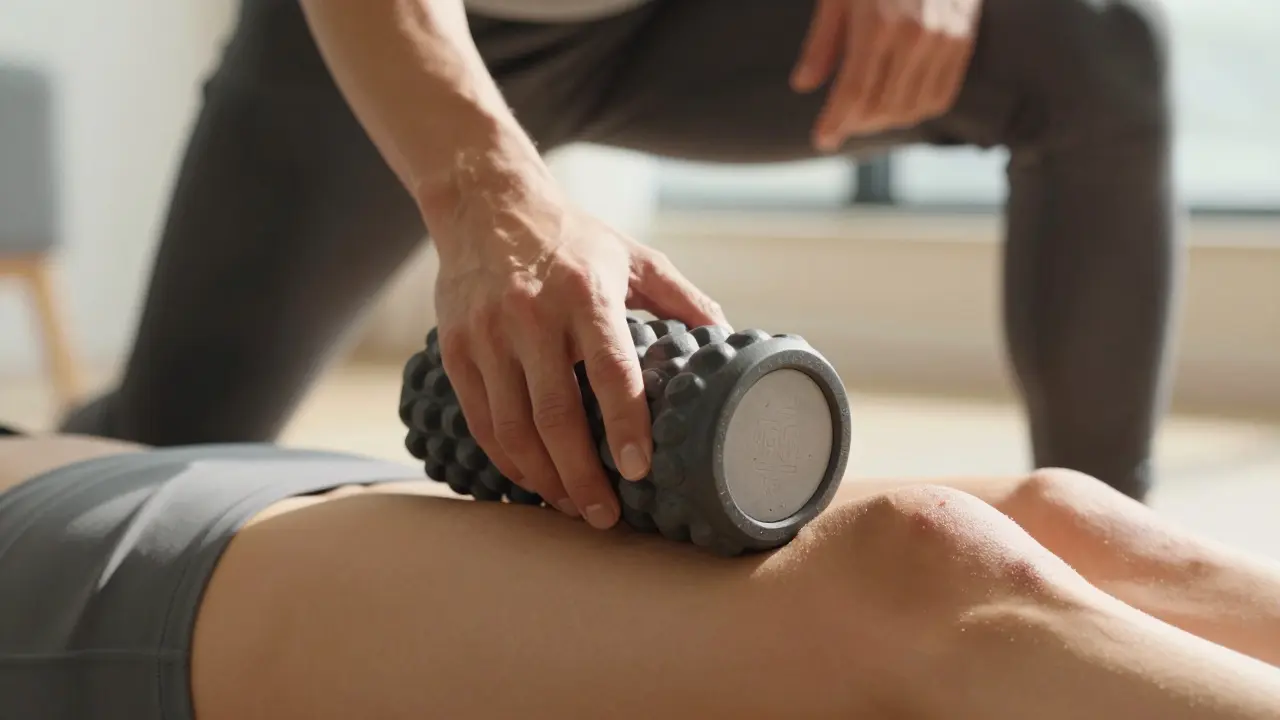
Effective Techniques for Fascial Release
You do not need expensive equipment to start working on your fascia. In fact, many of the most effective methods use simple tools or your own body weight. The goal is to apply consistent, non-jarring pressure to areas of restriction.
Self-Myofascial Release with Foam Rollers
Using a foam roller is one of the most accessible ways to perform fascia stretching. Unlike massage, where someone else applies pressure, self-myofascial release (SMR) uses gravity and your body weight. Start with large muscle groups like the quadriceps, hamstrings, and upper back. Place the roller under the target area and support yourself with your hands or feet. Roll slowly-think inches per minute, not miles per hour. When you find a tender spot, stop rolling and hold the position for 30 to 90 seconds. Breathe deeply into the area. This pause allows the nervous system to down-regulate the pain response and permits the tissue to soften.
Ball Work for Deep Tissue Access
For smaller, more specific areas like the feet, glutes, or between the shoulder blades, a ball is more effective than a roller. A lacrosse ball offers firm, concentrated pressure, while a tennis ball or rubber massage ball provides a softer touch. Stand against a wall and place the ball between your upper back and the surface. Lean into the ball to find tight spots. This technique is particularly useful for releasing the thoracic fascia, which often becomes tight from hunching over desks or phones.
Dynamic Fascial Loading
Fascia loves variety and multi-directional movement. Static poses are helpful, but dynamic movements that load the fascia in different planes are even better. Try exercises like lunges with torso rotation, animal flows (such as bear crawls), or wide-stance squats. These movements stretch the fascia diagonally, helping to restore its natural three-dimensional web structure. Incorporating these into your warm-up can prime the fascia for activity without causing micro-tears.

Building a Sustainable Fascia Care Routine
Consistency matters more than intensity when it comes to fascia care. You cannot fix years of stiffness in one session. Instead, aim for short, regular sessions that keep the tissue hydrated and mobile. Here is a practical approach to integrating fascia stretching into your daily life.
- Hydration First: Drink a glass of water before any stretching session. Hydrated fascia releases more easily. Consider adding electrolytes if you sweat heavily.
- Morning Mobility: Spend 5-10 minutes upon waking doing gentle cat-cow stretches and spinal twists. Your fascia is stiffest after sleep due to fluid redistribution.
- Post-Activity Release: After exercise, spend 10 minutes using a foam roller on major muscle groups. Focus on areas that felt tight during the workout.
- Evening Relaxation: Use a massage ball on your feet or calves before bed to promote relaxation and improve circulation overnight.
Avoid stretching cold tissues vigorously. If you are very stiff, apply heat (like a warm shower or heating pad) for 10 minutes before starting. Heat increases blood flow and makes the collagen more pliable, reducing the risk of injury.
Common Mistakes to Avoid
Even with good intentions, it is easy to misuse fascia techniques. One common error is pushing through sharp pain. While some discomfort is normal, sharp or shooting pain indicates nerve involvement or acute inflammation. Back off immediately if you feel this. Another mistake is focusing only on the painful area. Fascia is interconnected; a tight calf can pull on the knee, which pulls on the hip, which affects the lower back. Always look upstream and downstream from the source of pain.
Finally, do not neglect active movement. Passive stretching alone is insufficient. You must actively move through your new range of motion to signal to your brain that this space is safe to occupy. Combine your foam rolling with dynamic exercises to lock in gains.
How long should I hold a fascia stretch?
Unlike traditional muscle stretching, fascia requires longer duration to respond. Hold each position for at least 90 seconds, ideally 2 to 5 minutes, to allow the connective tissue to soften and release adhesions effectively.
Can fascia stretching help with chronic pain?
Yes, many people find relief from chronic conditions like lower back pain, plantar fasciitis, and tension headaches through regular myofascial release. By breaking up adhesions and improving tissue glide, fascia stretching reduces mechanical strain on nerves and joints.
Is it safe to roll directly over bones or joints?
No, avoid rolling directly over bones, joints, or the spine. Focus on the soft tissue areas such as the muscles and connective tissue sheaths. Rolling on bone can cause bruising or irritation without providing therapeutic benefit.
How often should I practice fascia stretching?
For best results, incorporate fascia work into your routine 3 to 5 times per week. Daily light maintenance is ideal, especially if you have a sedentary job or engage in repetitive sports activities.
Does drinking water really affect fascia flexibility?
Absolutely. Fascia is composed largely of water and glycosaminoglycans, which bind water molecules. Dehydration causes the fascia to become sticky and rigid. Proper hydration keeps the tissue lubricated and pliable, making stretching more effective and less painful.