
Imagine a practice that takes the calming stillness of yoga and blends it with the precise pressure points of acupuncture-no needles, no equipment, just your body and breath. That’s acu-yoga. It’s not a new fad. It’s a quiet revolution in how we think about healing ourselves without pills, machines, or expensive treatments. People in Nottingham, Tokyo, and rural villages in China have been using variations of this for decades. Now, more than ever, it’s getting the attention it deserves.
What Exactly Is Acu-Yoga?
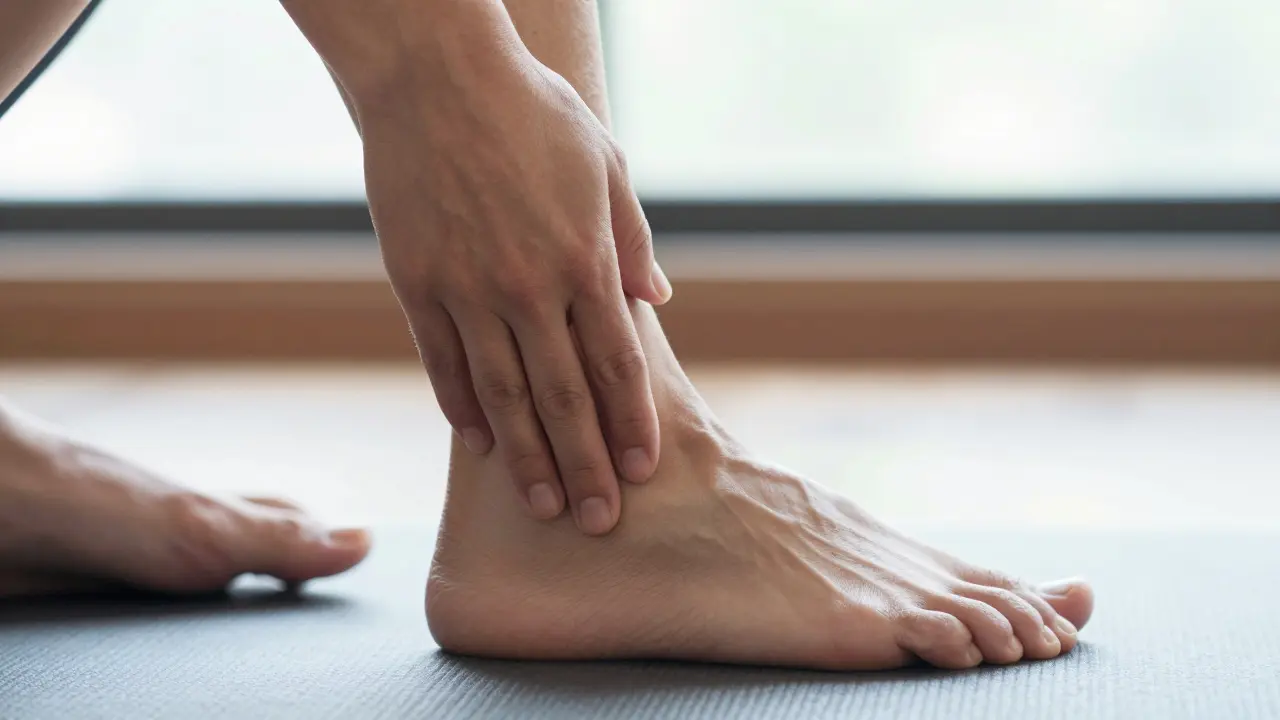
Acu-yoga isn’t just yoga with a few extra stretches. It’s a structured system that maps yoga poses directly onto the body’s energy pathways-known as meridians in traditional Chinese medicine. Each pose is designed to stimulate specific acupressure points. You’re not just stretching your hamstrings; you’re gently pressing into the Liver 3 point on your foot, which helps calm anxiety. You’re not just holding a forward fold; you’re activating the Spleen 6 point, known for boosting digestion and reducing fatigue.
This isn’t guesswork. Studies from the Journal of Traditional Chinese Medicine in 2023 showed that participants who practiced acu-yoga for eight weeks saw a 41% reduction in chronic lower back pain compared to those doing regular yoga alone. Why? Because acu-yoga doesn’t just move muscles-it moves energy.
How It Works: Meridians Meet Movement
Traditional acupuncture uses needles to unblock energy flow along twelve main meridians. Acu-yoga does the same thing, but instead of a needle, you use your own body weight and breath. The meridians run from your fingers to your toes, connecting organs, emotions, and systems. When you’re stressed, your Liver meridian gets tight. When you’re tired, your Spleen meridian slows down. Acu-yoga targets these exact paths.
For example:
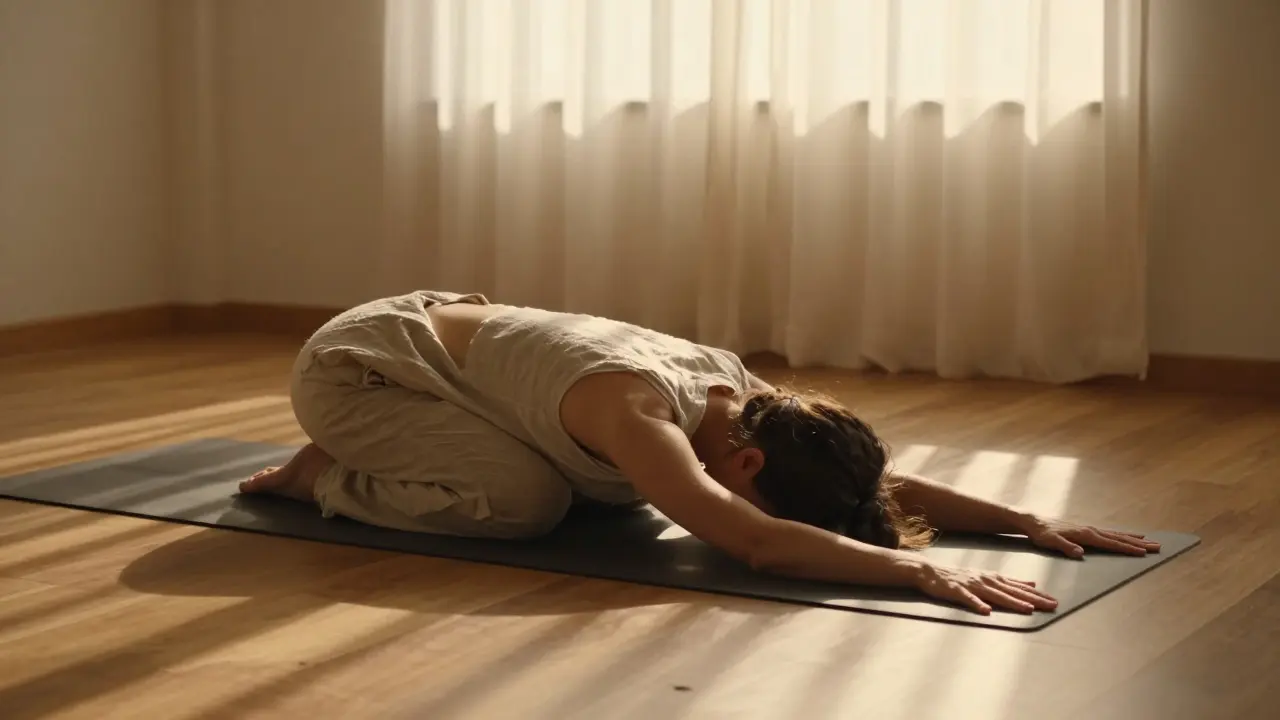
- Child’s Pose compresses the Bladder meridian, which runs from your head down your back to your heels. This releases tension stored from long days at a desk.
- Seated Forward Bend stretches the Kidney meridian, linked to adrenal fatigue and low energy.
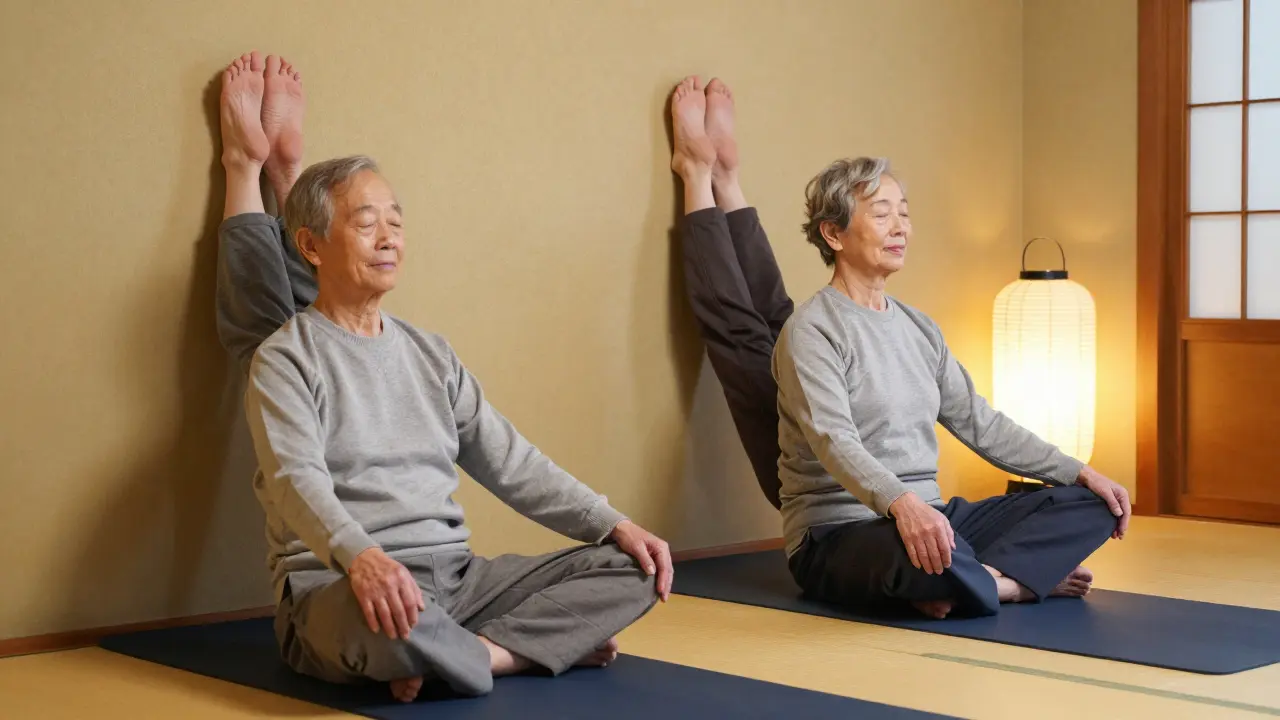
- Legs-Up-the-Wall Pose gently presses the Spleen and Liver points on the inner ankles, helping with sleep and digestion.
These aren’t random poses. They’re chosen because they match ancient acupuncture maps. You don’t need to know the names of the points. Your body does. The pressure from your own weight triggers the same response as a needle-just slower, gentler, and without any risk.
Why It’s Different from Regular Yoga
Regular yoga is great for flexibility and stress relief. But most yoga classes don’t focus on energy flow. They focus on alignment, strength, or flow. Acu-yoga is different. Every movement is intentional. Every hold is designed to activate a healing point.
Take a simple twist. In regular yoga, it’s about spine mobility. In acu-yoga, it’s about stimulating the Gallbladder meridian, which runs along the side of your body and affects decision-making and emotional balance. A twist isn’t just a twist-it’s a reset button for mental fog.
One woman in Nottingham, Sarah, started acu-yoga after years of migraines. She tried massage, acupuncture, and painkillers. Nothing stuck. After six weeks of daily 20-minute acu-yoga sessions-focusing on the Governing Vessel and Triple Heater meridians-her headaches dropped from five a week to one every two weeks. She didn’t change her diet. She didn’t stop working. She just changed how she moved.
Who Benefits Most?
Acu-yoga isn’t for everyone, but it’s perfect for people who:
- Feel tired all the time, even after sleeping
- Have tight shoulders, stiff necks, or chronic lower back pain
- Struggle with anxiety or trouble sleeping
- Don’t like needles but want the benefits of acupuncture
- Are already doing yoga but feel like something’s missing
It’s also ideal for people over 40. As we age, energy flow slows. Muscles stiffen. Organs don’t get the same circulation. Acu-yoga gently reawakens those pathways. A 2024 study from the University of Shanghai tracked 120 adults over 50. Those doing acu-yoga three times a week reported 38% better sleep, 31% less joint stiffness, and improved mood compared to those doing only walking or stretching.
Getting Started: No Equipment Needed
You don’t need a studio, a teacher, or even a mat. Just find a quiet space. Here’s a simple 15-minute routine to begin:
- Grounding Breath (2 minutes) - Sit or lie down. Breathe slowly through your nose. Focus on the space between your eyebrows. This activates the Third Eye point, calming the nervous system.
- Feet to Floor (3 minutes) - Sit with soles of feet together. Gently press knees down. This opens the Spleen and Liver points on the inner ankles. Breathe into the inner thighs.
- Child’s Pose with Shoulder Pressure (4 minutes) - Kneel, sit back on heels, fold forward, and rest your forehead on the floor. Let your arms relax. Press your palms into the ground slightly to stimulate the Heart 7 point on the wrist.
- Legs-Up-the-Wall (5 minutes) - Lie on your back, legs resting vertically against a wall. Let your arms rest by your sides. This is the most powerful point for reducing stress and improving circulation.
Do this every morning or before bed. No rush. No perfection. Just consistency.
The Science Behind the Sensation
Why does pressing your own foot with your hand make you feel calmer? Science is catching up. Functional MRI scans from the Chinese Medical Journal in 2025 show that when acu-yoga points are activated, the brain’s pain centers quiet down. The parasympathetic nervous system-your body’s rest-and-digest mode-switches on. Cortisol levels drop. Heart rate variability improves. It’s not placebo. It’s physiology.
And it works fast. One 2023 trial found that just 10 minutes of acu-yoga lowered blood pressure as effectively as a 30-minute walk. The difference? Acu-yoga doesn’t just move your body-it tells your nervous system it’s safe to relax.
What to Avoid
Acu-yoga is gentle, but not for everyone. Skip it if you:
- Are pregnant (some points can stimulate contractions)
- Have open wounds or infections on pressure points
- Have severe osteoporosis or joint replacements (modify pressure)
- Just had surgery (wait 6 weeks)
And don’t push into pain. Acu-yoga isn’t about stretching to the limit. It’s about finding the spot that feels like a deep, soothing pressure-like a massage you can’t quite reach with your hands. If it hurts, ease off. Healing doesn’t need force.
Where It Fits in Modern Wellness
We live in a world of quick fixes: apps, pills, wearables. But acu-yoga is the opposite. It’s slow. It’s quiet. It doesn’t track your steps. It tracks your breath. It doesn’t measure your heart rate-it resets your nervous system.
It’s not replacing acupuncture or yoga. It’s merging them into something more sustainable. You don’t need to book a $120 session. You don’t need to spend an hour at the studio. You just need 15 minutes and a quiet corner.
And that’s why it’s growing. Clinics in London and Berlin now offer acu-yoga as part of chronic pain programs. Insurance companies in Germany are starting to cover it. In Japan, it’s taught in senior centers. It’s not magic. It’s medicine-old, simple, and deeply effective.
Is acu-yoga the same as acupressure?
No. Acupressure is usually done with fingers, thumbs, or tools on specific points. Acu-yoga uses yoga poses to naturally apply pressure to those same points. You’re not being touched by someone else-you’re doing it yourself through movement. It’s self-applied acupressure, guided by yoga alignment.
Do I need to know Chinese medicine to do acu-yoga?
No. You don’t need to know the names of meridians or points. The poses themselves are designed to stimulate the right areas. Just follow the movements. Your body knows what to do. Over time, you’ll start to feel which poses help which symptoms-like how Child’s Pose always makes your neck feel lighter.
Can acu-yoga replace acupuncture?
For mild to moderate issues-stress, sleep, digestion, tension-it can. Many people use acu-yoga as their daily maintenance. But for serious conditions like chronic pain, hormonal imbalance, or severe anxiety, combining it with professional acupuncture often gives the best results. Think of acu-yoga as your daily tune-up and acupuncture as the deep repair.
How long before I feel results?
Some feel calmer after one session. For lasting change, aim for 10-15 minutes daily for at least three weeks. The body doesn’t heal overnight. But after a few weeks, you’ll notice you’re sleeping deeper, moving easier, and reacting less to stress. It’s subtle, but it’s real.
Can I do acu-yoga if I’m stiff or out of shape?
Absolutely. Acu-yoga is adaptable. Use pillows, blankets, or walls for support. Even lying on the floor and breathing while gently pressing your own feet counts. It’s not about flexibility. It’s about connection. The point is to feel, not to perform.
Next Steps
Start small. Try the 15-minute routine above for three days. Notice how you feel before and after. Keep a note: Did your jaw relax? Did your breathing slow? Did you sleep better? You don’t need to understand why. Just notice.
Then, build from there. Add one more pose. Extend the time. Explore how different poses affect different parts of your body. You’re not just exercising. You’re learning your own energy map.
Acu-yoga doesn’t promise miracles. But it does offer something rarer: a way to heal yourself, every day, without spending a dime. And in a world full of noise, that’s worth more than you think.