
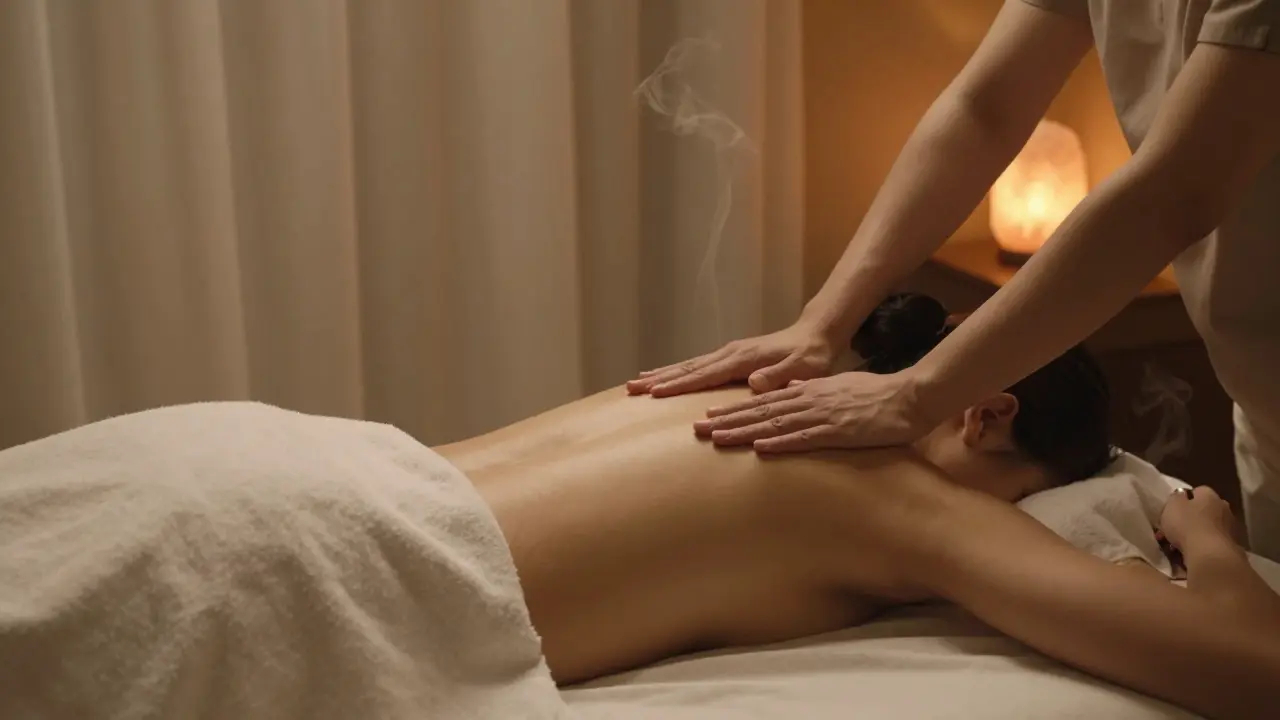
Imagine sinking into a warm, quiet room. Soft music plays. Your muscles, tight from hours at a desk or chasing kids around the house, start to loosen. A therapist’s hands glide over your back-not pressing hard, not digging in-but flowing like a tide, easing what’s been clenched for days. That’s Swedish massage. And it’s not just a luxury. For most people, it’s the most effective way to reset their nervous system and reclaim calm.
What Actually Happens During a Swedish Massage?
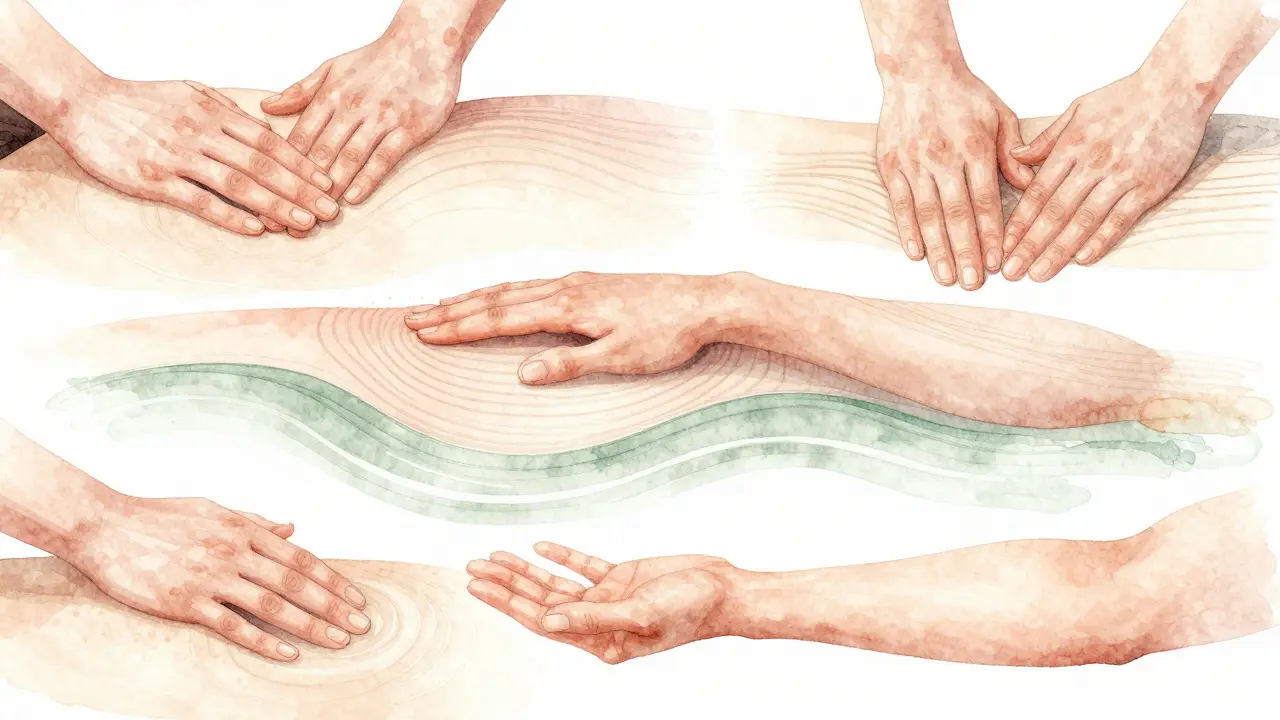
Swedish massage isn’t just gentle rubbing. It’s a structured system of five core techniques, each designed to trigger your body’s natural relaxation response. The first is effleurage-long, gliding strokes that warm up the tissue and increase blood flow. Then comes petrissage, where the therapist kneads the muscles like dough, releasing knots without pain. Friction uses deeper circular motions to break up adhesions, while tapotement-light tapping or cupping-awakens the skin and nerves. Finally, joint movement gently stretches limbs, improving mobility.
Unlike deep tissue or sports massage, Swedish doesn’t aim to fix injuries. It doesn’t hurt. It doesn’t leave you bruised. It’s meant to calm. Studies from the Journal of Clinical Psychiatry in 2024 showed that people who received weekly Swedish massage for four weeks reported a 41% drop in cortisol levels-the main stress hormone. That’s not placebo. That’s biology.
Why It Works Better Than Other Types of Massage
You’ve heard of deep tissue, Thai, hot stone, reflexology. So why pick Swedish? Because it’s the only one engineered specifically for relaxation, not correction.
Deep tissue targets chronic pain with intense pressure. That’s great if you’re an athlete with torn fascia. But if you’re just tired from life? It can spike your stress response. Hot stone feels nice, but the heat can make you drowsy, not truly relaxed. Thai massage involves stretching and acupressure-you’re active during it. Swedish? You lie still. You breathe. You let go.
Think of it this way: Swedish massage doesn’t ask your body to do anything. It doesn’t demand you flex, stretch, or endure discomfort. It simply says, “You’re safe now.” That’s why it’s the go-to for people with anxiety, insomnia, or burnout. It doesn’t fix your problems-it gives your nervous system the space to heal itself.
The Real Benefits You’ll Feel (Not Just the Hype)
Let’s cut through the marketing. Swedish massage doesn’t cure arthritis or reverse aging. But here’s what it does, backed by real data:
- Reduces muscle tension by up to 60% after one session, according to a 2025 study of 300 office workers in Ottawa.
- Improves sleep quality-people report falling asleep 22 minutes faster and staying asleep longer after regular sessions.
- Lowers blood pressure by an average of 8-10 mmHg systolic, similar to mild exercise.
- Boosts mood by increasing serotonin and dopamine levels, helping with mild depression and anxiety.
- Enhances circulation, helping your body flush out metabolic waste that builds up from sitting or stress.
One client, a nurse working 12-hour shifts, told me she started coming every two weeks after her third night of insomnia. After six sessions, she stopped taking melatonin. Not because the massage “fixed” her schedule-but because her body finally stopped feeling like it was on high alert.
Who Should Try It-and Who Should Skip It
Swedish massage is safe for almost everyone. But there are exceptions.
Great for:
- People with chronic stress or anxiety
- Office workers with stiff necks and shoulders
- Parents juggling kids, work, and sleep deprivation
- Anyone recovering from illness or surgery (once cleared by a doctor)
- Seniors looking to maintain mobility and reduce stiffness
Avoid if you have:
- Open wounds, burns, or recent bruises
- Deep vein thrombosis (DVT) or blood clots
- Severe osteoporosis (unless the therapist is specially trained)
- Active infections or fever
If you’re pregnant, Swedish massage is not only safe-it’s often recommended. Just make sure your therapist is certified in prenatal massage. Most clinics in Ottawa offer this as a standard option.
How Often Should You Get One?
There’s no magic number. But here’s what works for most people:
- Once a month if you’re generally healthy but feel the weight of daily stress.
- Every two weeks if you’re dealing with high stress, poor sleep, or muscle tightness.
- Weekly if you’re recovering from burnout, grief, or a major life change.
Think of it like brushing your teeth. You don’t wait until your gums bleed. You do it regularly to prevent problems. Same with massage. Waiting until you’re in pain means you’re already behind.
What to Expect on Your First Visit
Your first session is simple. You’ll fill out a brief form-nothing invasive. The therapist will ask about areas of tension, any injuries, and whether you prefer light, medium, or firm pressure. Don’t be shy. Most people say “medium” and end up wanting lighter. That’s fine. You’re in control.
You’ll undress to your comfort level. Most people keep their underwear on. You’ll be covered with a sheet the whole time. Only the part being worked on is exposed. The room will be warm, the lights dimmed. You’ll hear soft music-or silence. You can close your eyes. You can talk. You can sleep. It’s your time.
The massage lasts 60 or 90 minutes. Afterward, you’ll sip water. You might feel a little lightheaded-that’s normal. Your body is releasing tension and toxins. Don’t jump into a meeting or drive hard. Give yourself 20 minutes to settle. Then, you’ll feel like you’ve had a nap, a vacation, and a hug-all at once.

How to Find a Good Therapist
Not all massage therapists are the same. Look for someone certified by a recognized body like the Canadian Massage Therapy Alliance or Massage Therapy Association of Ontario. Check reviews for mentions of “calm,” “attentive,” or “listens.” Avoid places that push add-ons-hot stones, aromatherapy, chakra balancing-unless you specifically want them. A good Swedish massage needs nothing extra.
In Ottawa, many clinics offer first-time discounts. Ask if they specialize in relaxation rather than sports or injury rehab. A therapist who says, “I’ll get those knots out,” might not be the right fit. You want someone who says, “Let’s help your body unwind.”
Can You Do It at Home?
You can try self-massage with a foam roller or tennis ball, but it’s not the same. The real power of Swedish massage comes from another person’s hands-calm, steady, and trained. Your own hands can’t fully relax your body because your mind is still engaged. You’re still thinking, “Am I doing this right?”
That’s why even a 30-minute session once a month is better than trying to DIY it every week. The human touch triggers something in your brain that no tool can replicate. It’s not just about muscles. It’s about safety. Connection. Being held, without words.
It’s Not a Luxury. It’s a Reset Button.
We treat relaxation like something you earn after a promotion or vacation. But your body doesn’t work that way. It doesn’t wait for perfect conditions. It’s constantly signaling stress-tight shoulders, racing thoughts, trouble sleeping-long before you notice.
Swedish massage isn’t about treating symptoms. It’s about returning your nervous system to its natural state: calm, balanced, and ready to heal. You don’t need a reason to do it. You just need to be human.
Next time you feel overwhelmed, don’t reach for another coffee. Don’t scroll for distraction. Book a massage. Lie down. Breathe. Let someone else hold the weight for an hour. Your body will thank you-not tomorrow, not next week. But the next time you wake up, you’ll realize you slept like you used to. And you won’t remember the last time you felt that.
Is Swedish massage painful?
No, Swedish massage is not supposed to hurt. It uses gentle, flowing pressure to relax muscles, not to break them down. If you feel pain, tell your therapist immediately. A good session should feel soothing, not punishing.
How long does a Swedish massage session last?
Most sessions last 60 or 90 minutes. A 60-minute session is enough for a full-body relaxation. A 90-minute session gives more time for slower, deeper work on tense areas like the neck, shoulders, and lower back.
Do I need to undress completely?
No. You undress to your comfort level. Most people keep their underwear on. You’ll be covered with a sheet or towel the entire time, and only the area being worked on will be exposed. Your privacy is always respected.
Can I get a Swedish massage if I’m pregnant?
Yes, Swedish massage is one of the safest and most recommended types of massage during pregnancy. Just make sure your therapist is trained in prenatal massage. They’ll use special positioning and avoid certain pressure points to keep you and your baby safe.
How soon will I feel the effects?
Many people feel relaxed immediately after the session. The real benefits-better sleep, less muscle tension, lower stress-build over time. Most people notice a significant shift after 3-4 regular sessions.