
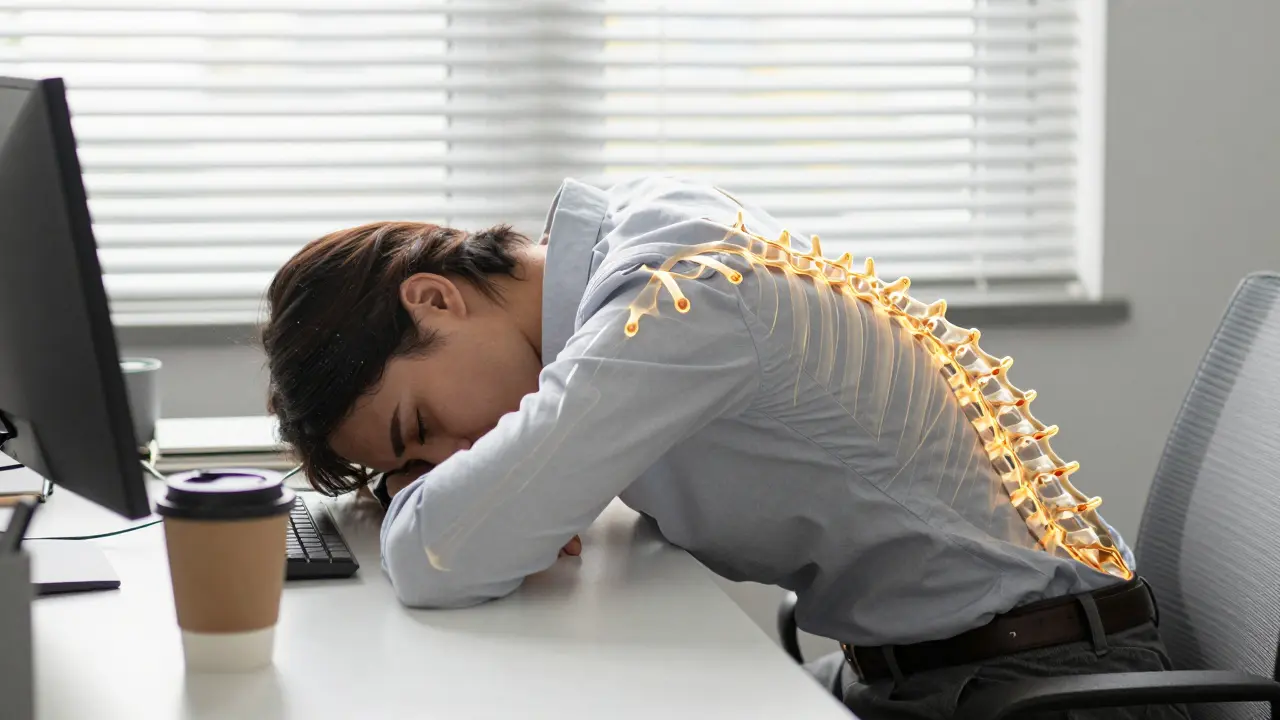
If you sit at a desk eight hours a day, your body isn’t just tired-it’s rewired. Shoulders creep forward, hips tighten, and your spine forgets how to stand tall. You might blame stress, bad chairs, or long screens. But the real culprit? Your fascia-the web of connective tissue that holds your muscles, organs, and bones together. Over time, sitting distorts this network. And that’s where Rolfing comes in.
What Rolfing Actually Does
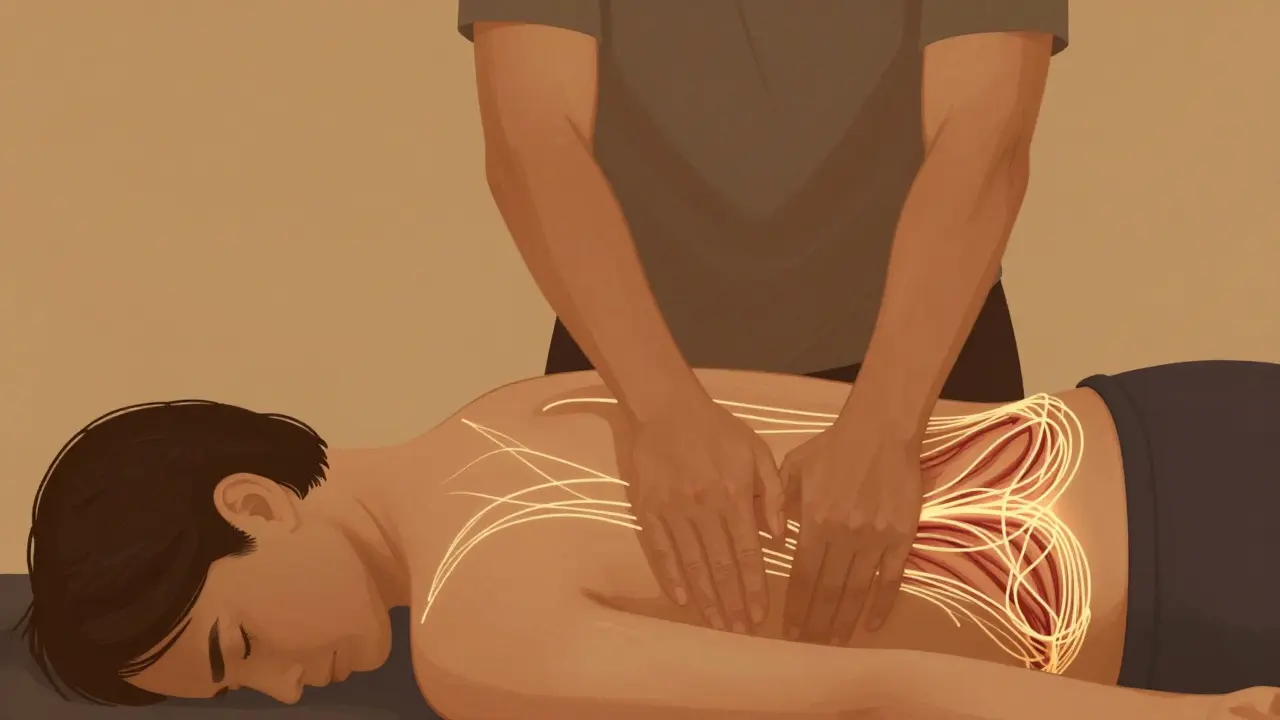
Rolfing isn’t massage. It’s not even stretching. It’s structural integration. Developed by Dr. Ida Rolf in the 1950s, it targets the fascia, the dense, glue-like tissue that wraps every muscle and organ in your body. When you sit all day, your fascia gets sticky. It shortens, thickens, and locks your posture into a slouched shape. Rolfing uses deep, slow pressure to release these adhesions, letting your body return to its natural alignment.
Think of it like untangling a knotted rope. You don’t just pull harder-you find the exact knot and gently unravel it. A Rolfing session doesn’t hurt, but it’s intense. Practitioners use their knuckles, elbows, and forearms to apply sustained pressure, often focusing on the back, hips, hamstrings, and chest. Sessions usually last 75 to 90 minutes and follow a 10-series structure. Each session builds on the last, systematically realigning your body from the ground up.
Why Office Workers Need It
Most office workers develop the same pattern: rounded shoulders, forward head, tight hip flexors, and a flattened lower back. This isn’t just "bad posture." It’s a structural imbalance that affects breathing, digestion, even mood. Studies from the Journal of Bodywork and Movement Therapies show that prolonged sitting increases fascial stiffness by up to 37% in just six weeks. That’s not a myth-it’s biomechanics.
And the pain? It doesn’t go away with yoga or ergonomic chairs. You might feel better for a day, but the fascia re-tightens. Rolfing works at the root. A 2023 trial with 120 office workers found that after completing a 10-session Rolfing series, 89% reported significant reduction in chronic neck and lower back pain. Nearly 75% said they could sit without shifting positions for longer than before. That’s not placebo. That’s tissue changing.
How Rolfing Changes Your Movement
After a few sessions, you’ll notice things you didn’t even know were broken. Standing up from your chair doesn’t require leaning forward with your arms. Walking feels lighter. You breathe deeper without trying. Your shoulders don’t ache after typing for an hour. Why? Because your body is no longer fighting gravity.
Rolfing doesn’t just fix your back-it resets your entire movement blueprint. Your head, which normally weighs about 10 to 12 pounds, sits forward on your spine like a bowling ball on a stick. That’s 15 extra pounds of strain on your neck and upper back. Rolfing gently lifts your head back over your pelvis, redistributing the load. Your ribcage opens. Your diaphragm can expand. You stop holding your breath unconsciously.
One client, a marketing manager in Nottingham, came in with migraines and numb fingers. She’d tried physio, acupuncture, even chiropractic adjustments. Nothing stuck. After session five of Rolfing, she stopped taking painkillers. "I didn’t realize I was walking like a hunchback," she said. "Now I feel like I’m wearing a new body."
The 10-Series: What to Expect
Rolfing isn’t a one-off fix. It’s a process. The standard 10-session series is designed to work layer by layer:
- Session 1-3: Surface Layers - Focuses on breathing, feet, and outer limbs. Releases tension in the calves, thighs, and shoulders.
- Session 4-7: Core Integration - Targets the pelvis, spine, and ribcage. This is where real alignment begins.
- Session 8-10: Balance and Completion - Fine-tunes the whole system. You learn how to move with ease, not force.
Each session builds on the last. You don’t need to do all ten-but most people do. Skipping ahead doesn’t work. Fascia doesn’t heal in a rush. It needs time to reorganize.
Some practitioners offer shorter packages, but the full series gives the most lasting results. Think of it like orthodontics for your body. You wouldn’t stop wearing braces after three months.
Who Should Avoid Rolfing
Rolfing isn’t for everyone. If you have osteoporosis, recent fractures, or active inflammation like rheumatoid arthritis, it’s not safe. Pregnant women should wait until after the first trimester and only work with a certified Rolfer trained in prenatal modifications.
Also, don’t expect miracles if you’re still sitting 10 hours a day. Rolfing gives you a better structure, but you have to support it. That means standing up every 30 minutes. Moving your hips. Rolling your shoulders. Maybe even investing in a standing desk. Rolfing won’t undo years of neglect if you go right back to the same habits.
How to Find a Qualified Rolfer
Not everyone who calls themselves a "bodyworker" is trained in Rolfing. True Rolfers are certified by the Rolf Institute of Structural Integration a globally recognized organization that certifies practitioners in the original Rolfing method. Look for the RSI logo on their website or ask for their certification number.
Good Rolfers don’t just push hard-they explain what they’re doing and why. They’ll ask about your daily routine, your pain patterns, even your sleep habits. They’ll give you simple movement exercises to do between sessions. If someone promises a miracle cure in one visit, walk away.
In the UK, certified Rolfers are listed on the Rolf Institute’s public directory. Many work out of private clinics in London, Manchester, and Nottingham. Prices range from £80 to £130 per session, depending on location and experience. Some clinics offer payment plans for the full 10-series.

Real Results, Not Quick Fixes
Rolfing isn’t trendy. It’s not Instagram-friendly. You won’t see influencers posting before-and-after photos of their "fascia release." But if you’ve been living with the dull ache of sitting all day, if you’ve tried everything and still wake up stiff, Rolfing might be the only thing that finally works.
It’s not about relaxation. It’s about restoration. Your body didn’t break because you’re weak or lazy. It broke because you kept it in the same position for years. Rolfing doesn’t fix you-it helps you remember how to be whole again.
One office worker in Nottingham told me: "I used to think pain was just part of being an adult. Now I know it’s just bad architecture. And you can rebuild it."
Frequently Asked Questions
Is Rolfing painful?
Rolfing isn’t supposed to hurt, but it’s intense. The pressure is deep and sustained, and you might feel discomfort as tight tissue releases. Most people describe it as "good pain"-like a deep stretch that feels necessary. A good Rolfer will check in constantly and adjust pressure based on your feedback.
How long do Rolfing results last?
Results can last years if you maintain movement habits. Most people report lasting changes after completing the 10-series. But if you return to the same sitting patterns, your body will eventually revert. The key is combining Rolfing with small daily movements-standing up, walking, stretching.
Can I do Rolfing at home?
No. Rolfing requires specialized training and deep tissue manipulation that can’t be safely replicated at home. Foam rollers and massage guns help with surface tension, but they don’t address the layered fascial restrictions Rolfing targets. Trying to self-treat can lead to injury.
How is Rolfing different from massage therapy?
Massage focuses on muscle relaxation and circulation. Rolfing targets the fascia-the connective tissue that holds your structure together. It’s about alignment, not just relief. A massage might make you feel better for a day. Rolfing changes how your body works for years.
Do I need to stop working to do Rolfing?
No. Most people continue working full-time during their Rolfing series. Sessions are usually spaced one to two weeks apart, fitting easily into a regular schedule. Some even schedule them during lunch breaks. The key is avoiding intense physical activity right after a session-your body needs time to integrate the changes.
Next Steps
If you’re tired of living with stiffness, numbness, or chronic pain from sitting, start with one session. You don’t need to commit to ten right away. Many clinics offer a free 15-minute consultation to see if Rolfing is right for you. Bring your questions. Bring your pain points. And bring your willingness to move differently.
Your body remembers how to stand tall. You just need someone to help you remember too.