

For years, people have shrugged off nagging pain in their shoulders, neck, or lower back as just part of aging or stress. But what if that pain isn’t normal? What if it’s coming from hidden muscle knots-tiny, hyperirritable spots deep in your muscles that act like trapped electrical wires? These are called trigger points, and they’re one of the most common but overlooked causes of chronic pain. Trigger point massage isn’t just another spa treatment-it’s a targeted, science-backed method to break those knots loose and restore normal movement. And you don’t need a professional to start. With the right approach, you can do it yourself.
What Exactly Are Trigger Points?
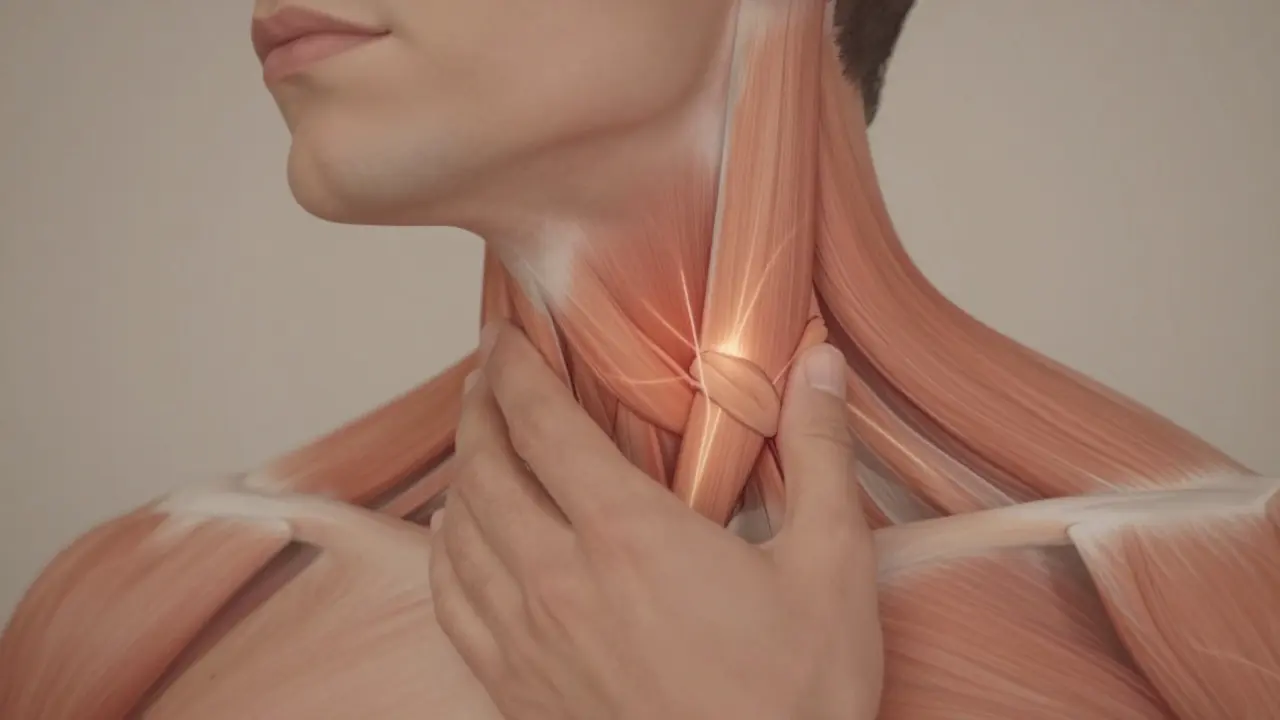
Trigger points aren’t just sore spots. They’re specific areas in a muscle that become tight and stay that way, even when the rest of the muscle relaxes. Think of them like a knot in a rubber band. When you stretch the band, the knot doesn’t move-it pulls on everything around it. That’s why you might feel pain in your shoulder, but the real problem is a knot in your upper trapezius muscle, or why your headache might be caused by a trigger point in your neck.
These knots form because of repeated stress, injury, poor posture, or even emotional tension. A 2023 study from the Journal of Bodywork and Movement Therapies found that over 70% of people with chronic low back pain had active trigger points in their gluteal and lower back muscles. And here’s the kicker: trigger points don’t always hurt where they are. They refer pain to other areas. A knot in your calf can make your knee ache. A knot in your jaw can cause ear pain. That’s why so many people go to specialists for years without relief-they’re treating the wrong spot.
How Trigger Point Massage Works
Trigger point massage works by applying steady, focused pressure directly on the knot. This pressure does three things:
- It interrupts the abnormal nerve signals that keep the muscle tight.
- It increases blood flow to the area, flushing out metabolic waste that builds up in the knot.
- It gently stretches the muscle fibers, helping them return to their normal length.
Unlike deep tissue massage, which works over a broad area, trigger point work is precise. You’re not trying to melt the whole muscle-you’re aiming for a pinpoint spot the size of a pea. The pressure should be firm enough to feel like a deep ache, but not so hard it makes you flinch. You want to hold it for 30 to 60 seconds, then slowly release. Repeat 3 to 5 times. Most people feel a noticeable release after just one session.
It’s not magic. It’s physiology. When you press on a trigger point, you’re sending a signal to your nervous system that says, “Hey, this area isn’t under threat anymore.” Your brain responds by relaxing the muscle. It’s like resetting a stuck button.
Where to Find the Most Common Trigger Points
There are dozens of trigger points in the body, but a few show up again and again in people with chronic pain:
- Upper trapezius (top of the shoulder): Causes headaches, neck pain, and even dizziness. Often from hunching over a computer.
- Levator scapulae (side of the neck): Leads to shoulder blade pain and stiffness. Common in people who sleep on their stomachs.
- Gluteus medius (side of the hip): Mimics sciatica. Often mistaken for a pinched nerve.
- Quadratus lumborum (lower back): Causes deep, aching pain that feels like it’s in the kidney area.
- Masseter (jaw muscle): Can cause toothaches, earaches, and temple pain. Often from clenching or grinding teeth.
These areas are easy to access with your fingers, a tennis ball, or a foam roller. You don’t need expensive tools. Start by locating the tender spot. Press gently until you feel the pain intensify slightly-this is your trigger point. Hold for a minute. Breathe. Then release. Do this daily for a week. Most people report noticeable improvement within days.
Tools for Self-Massage: What Actually Works
You don’t need a massage gun or a $200 device. In fact, the most effective tools are the simplest:
- Tennis ball or lacrosse ball: Perfect for hard-to-reach spots like the glutes or upper back. Lie on the floor and roll slowly over the knot.
- Foam roller: Great for larger muscle groups like quads, hamstrings, and calves. Roll slowly, pausing on tender spots.
- Fingers: Your thumbs are surprisingly effective for the neck, shoulders, and jaw. Use the pad of your thumb, not the tip.
- Massage stick or handheld roller: Good for legs and arms if you have limited mobility.
One common mistake? Using too much pressure too fast. You’re not trying to crush the muscle-you’re trying to coax it open. Think of it like slowly untangling a knot in a rope. Rushing it makes it tighter.
When to Skip Trigger Point Massage
Trigger point massage is safe for most people-but not everyone. Avoid it if you have:
- Recent fractures or bone injuries in the area
- Open wounds, infections, or skin conditions
- Blood clotting disorders or are on blood thinners
- Severe osteoporosis
- Any unexplained swelling or numbness
If you’re unsure, check with your doctor. And if the pain gets worse after massage, stop. That’s your body saying something else is going on.
Why This Works Better Than Painkillers
Painkillers mask the symptom. Trigger point massage addresses the cause. A 2024 review in the Journal of Orthopaedic & Sports Physical Therapy found that people who used trigger point therapy for six weeks reduced their reliance on NSAIDs by 62%. They also reported better sleep, less anxiety, and improved mobility-things painkillers can’t touch.
Plus, there’s no risk of dependency, no stomach upset, no liver strain. You’re not fighting your body-you’re helping it heal itself. That’s why physical therapists, chiropractors, and even professional athletes swear by this method.

How to Make It a Habit
Consistency is everything. One session won’t fix years of tension. But 10 minutes a day? That changes everything.
Try this simple routine:
- After your morning shower, when muscles are warm, spend 5 minutes on your neck and shoulders.
- Before bed, roll out your lower back and glutes with a tennis ball.
- Keep a small ball on your desk. Roll it under your foot while working-it helps with lower back tension too.
Track your progress. Note where the pain was on Day 1. Check again on Day 7. You’ll be surprised how much it changes. Many people go from constant discomfort to only occasional twinges in just two weeks.
What Happens When You Stop
Trigger points don’t disappear just because you feel better. If you stop the massage, the knots will come back. That’s why this isn’t a cure-it’s a maintenance habit. Think of it like brushing your teeth. You don’t do it once and expect lifelong dental health. You do it daily.
Once you get used to it, you’ll start noticing tension before it becomes pain. You’ll catch yourself hunching over your keyboard and say, “Ah, time to roll out my traps.” That’s when you know you’ve taken control.
Final Thought: You Don’t Need to Suffer
Chronic pain doesn’t have to be your normal. You don’t need expensive treatments, endless doctor visits, or pills that make you drowsy. The tools are simple. The method is proven. And the results? They’re faster than most people expect.
Start today. Find one tender spot. Press. Hold. Breathe. Repeat. In a week, you’ll wonder why you waited so long.
Can trigger point massage cause damage?
When done correctly, trigger point massage is safe. The main risk is using too much force, which can bruise tissue or irritate nerves. Always use controlled pressure-not brute strength. If you feel sharp pain, numbness, or tingling, stop immediately. These are warning signs. It should feel like a deep ache, not a stabbing pain.
How long does it take to see results?
Many people feel relief after just one session, especially for acute tension. For chronic pain that’s been around for months or years, it typically takes 5 to 10 minutes of daily work for 7 to 14 days to notice real improvement. Consistency matters more than intensity.
Should I use heat or ice before trigger point massage?
Heat is better. Warm muscles release more easily. Take a warm shower or use a heating pad for 10 minutes before massaging. Ice can numb the area, which makes it harder to locate the trigger point and reduces the effectiveness of the pressure. Save ice for swelling or inflammation-not for knots.
Can I do trigger point massage on my own back?
Yes, but it’s harder. Use a tennis ball against a wall or lie on the floor with the ball under your upper back. Slowly shift your weight to roll over the knot. It’s not as precise as having someone else do it, but it’s still effective. Don’t try to reach your lower back with your hands-use a foam roller or ball instead.
Is trigger point massage the same as deep tissue massage?
No. Deep tissue massage works broadly across large muscle groups to release general tension. Trigger point massage targets specific, pinpoint areas that are causing referred pain. One is a broad stroke; the other is a scalpel. You can combine them, but they serve different purposes.