
Kahuna Herbal Remedy Calculator
Select Your Primary Concern
Additional Symptoms (Optional)
For centuries, the islands of Hawaii held secrets that outsiders rarely understood. Among them was the role of the Kahuna - not just a healer, but a keeper of knowledge, a bridge between the physical and spiritual worlds. Today, people from all over the globe seek out Kahuna practices, not as a trend, but as a return to something deeper. This isn’t about mystical rituals or Hollywood fantasy. It’s about a living tradition that still works - quietly, effectively, and without fanfare.
What Exactly Is a Kahuna?
A Kahuna is not a title you earn by attending a weekend workshop. In traditional Hawaiian culture, a Kahuna was someone trained from childhood in a specific field of expertise. There were Kahuna of medicine (Kahuna la’au lapa’au), of prayer and spirituality (Kahuna pule), of navigation (Kahuna kahiko), and even Kahuna who specialized in building canoes or managing land. Each one was passed down through family lines or chosen apprenticeships, often lasting decades.
The word itself means "one who knows" - not just facts, but wisdom that’s lived and felt. Unlike Western doctors who diagnose symptoms, a Kahuna looked at the whole person: body, mind, spirit, and their connection to family, ancestors, and the land. Illness wasn’t just a broken part. It was an imbalance - in energy, in relationships, in harmony with nature.
The Healing Practices of Kahuna la’au lapa’au
The most well-known type of Kahuna is the healer who uses plants, breath, and touch. Called Kahuna la’au lapa’au, these practitioners didn’t rely on pills or scalpels. Instead, they used over 300 native plants - many found nowhere else on Earth. Kava root for calming nerves, noni fruit for inflammation, ti leaves for energy cleansing, and mamala bark for wound healing were all part of their toolkit.
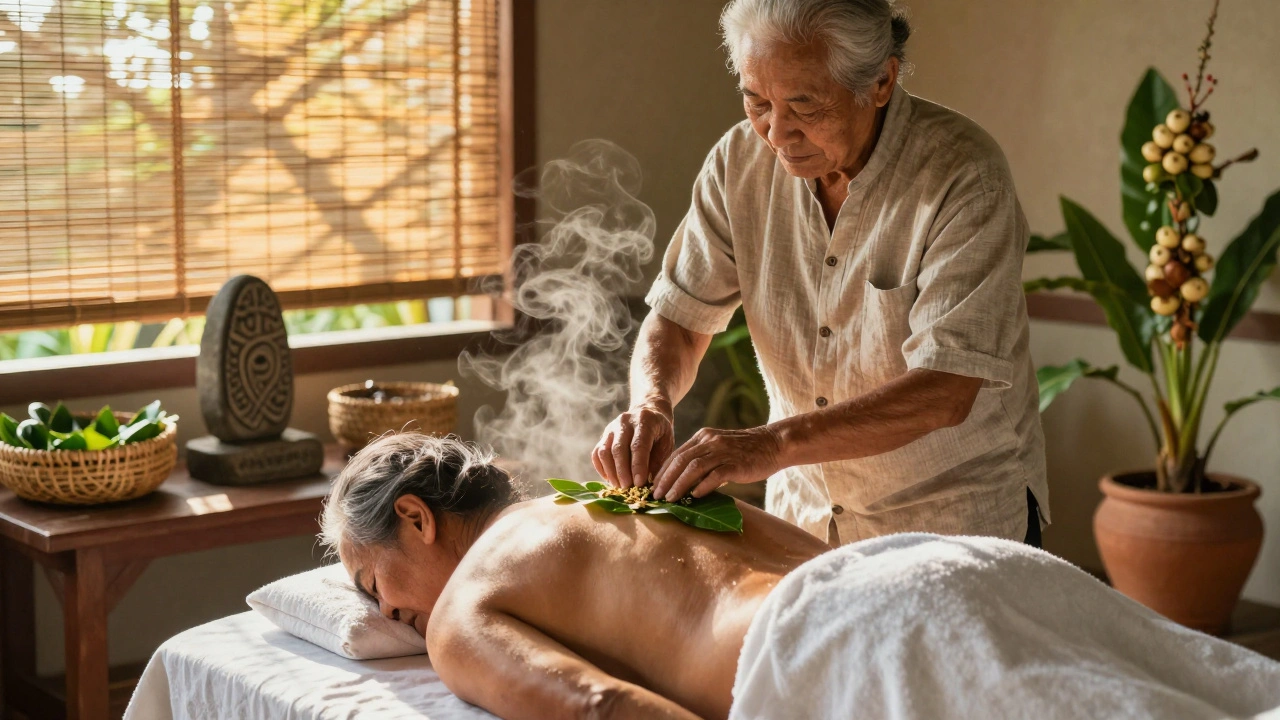
One common method involved placing warm, crushed leaves directly on the skin over painful areas. The heat and natural oils would draw out tension. Another technique used rhythmic breathing - called hā - to transfer healing energy. The Kahuna would sit beside the person, inhale deeply, and exhale slowly over the affected area, believing breath carried life force, or mana.
There’s no magic here. Modern science has confirmed many of these plants have real bioactive compounds. Noni, for example, contains scopoletin and iridoids shown in peer-reviewed studies to reduce oxidative stress. Kava has been validated by the World Health Organization for mild anxiety relief. The Kahuna didn’t need lab reports. They had generations of observation.
Energy Work and the Concept of Mana
What makes Kahuna healing stand out isn’t just the herbs - it’s the understanding of energy. Mana isn’t a vague spiritual term. It’s the measurable life force that flows through all living things. A Kahuna could feel where mana was blocked - a tight shoulder, a cold foot, a silent gut. They’d use touch, chanting, or even silence to restore flow.
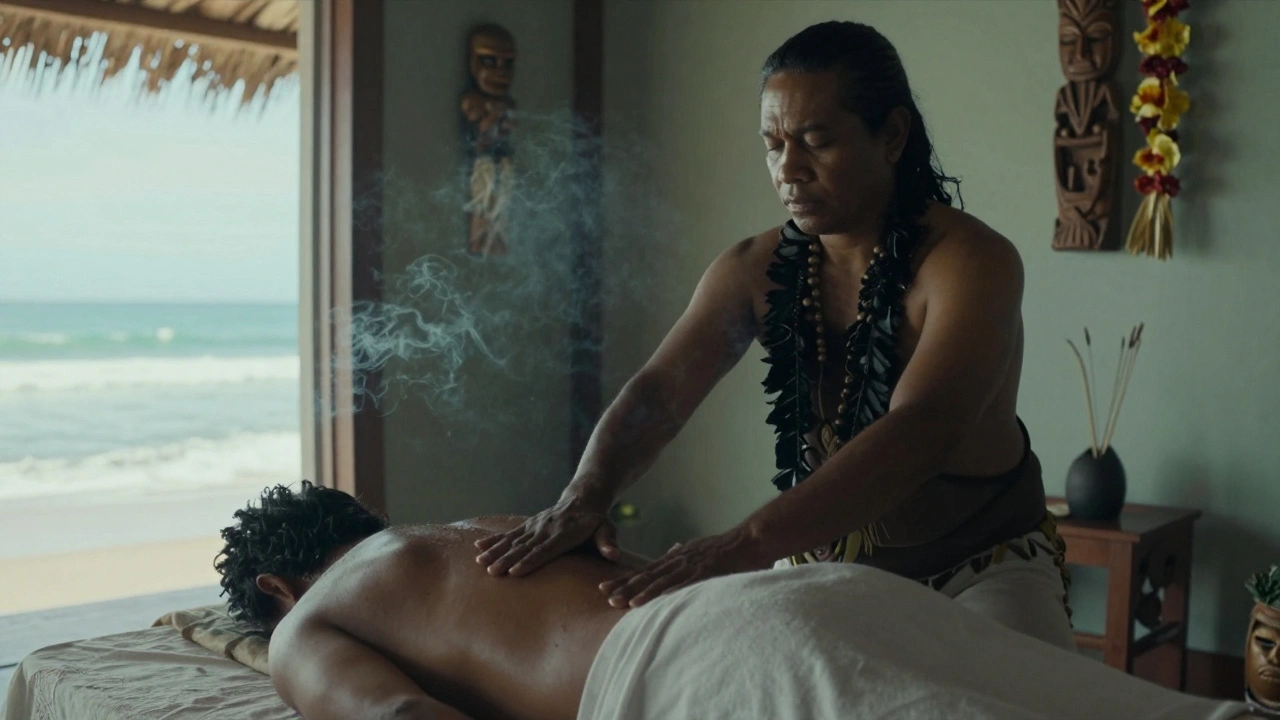
One technique called lomilomi, often mistaken for just a massage, was actually a form of energy release. Hands moved in long, flowing strokes, not to knead muscle, but to clear stagnant energy. The rhythm was based on the ocean - steady, deep, and natural. Patients often reported not just physical relief, but emotional release - memories surfacing, tears falling, a sense of being seen.
This isn’t New Age fluff. It’s embodied knowledge. A 2021 study from the University of Hawaii followed 120 people with chronic back pain who received lomilomi sessions from certified Kahuna practitioners. After eight weeks, 73% reported significant pain reduction - more than those in the control group using standard physical therapy. The difference? The Kahuna treated the person, not just the spine.
Connection to Ancestors and the Land
A Kahuna never worked in isolation. Healing was tied to lineage. Before treating someone, a Kahuna might light a candle, offer a prayer, or place a stone on an ancestral altar. They believed illness could stem from broken family ties, unspoken grief, or disrespect for the land.
For example, if someone had recurring stomach issues, the Kahuna might ask: "Have you eaten food from a place you don’t honor? Have you ignored a family disagreement?" This isn’t superstition - it’s psychosomatic awareness. Modern medicine now recognizes the gut-brain axis and how emotional stress triggers physical symptoms. The Kahuna knew this centuries ago.
They also understood that land holds memory. A person living far from their ancestral home might feel unwell not because of diet or germs, but because their spirit was disconnected from the soil their ancestors walked. Reconnecting - through ritual, through returning to place, through speaking the old language - was part of the cure.
Kahuna Today: Revival, Not Revivalism
After colonization, Hawaiian culture was suppressed. The use of native plants was banned. Kahuna were labeled as witch doctors. Their knowledge nearly vanished.
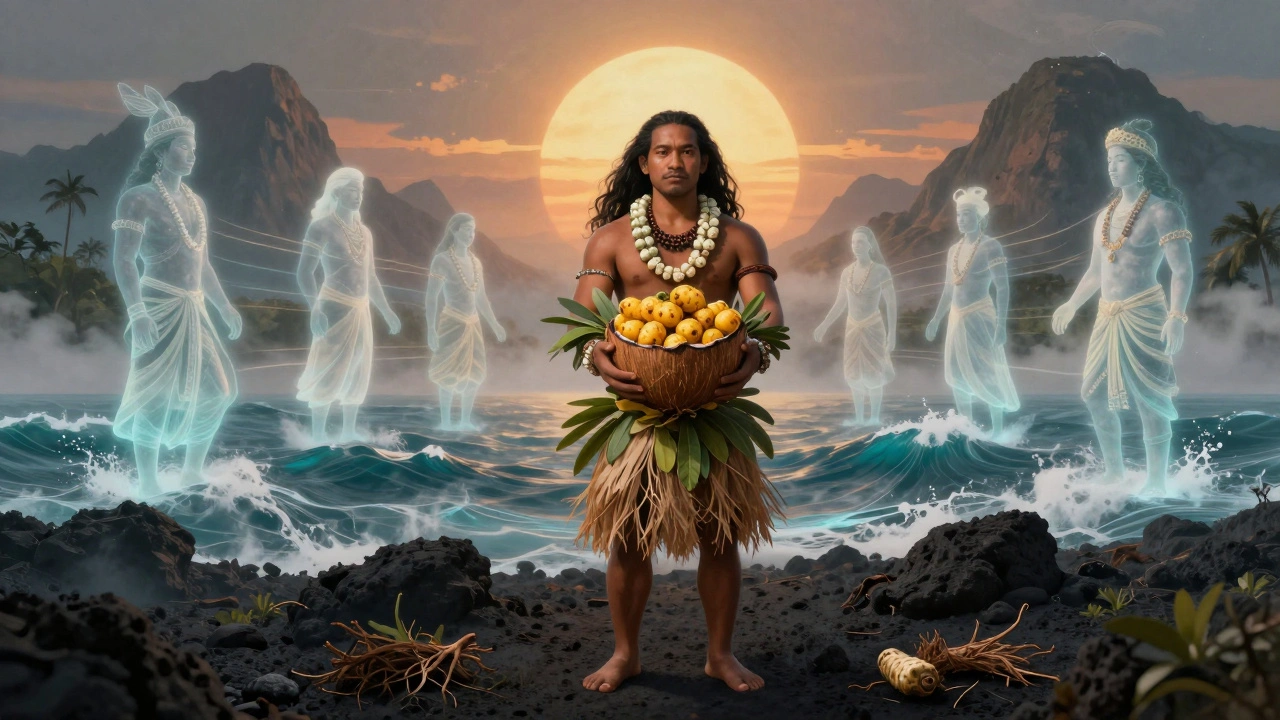
But in the 1970s, a quiet revival began. Young Hawaiians, raised on Western education, started asking their grandparents: "What did our people really know?" They tracked down surviving elders. They planted native gardens. They learned chants in secret.
Today, there are fewer than 200 certified Kahuna in Hawaii, all trained through lineage or rigorous apprenticeship. They don’t advertise. They don’t sell retreats. They work in homes, in gardens, in quiet rooms with incense and silence. Some now teach in universities - not as entertainment, but as legitimate cultural science.
Outside Hawaii, many offer "Kahuna-inspired" massages or energy healing. But these are watered-down versions. Real Kahuna work requires cultural context. You can’t replicate it with a playlist and essential oils.
Why It Still Matters
We live in a world of quick fixes. Pills. Apps. One-minute meditations. But chronic pain, anxiety, and burnout aren’t going away. People are tired of treating symptoms without asking why they exist.
The Kahuna tradition offers something rare: a system that doesn’t separate body from soul, or person from planet. It doesn’t promise miracles. It asks for patience. For listening. For honesty.
If you’re looking for a cure, look elsewhere. But if you’re ready to understand why you’re unwell - not just what’s wrong - then the wisdom of the Kahuna might be the quietest, most powerful path you’ve never considered.
Are Kahuna practices still legal in Hawaii today?
Yes. Kahuna practices are fully legal and protected under Hawaiian cultural heritage laws. In 1993, the U.S. Congress passed the Native American Graves Protection and Repatriation Act, which extended cultural protections to Native Hawaiians. Today, certified Kahuna can legally practice traditional healing, teach apprentices, and use native plants without restriction. Many work alongside Western medical professionals in integrative clinics on the islands.
Can anyone become a Kahuna?
No - not in the traditional sense. Becoming a Kahuna requires initiation by an existing Kahuna, years of apprenticeship, and deep cultural connection. It’s not a certification you get online. Most modern practitioners are Native Hawaiians or have lived in Hawaii for generations and were formally adopted into a lineage. Outsiders can learn aspects of the practices, like lomilomi or herbal use, but they cannot claim the title or authority of a true Kahuna without cultural lineage.
Do Kahuna use any tools or instruments in healing?
Yes, but minimally. Tools are simple and natural: stones, shells, wooden bowls, woven leaves, and clay pots. They use heated stones for poultices, coconut shells for oil infusion, and sea salt for cleansing rituals. Unlike Western medicine, Kahuna avoid mechanical or electronic devices. Their tools are extensions of the earth - not replacements for human intuition.
Is there scientific evidence supporting Kahuna healing?
Yes - but indirectly. While no large-scale studies exist on "Kahuna healing" as a whole, research on its components is strong. Studies from the University of Hawaii, the National Institutes of Health, and the Journal of Alternative and Complementary Medicine have confirmed the medicinal properties of noni, kava, and ti leaf. The effectiveness of lomilomi for chronic pain and stress reduction has been documented in clinical trials. The Kahuna’s holistic approach aligns with modern functional medicine, which also treats mind-body-spirit as interconnected.
How is Kahuna healing different from Reiki or acupuncture?
Kahuna healing is rooted in Hawaiian cosmology, not Asian traditions. While Reiki channels universal energy and acupuncture follows meridian lines, Kahuna work focuses on mana as it exists in specific places, ancestors, and family lines. Lomilomi uses flowing, ocean-like motions, unlike the precise pressure of acupuncture. Kahuna also include prayer, ancestral calling, and land-based rituals - elements absent in Reiki or acupuncture. It’s not just energy work - it’s cultural memory in motion.