
Most people think of physical therapy or yoga when they want to move better, reduce pain, or feel more in control of their body. But there’s another approach-quiet, subtle, and deeply effective-that’s been helping people for over 80 years: the Feldenkrais Method. If you’ve never heard of Feldenkrais training, you’re not alone. Yet thousands of people-from athletes recovering from injury to seniors regaining mobility-have found lasting relief through it. This guide breaks down exactly what Feldenkrais training is, how it works, what to expect, and how to get started.
What Is Feldenkrais Training?
Feldenkrais training is a form of somatic education developed by Dr. Moshe Feldenkrais, a physicist, engineer, and judo expert. He created it in the 1940s after a knee injury left him unable to walk without pain. Instead of relying on surgery or conventional therapy, he studied how the body learns to move. His insight? Movement isn’t just about muscles and bones-it’s about how your brain maps your body.
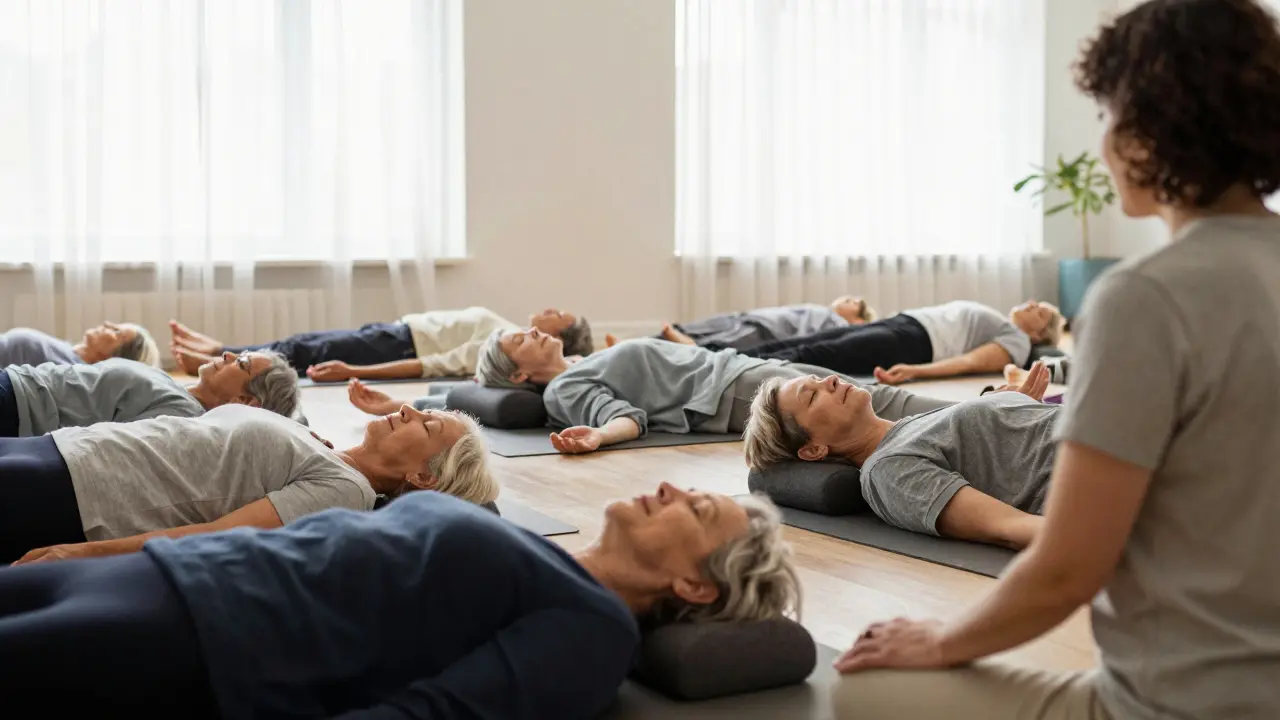
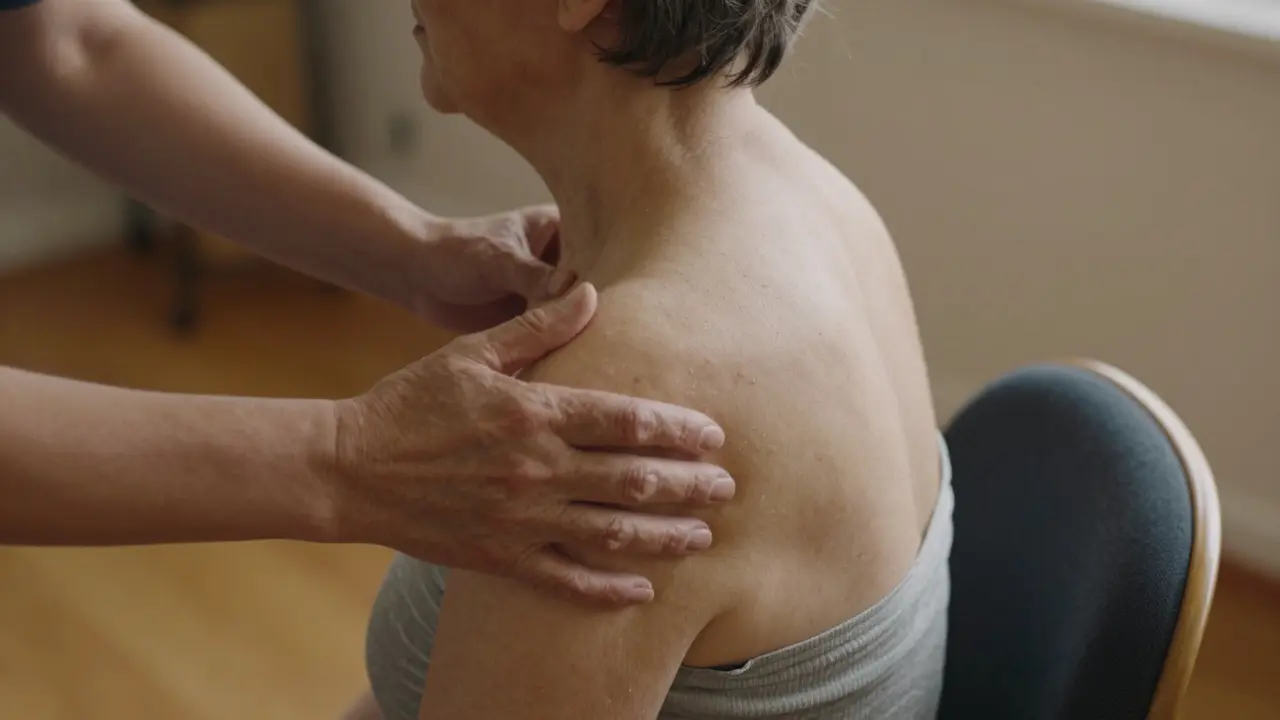
The method uses two main approaches: Awareness Through Movement (ATM) and Functional Integration (FI). ATM lessons are group classes where you lie, sit, or stand while a teacher guides you through slow, gentle movements using verbal cues. FI sessions are one-on-one, hands-on sessions where the practitioner gently moves you to help your nervous system discover new patterns.
It’s not stretching. It’s not massage. It’s not exercise. It’s learning.
How Does It Work?
Your brain builds a map of your body based on sensory feedback. Over time, injuries, stress, poor posture, or repetitive motions can distort that map. You might think you’re sitting straight, but your brain has forgotten what true alignment feels like. That’s why you slouch without realizing it-or why your shoulder aches even though nothing seems wrong.
Feldenkrais training helps you reconnect with your body’s natural intelligence. By slowing down movements and paying attention to sensation, you give your nervous system a chance to notice what’s working and what’s not. The goal isn’t to force your body into a new position. It’s to help your brain find a more efficient, comfortable way to move.
Studies show that people who complete even 10-15 sessions report improved posture, reduced pain, and better balance. One 2021 study published in the Journal of Bodywork and Movement Therapies found that older adults with chronic lower back pain improved their walking speed and reduced pain intensity after 12 weeks of weekly Feldenkrais lessons.
What to Expect in a Class
ATM classes usually last 45 to 60 minutes. You’ll lie on a low, padded table or sit in a chair. No mats, no equipment, no sweat. You might be asked to slowly turn your head while keeping your shoulders still, or to imagine your ribs expanding like a bellows. The movements are tiny. So tiny, you might wonder if it’s doing anything.
But here’s the trick: the less effort you use, the more your brain notices. You’re not trying to stretch tight muscles. You’re not trying to get deeper into a pose. You’re just noticing: Which side feels heavier? Where does the movement stop? What happens if I move slower?
There’s no right or wrong. If you can’t move your leg 10 degrees, that’s fine. The point isn’t range of motion-it’s awareness. People often leave a class feeling lighter, calmer, or oddly taller-even if they didn’t do anything strenuous.
Who Benefits Most?
Feldenkrais training isn’t a cure-all, but it’s incredibly effective for specific situations:
- People with chronic pain (neck, back, hip, knee)
- Recovering athletes or dancers with repetitive strain
- Older adults losing mobility or balance
- People with neurological conditions like Parkinson’s or MS
- Those with anxiety or stress-related tension
- Anyone who feels stiff, awkward, or disconnected from their body
It’s not for acute injuries. If you’ve just torn a ligament, see a physiotherapist first. But once the swelling goes down, Feldenkrais can help you rebuild movement without reinforcing old habits.
Feldenkrais Practitioner Training
If you’re considering becoming a practitioner, the training is intense. It takes 3 to 4 years of part-time study, with over 800 hours of classroom time. Trainees learn anatomy, neuroscience, movement analysis, and hands-on communication skills. They spend hours observing how people move-not just in class, but in grocery stores, on buses, in kitchens.
Graduates must pass written and practical exams before being certified by one of the major organizations, like the Feldenkrais Guild of North America or the Feldenkrais Association of Europe. The training is expensive-anywhere from $15,000 to $25,000 total-but many practitioners say it changes how they see the world. One graduate in London told me, “I used to think of pain as something to fix. Now I see it as a message.”

How to Find a Practitioner
Start with the official directories. The Feldenkrais Guild maintains a global list of certified practitioners. In the UK, you can search by region on their website. Look for practitioners who have completed the full 800-hour certification. Some offer sliding scale rates or group classes to make it more affordable.
Try a single ATM class before committing. Most studios offer a free or low-cost first session. Pay attention to how the teacher speaks. Good practitioners don’t tell you what to do-they ask questions. They don’t correct you. They invite you to notice.
Common Myths
There’s a lot of confusion around Feldenkrais. Here are the biggest myths-and the truth:
- Myth: It’s just gentle yoga.
Truth: Yoga focuses on posture and flexibility. Feldenkrais focuses on neural learning. You don’t need to be flexible to benefit. - Myth: You need to be in good shape.
Truth: One of the most powerful sessions I’ve seen was with a woman in her 80s who could barely stand. After six weeks, she walked to the garden without her cane. - Myth: It’s spiritual or mystical.
Truth: It’s science. Dr. Feldenkrais based his work on physics, neurology, and learning theory. No crystals, no chanting.
Getting Started
You don’t need to commit to years of training to feel the difference. Start here:
- Try a free online ATM lesson (YouTube has many from certified teachers).
- Find a local class-many community centers or physiotherapy clinics offer them.
- Book one Functional Integration session to experience hands-on learning.
- Pay attention to how you move during daily tasks: standing up, reaching for a cup, turning in bed.
- Don’t rush. Progress isn’t measured in flexibility or strength-it’s measured in ease.
People often say they feel like they’ve ‘gotten their body back.’ Not because they fixed something broken. But because they finally learned how to listen to it.
Is Feldenkrais training covered by health insurance?
In most countries, including the UK and US, Feldenkrais sessions are not typically covered by public health insurance. Some private health plans may offer partial reimbursement if the practitioner is licensed as a physiotherapist or bodyworker. Always check with your provider before booking.
How long does it take to see results?
Some people feel a shift after one session-often a sense of lightness or relief. For lasting change, most practitioners recommend at least 6 to 12 sessions over a few months. The effects build cumulatively as your nervous system rewires. It’s not a quick fix, but the changes tend to stick.
Can I do Feldenkrais at home?
Yes. Many certified practitioners offer audio recordings or video lessons for home use. These are excellent supplements, but they’re not replacements for in-person sessions. Hands-on guidance helps you notice things your brain can’t see on its own. Start with home lessons if you’re unsure, but plan to try a live class eventually.
Is Feldenkrais safe for people with chronic conditions?
Yes. Because the movements are slow, gentle, and non-forceful, it’s one of the safest movement therapies for people with arthritis, osteoporosis, spinal injuries, or neurological conditions. Always inform your practitioner about your condition so they can adapt the lesson. Many practitioners specialize in working with specific populations.
What’s the difference between Feldenkrais and the Alexander Technique?
Both focus on posture and movement awareness, but they differ in approach. The Alexander Technique uses verbal cues and light touch to help you correct alignment-often aiming for a ‘correct’ posture. Feldenkrais doesn’t prescribe a ‘right’ way to move. Instead, it explores how your body naturally organizes movement, letting your nervous system find the most efficient pattern. Alexander is more about posture; Feldenkrais is about learning.