
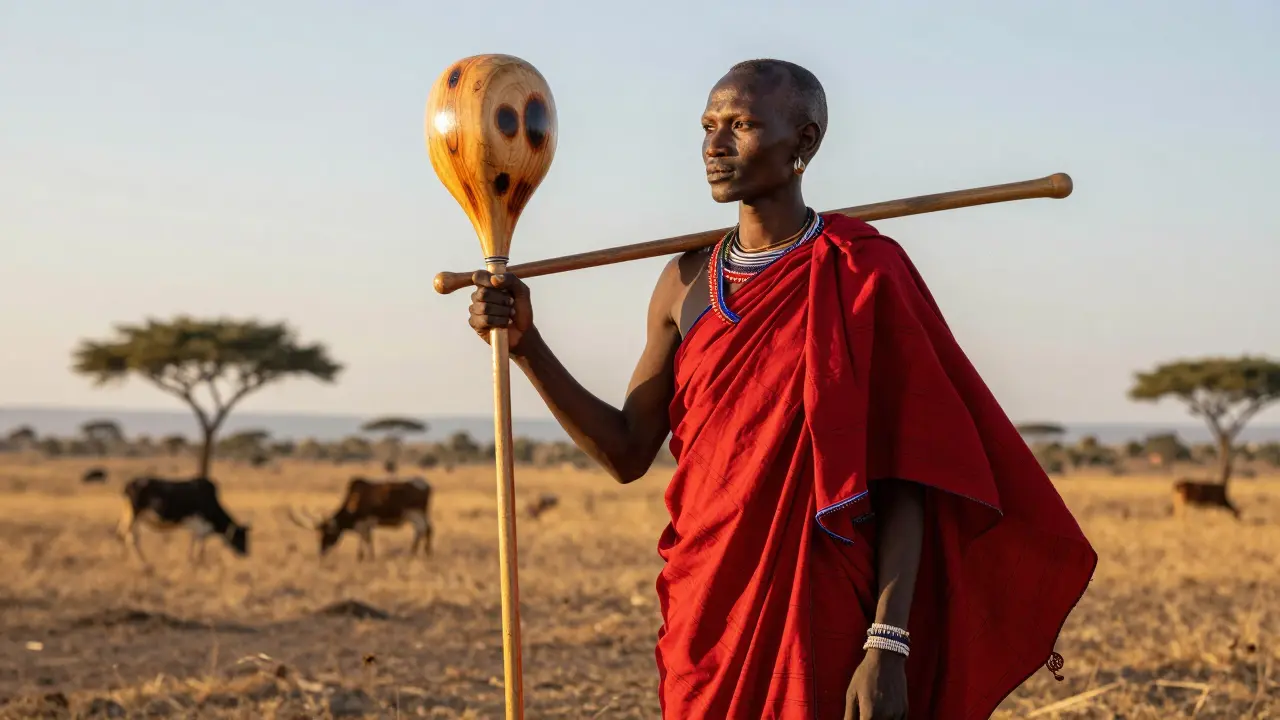
The rungu is more than just a wooden club. It’s a symbol of identity, authority, and survival that has carried the weight of history across the savannas of East Africa. For centuries, it has been held in the hands of warriors, elders, and hunters-not as a mere tool, but as an extension of their purpose. Today, it still appears in ceremonies, dances, and even modern art, but few outside its cultural roots understand what it truly represents.
Where the Rungu Comes From
The rungu traces its origins to the pastoral communities of East Africa, especially among the Maasai, Kikuyu, and other Nilotic and Bantu-speaking groups. It wasn’t invented overnight-it evolved from the need to defend livestock, hunt game, and maintain order within tight-knit societies. Unlike swords or spears, the rungu was simple: a short, thick wooden shaft, often curved at the top, sometimes weighted with a metal or stone knob. Its design made it easy to carry, quick to swing, and deadly accurate at close range.
Archaeological evidence suggests similar clubs have been used in the region for over 1,000 years. But the version most recognized today-smooth, polished, with a distinctive bulbous head-became widespread during the 18th and 19th centuries, when Maasai warriors expanded their territory across what is now Kenya and northern Tanzania. These warriors, known for their fierce independence and cattle-based economy, relied on the rungu as both a weapon and a badge of status.
More Than a Weapon
While the rungu could stop a charging lion or break a rival’s skull, it was never just about violence. In Maasai culture, a young man earned his first rungu during his initiation into warriorhood. The club was carved by his father or an elder, often from a specific type of wood like acacia or ebony, chosen for its strength and spiritual meaning. The weight, shape, and even the grain of the wood were believed to carry ancestral power.
Carrying a rungu signaled readiness-not just to fight, but to protect. It was worn daily, slung over the shoulder or held in the hand during gatherings. A warrior without a rungu was seen as incomplete, like a soldier without a rifle. Even today, Maasai men in rural areas carry rungus not because they expect trouble, but because it’s part of who they are.
The Rungu in Ritual and Ceremony
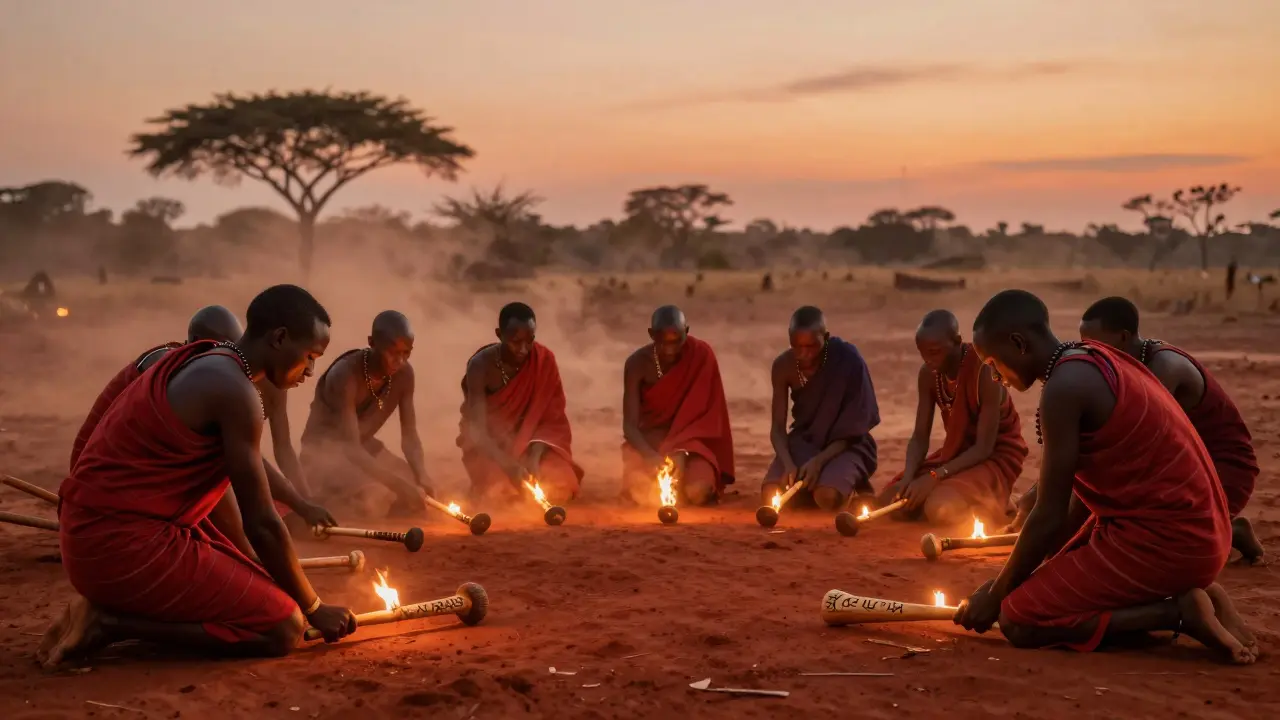
The rungu plays a central role in rites of passage. During the Eunoto ceremony, when young warriors become elders, they lay down their rungus in a symbolic act of leaving behind violence and embracing responsibility. The clubs are often stored in family huts or displayed on walls as heirlooms. In some communities, a rungu is buried with its owner-a final gesture of honor.
It also appears in dance. The Maasai adumu, or jumping dance, often includes rhythmic swinging of rungus as performers leap high into the air. The movement isn’t random-it mimics the motion of a warrior defending his herd. The sound of the club striking the ground adds percussion to the chant, linking physical strength with spiritual expression.
Modern Meanings and Misunderstandings
Outside Africa, the rungu is often reduced to a prop in movies or a souvenir in tourist markets. It’s sold as a "tribal club" with no context, stripped of its meaning. Some people buy them as home decor, unaware that in its original culture, the rungu is never treated as a mere object. It’s not a decoration-it’s a living part of identity.
But there’s also a quiet revival. Young East Africans, especially those in cities, are reclaiming the rungu as a symbol of cultural pride. Artists carve modern versions with intricate patterns, blending traditional forms with contemporary aesthetics. Some use them in performance art to challenge stereotypes. Others gift them to children as a way to teach heritage-not through textbooks, but through touch and tradition.
Materials and Craftsmanship
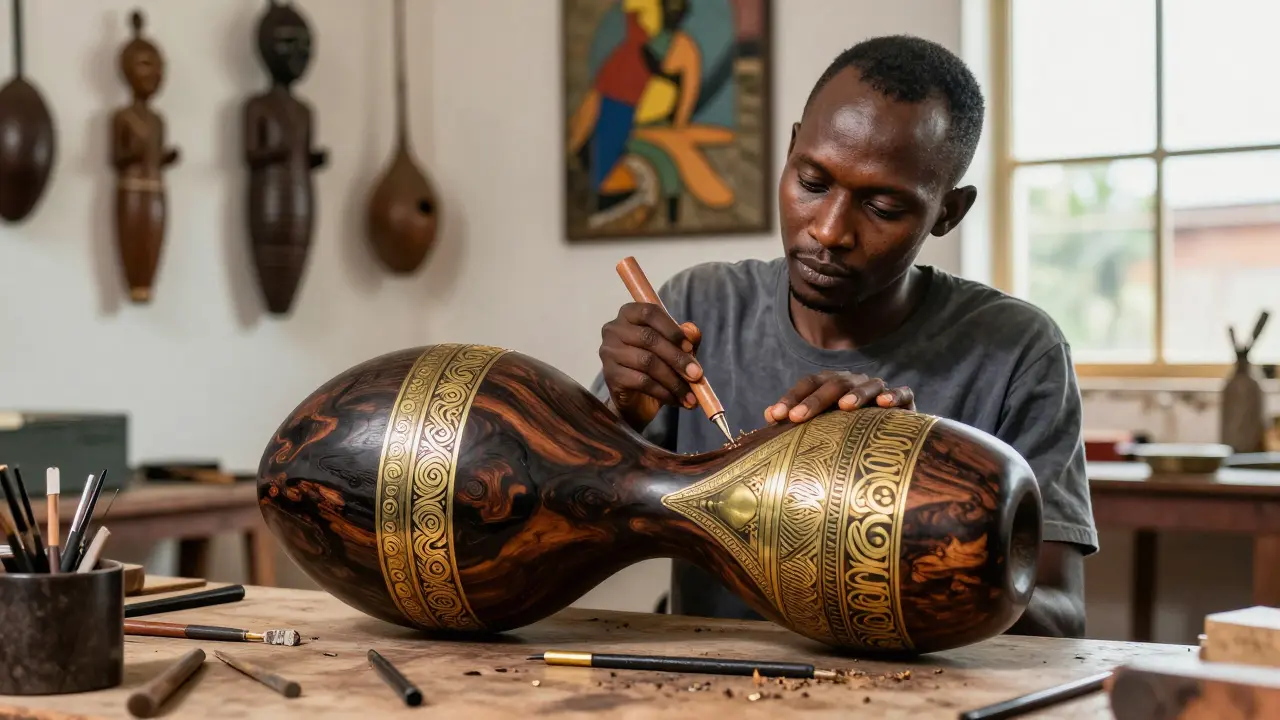
A true rungu is hand-carved. The wood is selected carefully: acacia for durability, ebony for prestige, or olive for its smooth grain. The knob at the top is often shaped by fire, then polished with animal fat and sand. Some are inlaid with brass, copper, or even cowrie shells-each detail telling a story. A well-made rungu can last a lifetime, passed from father to son.
Unlike mass-produced versions sold online, authentic rungus are never machine-made. The slight imperfections-the uneven curve, the faint burn marks-are not flaws. They’re proof of human hands, of patience, of lineage. A rungu without a maker’s mark is like a song without a singer.
Why It Still Matters
In a world where traditions are fading, the rungu remains. It doesn’t shout for attention. It doesn’t need to. It speaks in silence: of resilience, of community, of belonging. It’s not about the past-it’s about continuity. When a Maasai elder holds his rungu during a village meeting, he’s not just holding wood. He’s holding the memory of his father, the strength of his ancestors, and the promise to his grandchildren.
For those who understand it, the rungu is not a relic. It’s a responsibility.
Is the rungu still used as a weapon today?
In rural areas, especially among the Maasai, the rungu is still carried daily and can be used for self-defense against predators or in conflicts over land and livestock. However, its use as a weapon has declined with modern law enforcement and firearms. Today, it’s more often a cultural symbol than a tool of violence.
Can anyone carry a rungu, or is it restricted to certain groups?
Traditionally, the rungu was worn by adult males in specific communities, especially after initiation into warriorhood. Women did not carry them in the same way, though they sometimes held smaller versions in ceremonial dances. Today, cultural respect matters more than rules-many East Africans, regardless of gender, carry rungus as a sign of heritage, especially in urban cultural events.
What’s the difference between a rungu and a knobkerrie?
The terms are often used interchangeably, but there’s a subtle distinction. A rungu typically has a curved, bulbous head and is associated with the Maasai and other Nilotic groups. A knobkerrie is a broader term used in Southern Africa, especially among Zulu and Xhosa peoples, and often has a straighter shaft and a more rounded knob. Both serve similar purposes, but their styles and cultural contexts differ.
Are rungus legal to own outside Africa?
Yes, in most countries, owning a rungu as a cultural artifact or decorative item is legal. However, some places classify it as a weapon, especially if it’s heavy or sharpened. Always check local laws before importing or carrying one in public. Many authentic rungus sold abroad are intentionally blunt and unsharpened for safety and compliance.
How can I tell if a rungu is authentic?
An authentic rungu is hand-carved, not machine-made. Look for slight irregularities in shape, burn marks from shaping, and natural wood grain. It should feel balanced in the hand, not too light or too heavy. Avoid plastic or resin versions. The best way to confirm authenticity is to buy from artisans in East Africa or from sellers who can trace the maker and region of origin.
Do women ever use the rungu?
Historically, women did not carry rungus in the same way men did, as it was tied to warrior status. However, in some communities, women use smaller versions during dances or rituals. Today, many women in East Africa carry rungus as cultural symbols, especially in performances or as gifts to honor heritage. The meaning is evolving, but respect for tradition remains.
If you’re drawn to the rungu, don’t just admire it-learn it. Ask about its maker. Understand its history. Let it be more than a souvenir. It’s not just a club. It’s a story that’s still being told.