
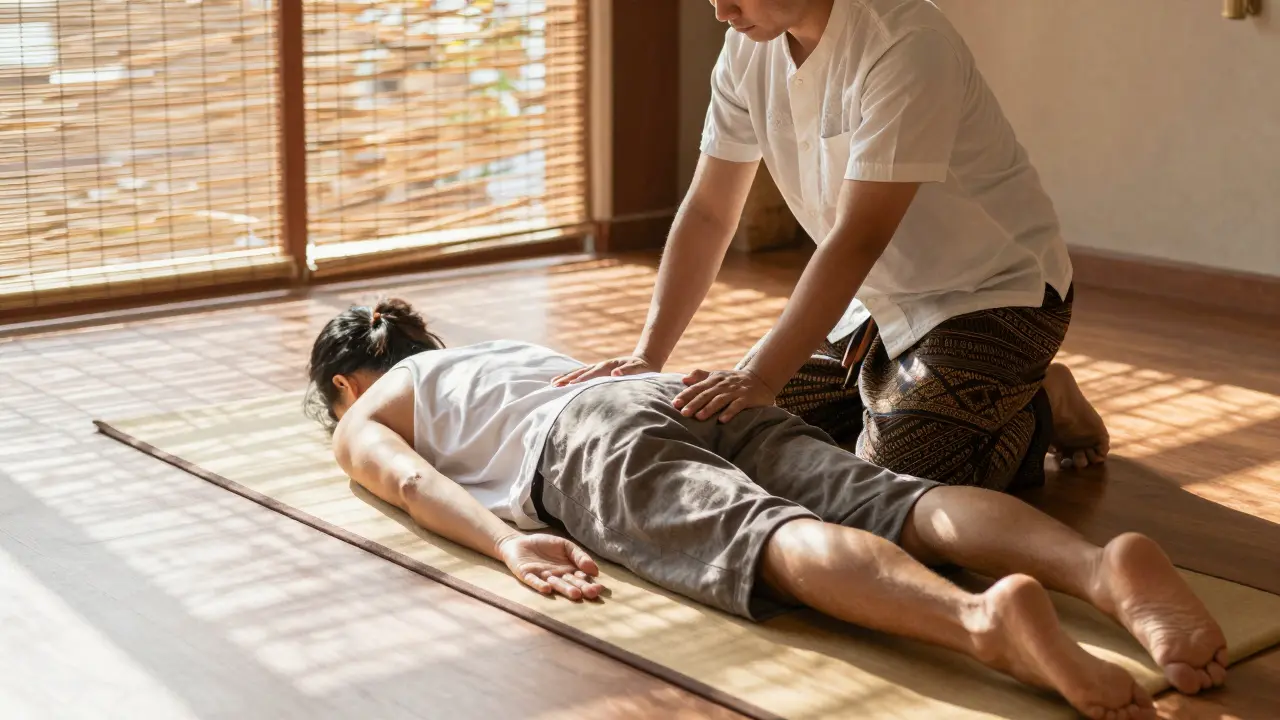
Thai bodywork isn’t just a relaxing spa treatment-it’s a 2,500-year-old system of healing that moves energy, releases tension, and resets your nervous system. Unlike Swedish massage, which focuses on muscles, Thai bodywork treats your whole body as a network of energy lines, joints, and pressure points. If you’ve ever felt stiff after sitting at a desk all day, or if you’re tired of treatments that only give you temporary relief, Thai bodywork might be the missing piece.
How Thai Bodywork Works
Thai bodywork, also called Thai massage or Nuad Boran, combines acupressure, assisted yoga postures, and deep stretching. Practitioners use their hands, thumbs, elbows, knees, and feet to apply rhythmic pressure along ten energy lines called sen lines. These lines are similar to meridians in Chinese medicine but have their own unique map developed in Thailand. The goal isn’t just to loosen tight muscles-it’s to clear blockages in energy flow that cause pain, fatigue, and stiffness.
During a session, you stay fully clothed in loose clothing and lie on a mat on the floor. There’s no oil. No table. No silence. You’re guided through stretches that feel like yoga, but someone else is doing the work. It’s not passive. You’re actively involved-breathing, relaxing, letting go. The pressure ranges from firm to deep, depending on your tolerance. It’s not supposed to hurt, but it can feel intense if you’re tight.
Reduces Chronic Pain and Improves Mobility
People with lower back pain, neck stiffness, or knee arthritis often report major improvements after just a few sessions. A 2021 study published in the Journal of Bodywork and Movement Therapies found that participants with chronic lower back pain who received Thai bodywork twice a week for four weeks saw a 42% reduction in pain levels and a 37% increase in range of motion. That’s better than what many get from painkillers or physical therapy alone.
Why? Because Thai bodywork doesn’t just massage the spot that hurts. It releases tension in the hips, hamstrings, and spine that pull on the lower back. It opens up the pelvis and realigns the spine through gentle traction. One woman in Bangkok, a 58-year-old schoolteacher with degenerative disc disease, started Thai bodywork after her doctor told her she’d need surgery. After six months of weekly sessions, she stopped using her cane and resumed walking her grandchildren to school.
Boosts Circulation and Lymphatic Drainage
Thai bodywork increases blood flow to areas that are usually neglected-like the soles of your feet, the inner thighs, and the back of the neck. The rhythmic compressions act like a pump, pushing stale blood and fluid out and bringing fresh oxygen and nutrients in. This helps reduce swelling, speeds up recovery after workouts, and even improves skin tone.
The lymphatic system, which removes toxins and waste from your body, doesn’t have a pump like your heart. It relies on movement. Thai bodywork’s deep stretches and pressure techniques stimulate lymph flow naturally. People with chronic sinus congestion, swollen ankles, or post-surgery swelling often notice a difference after just one session. One man in Toronto, recovering from knee replacement surgery, started Thai bodywork three weeks after his operation. Within two weeks, his swelling dropped by 60%, and his physical therapist said he was ahead of schedule.
Calms the Nervous System and Reduces Stress
If you’re always on edge, constantly checking your phone, or lying awake at night thinking about tomorrow, Thai bodywork can reset your nervous system. The rhythmic pressure and slow, deliberate movements trigger the parasympathetic response-the part of your nervous system that says, “It’s safe to relax.”
Studies show that Thai bodywork lowers cortisol levels by up to 30% after a single session. That’s comparable to the effect of a week-long vacation. Unlike meditation, which requires focus, Thai bodywork lets your body do the work. You don’t have to quiet your mind-you just have to breathe. Many clients say they fall asleep during sessions, even if they never sleep well at night.
Improves Flexibility Without Stretching
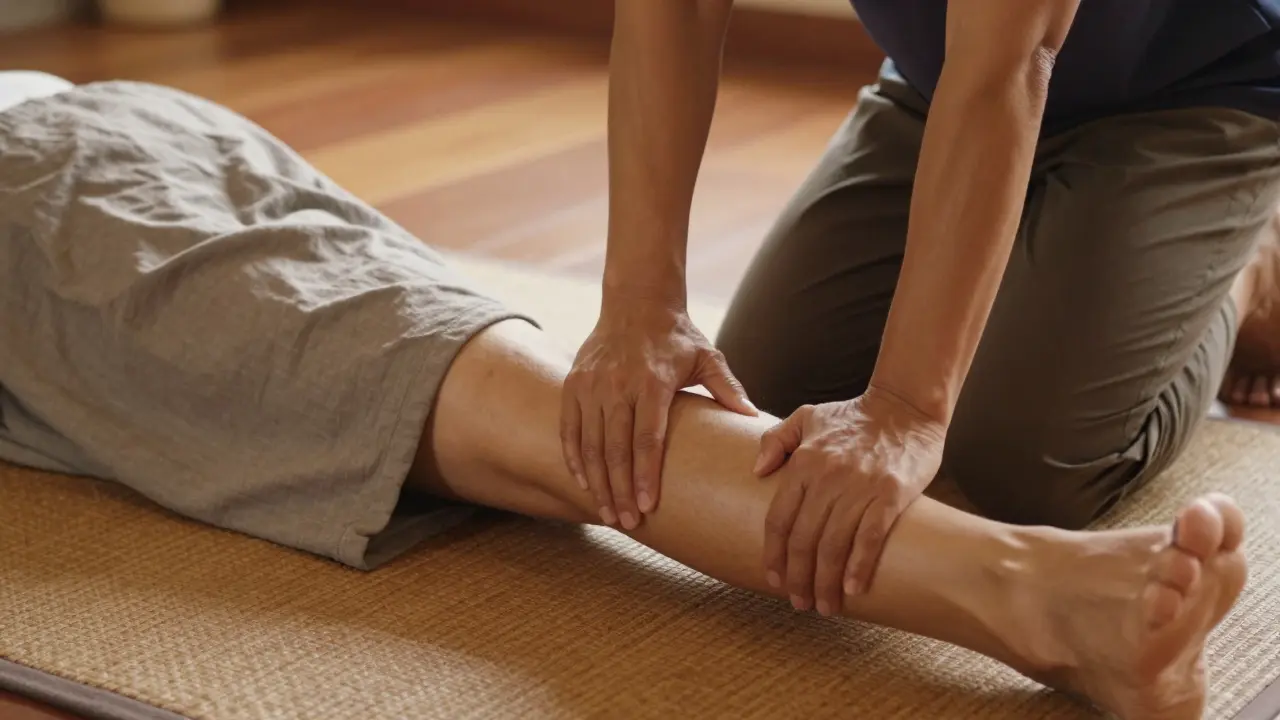
You don’t need to be flexible to benefit from Thai bodywork. In fact, the more stiff you are, the more you’ll gain. The therapist uses your body weight and gravity to gently guide you into stretches you couldn’t do on your own. Over time, your muscles learn to release. Your joints move more freely. Your posture improves.
One fitness coach in Vancouver, who taught yoga for 15 years, started Thai bodywork after her hips locked up from years of high-impact training. After eight sessions, she could touch her toes for the first time since college. She now uses Thai bodywork as a recovery tool for her students, saying it’s the only thing that truly fixes tightness without causing strain.
Supports Digestive Health and Detox
Many people don’t realize that tension in the abdomen and lower back can slow digestion. Thai bodywork includes specific techniques that massage the abdominal area, stimulate the colon, and release the diaphragm. This helps with bloating, constipation, and acid reflux.
A 2020 survey of 200 regular Thai bodywork clients in Thailand found that 73% reported improved digestion after three months of weekly sessions. One woman in Chicago, who struggled with IBS for over a decade, started Thai bodywork after antibiotics wiped out her gut bacteria. Within six weeks, her bloating dropped, her bowel movements became regular, and she stopped needing medication.
Enhances Mental Clarity and Emotional Balance
Thai bodywork doesn’t just work on the body-it works on the mind. The deep pressure on key points, especially around the head, neck, and shoulders, can release stored emotional tension. People often cry during sessions without knowing why. Others say they feel lighter, clearer, or more grounded afterward.
Unlike talk therapy, which requires you to verbalize pain, Thai bodywork lets your body express what words can’t. It’s not magic-it’s physiology. Pressure on the vagus nerve, located in the neck and chest, activates the body’s natural calm-down system. Many therapists report clients coming back not just for pain relief, but for emotional reset.
Who Should Try Thai Bodywork?
Thai bodywork is safe for most people, but it’s not for everyone. Avoid it if you have:
- Recent fractures or bone injuries
- Severe osteoporosis
- Open wounds or skin infections
- Deep vein thrombosis (DVT)
- Advanced pregnancy (unless done by a certified prenatal Thai therapist)
If you’re new to bodywork, start with a 60-minute session. Tell your therapist about any pain, injuries, or health conditions. A good practitioner will adjust pressure and avoid areas that could be risky. Don’t be afraid to speak up if something feels too intense.
How Often Should You Get Thai Bodywork?
For general maintenance: once every two to four weeks.
For chronic pain or recovery: once a week for 4-6 weeks, then taper off.
For athletes or high-stress jobs: weekly or biweekly.
Most people feel immediate effects-less tension, better sleep, more energy. But the real changes happen over time. After three months of regular sessions, clients report fewer headaches, better posture, and a deeper sense of calm. It’s not a quick fix. It’s a long-term reset.
Where to Find Authentic Thai Bodywork
Not all “Thai massage” is real Thai bodywork. Many spas offer a watered-down version with oil and music. True Thai bodywork is done on a mat, without oil, with full-body stretching and pressure along energy lines. Look for practitioners trained in Thailand or certified by the Thai Traditional Medical Society. Ask if they’ve studied in Chiang Mai or Bangkok. Check if they use the traditional Sen Sib energy line system.
In Canada, cities like Toronto, Vancouver, and Ottawa have certified Thai bodywork studios. Don’t just pick the cheapest option. The best practitioners have years of training and can explain what they’re doing and why.
Is Thai bodywork the same as Thai massage?
Yes, they’re the same thing. Thai bodywork and Thai massage refer to Nuad Boran, the traditional healing system from Thailand. The term “bodywork” is often used in Western countries to emphasize its therapeutic, non-spa nature. Both involve pressure, stretching, and energy line work-no oil, no table, no music.
Does Thai bodywork hurt?
It can feel intense, but it shouldn’t hurt. Think of it as “good pain”-the kind that feels like a deep release. If you feel sharp, burning, or shooting pain, tell your therapist immediately. A skilled practitioner adjusts pressure to your comfort level. Many people describe it as “deeply satisfying” rather than painful.
How long does a session last?
Most sessions are 60 or 90 minutes. First-timers usually start with 60 minutes. Longer sessions allow for deeper work on the legs, back, and shoulders. Avoid 30-minute sessions-they’re too short to make a real difference.
What should I wear to a Thai bodywork session?
Wear loose, comfortable clothing that allows movement-like yoga pants and a T-shirt. No underwear is needed unless you’re uncomfortable. The therapist will work around your clothing. Avoid jeans, tight leggings, or anything with zippers or buttons.
Can I do Thai bodywork if I’m not flexible?
Absolutely. In fact, Thai bodywork is perfect for people who aren’t flexible. The therapist moves your body for you, so you don’t have to stretch or strain. Over time, your flexibility improves naturally as tension releases. Many clients start stiff and end up moving more freely than ever before.
How much does Thai bodywork cost?
In Canada, prices range from $70 to $120 per hour, depending on location and practitioner experience. In cities like Toronto or Vancouver, expect $90-$120. In smaller towns, you might find $70-$85. Avoid places charging less than $60-they’re likely cutting corners on training or time.
Next Steps
If you’re curious, book your first session. Don’t overthink it. Just show up in comfortable clothes and breathe. Let the therapist guide you. After one session, you’ll know if it’s right for you. Most people feel different-lighter, looser, calmer-within hours.
Keep a journal for the next week. Note your sleep, pain levels, energy, and mood. You might be surprised by how much shifts.
Thai bodywork isn’t a trend. It’s a tradition that’s stood the test of time because it works. If you’re tired of treatments that only mask symptoms, it’s time to try something that heals from the inside out.