
Pressure Point Therapy: How Acupressure, Shiatsu, and Bodywork Relieve Pain Naturally
When you press a spot on your hand and your headache fades, you’re experiencing pressure point therapy, a hands-on method that applies targeted pressure to specific areas of the body to trigger natural healing responses. Also known as acupressure, it’s not magic—it’s biology. These points connect to nerves, muscles, and energy pathways that, when stimulated, can reduce pain, calm stress, and improve movement.
This approach isn’t new. It’s the foundation of shiatsu, a Japanese bodywork style that uses fingers, thumbs, and palms to apply rhythmic pressure along meridians. It’s also closely related to acupressure, which comes from traditional Chinese medicine. But modern science is catching up: studies show pressing these points can lower cortisol, increase endorphins, and loosen tight fascia—the connective tissue that often traps pain. That’s why techniques like myofascial release, a gentle form of deep tissue work focused on releasing restrictions in fascia, show up in so many of the posts here. They’re all part of the same family: bodywork that doesn’t rely on drugs or force, but on touch and awareness.
You’ll find pressure point therapy woven into practices like Hilot therapy, a Filipino healing tradition that combines massage, bone-setting, and pressure point work, and Amma massage, a Korean form of acupressure that targets energy channels. Even Hellerwork, a system that blends deep tissue work with movement education, uses pressure points to realign the body over time. These aren’t random techniques—they’re variations of the same core idea: your body knows how to heal. You just need to give it the right signal.
What makes pressure point therapy different from a regular massage? It’s precision. You’re not just rubbing sore muscles—you’re activating specific triggers that send messages to your nervous system. That’s why a session can feel intense, then suddenly release. It’s why runners use fascia stretching to prevent injury, why office workers swear by chair massage, and why people in Laos, Hawaii, and the Philippines have used these methods for centuries. It’s not about strength. It’s about timing, location, and intention.
Below, you’ll find real guides on how these methods work in practice—from the quiet rhythm of Lao massage to the structured pressure of shiatsu, from bamboo rods rolling over tension to hands finding the exact spot that unlocks relief. No fluff. No hype. Just what works, and why.
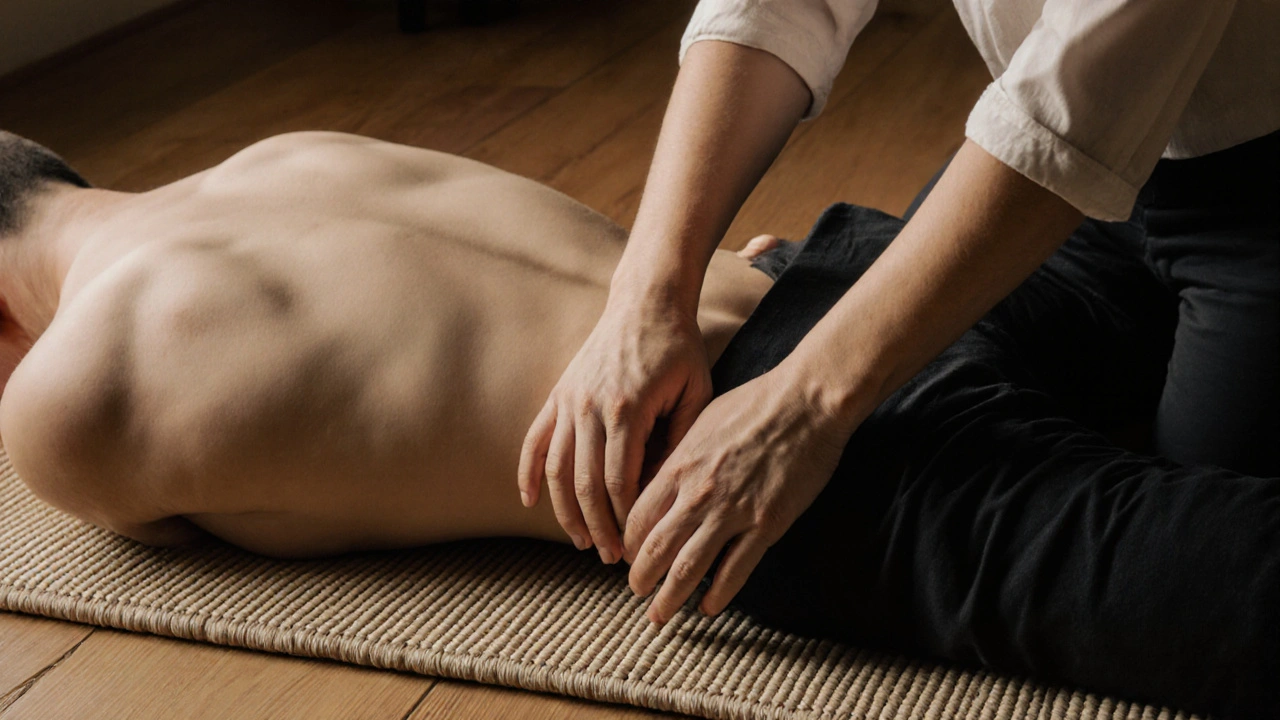
Shiatsu: How Touch Therapy Restores Balance and Relieves Stress
Shiatsu is a traditional Japanese touch therapy that uses pressure on energy pathways to restore balance, reduce stress, and improve overall well-being. Unlike massage, it works with your body's natural rhythm - not just muscles.