
Lomi lomi massage isn’t just another spa treatment. It’s a living tradition from Hawaii that blends rhythmic strokes, prayer, and intention into a single, flowing experience. Unlike Swedish or deep tissue massage, lomi lomi doesn’t focus on fixing tight muscles-it works to release stored emotions, restore balance, and reconnect you with your body’s natural rhythm. If you’ve ever felt drained after a long day, or like something inside you is stuck, lomi lomi might be what you’ve been searching for without knowing it.
Where Lomi Lomi Comes From
Lomi lomi comes from the Native Hawaiian healing tradition called lāʻau lapaʻau, which means “herbal healing.” It was practiced for centuries by kahuna (Hawaiian healers) who saw the body as a vessel for energy, not just bone and muscle. The word itself means “to rub, knead, or massage,” and the double repetition of “lomi” reflects the continuous, wave-like motion used in the technique.
Traditionally, lomi lomi was given after fishing trips, before battles, or during rites of passage. It wasn’t about relaxation-it was about preparation, release, and restoration. The healer would use their hands, forearms, and sometimes even elbows to glide over the body in long, uninterrupted strokes. No pressure points were targeted. No joints were cracked. Instead, the entire body was treated as one connected system.
Today, many modern practitioners have stripped away the spiritual elements to make lomi lomi more marketable. But the heart of it remains: movement, breath, and intention. Without those, it’s just a long, slow massage.
The Core Principles of Lomi Lomi
There are three non-negotiable principles behind every true lomi lomi session:
- Flow - Movements are continuous, like ocean waves. There are no starts or stops. The therapist doesn’t lift their hands off your skin unless they’re repositioning.
- Love - This isn’t metaphorical. Practitioners are taught to channel aloha-Hawaiian for love, compassion, and presence-through their hands. Your energy, their energy, and the space between you all matter.
- Intention - Before the session begins, the therapist often prays or sets a quiet intention. This could be as simple as: “May this body be freed.” The belief is that intention shapes the outcome more than technique.
These aren’t nice-to-haves. They’re the foundation. Skip them, and you’re not doing lomi lomi-you’re doing a slow Swedish massage with coconut oil.
What Happens During a Session
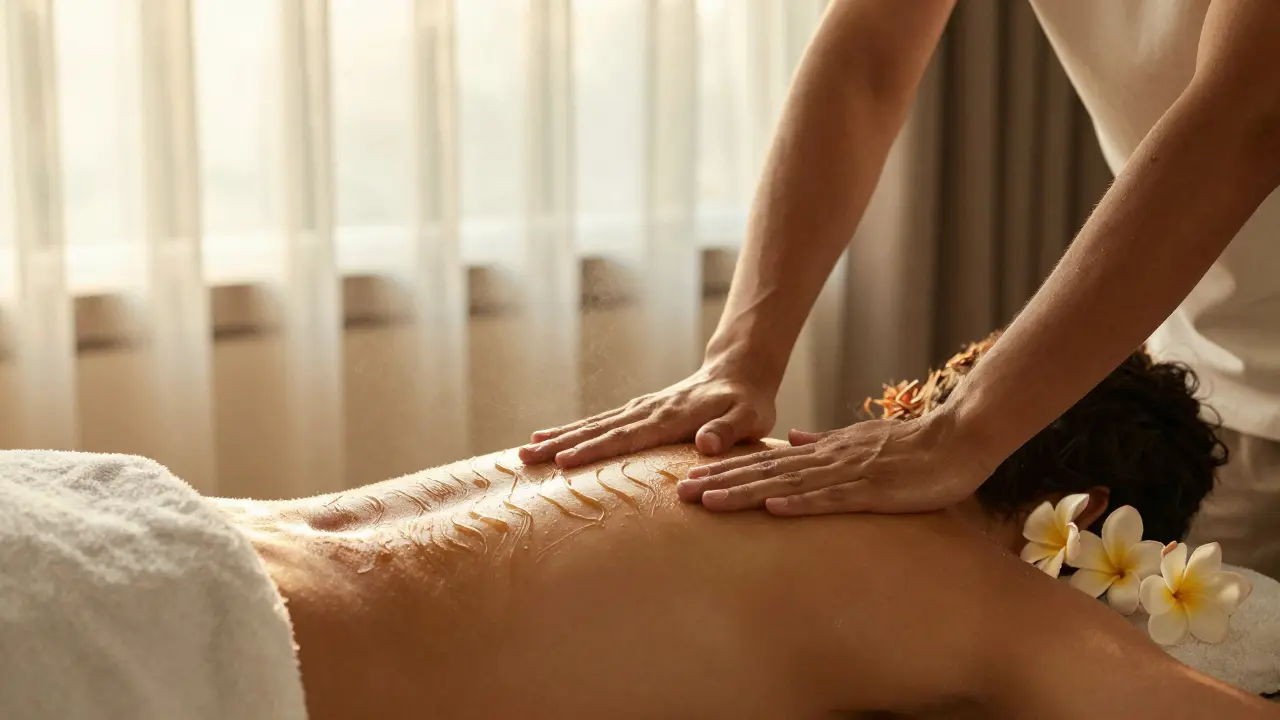
A typical lomi lomi session lasts 90 to 120 minutes. You lie on a massage table, usually unclothed under a sheet. The room is warm, often scented with plumeria or sandalwood. Soft chants or ocean sounds play in the background.
The therapist begins at your feet, using both forearms in wide, sweeping motions. One arm moves down your left leg while the other glides up your right. The rhythm is steady, hypnotic. You don’t feel pressure-you feel movement. Like being rocked in a tide.
At some point, the therapist will pause, rest their hands on your back, and breathe with you. That’s not a mistake. It’s part of the technique. They’re syncing their breath to yours to help your nervous system shift from fight-or-flight to rest-and-digest.
Later, they might use a long wooden stick or a warm stone to deepen the flow. But even then, it’s never aggressive. The goal isn’t to break tension-it’s to dissolve it.
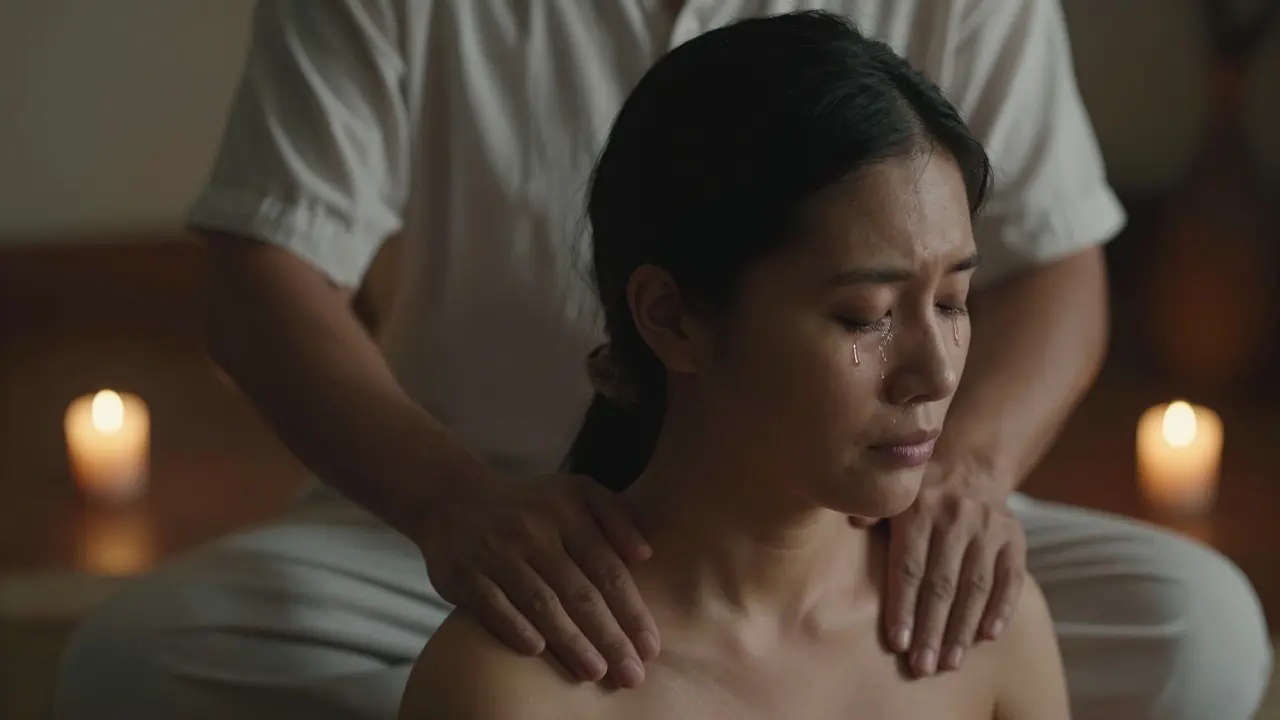
Many people report crying during lomi lomi. Not because it hurts. Because something inside them finally let go. A memory. A grief. A fear they didn’t even know they were holding.
How to Practice Lomi Lomi (Even If You’re Not Hawaiian)
You don’t need to be born in Hawaii to learn lomi lomi. But you do need to shift your mindset. Most people approach massage like a task: “I need to release this knot.” Lomi lomi asks: “What is this body trying to tell me?”
Here’s how to start practicing:
- Begin with breath - Before touching anyone, sit quietly for five minutes. Breathe in through your nose, out through your mouth. Let your shoulders drop. Your hands will follow your breath.
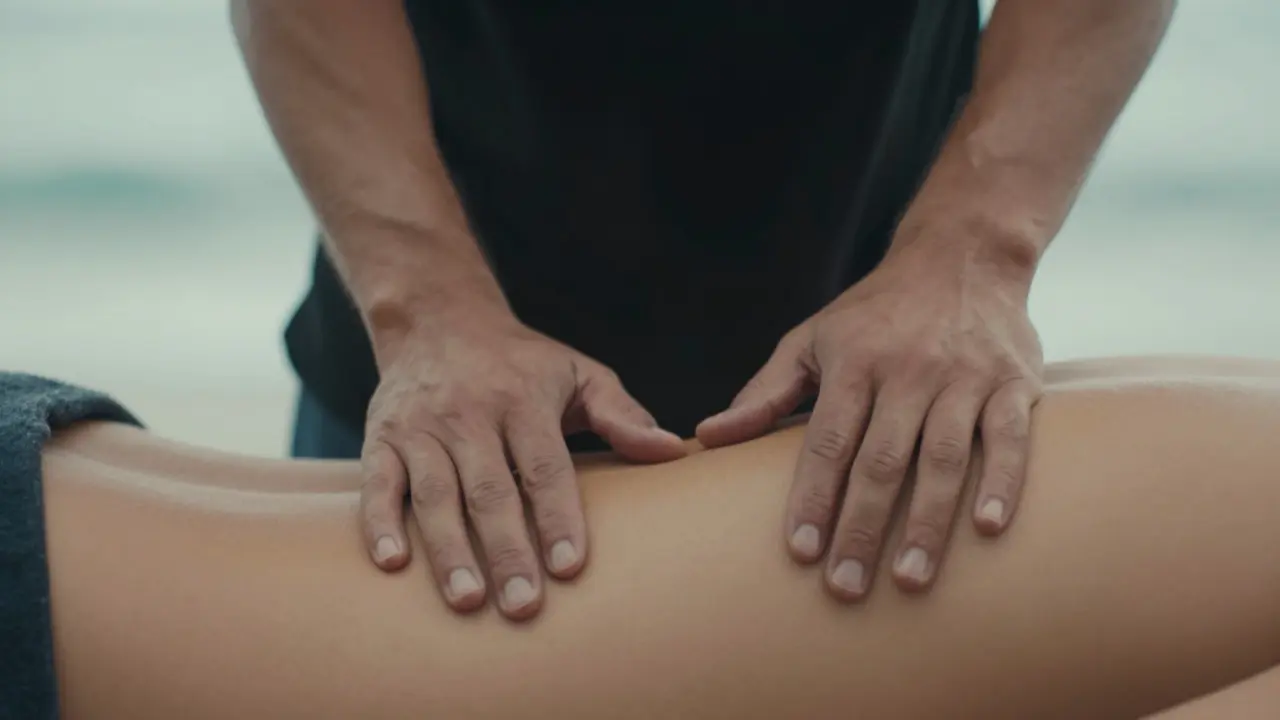
- Use your forearms - Your palms are too delicate. Your forearms are stronger, wider, and better at creating that wave-like motion. Place them gently on the skin and let your body weight move them, not your muscles.
- Move in pairs - One arm on the left side, the other on the right. Never work one side alone. This creates balance in the energy flow.
- Never stop - If you lift your hands, you break the rhythm. If you need to reposition, slide them slowly across the skin instead of lifting.
- Ask for permission - Even if you’re trained, always check in. “Is this pressure okay?” “Do you want more flow?” You’re not fixing someone. You’re walking beside them.
Practice on friends first. Use coconut oil or kukui nut oil-the traditional oils. Don’t rush. A 20-minute session done with presence is worth more than an hour of mechanical rubbing.
What Lomi Lomi Does to Your Body and Mind
Science is catching up to what Hawaiians have known for centuries. Studies on similar bodywork therapies show that rhythmic, full-body touch:
- Reduces cortisol (the stress hormone) by up to 31% within one session
- Increases vagal tone, which helps regulate heart rate and digestion
- Improves sleep quality for people with chronic stress
- Helps release stored trauma by calming the nervous system
But lomi lomi goes deeper. Because it’s not just physical. It’s emotional. People who regularly receive lomi lomi often describe feeling lighter-not just physically, but mentally. Like a weight they didn’t realize they were carrying has been gently lifted.
One woman in Maui, after seven sessions, said: “I didn’t cry over my mom’s death. But during lomi lomi, I cried for the first time in ten years. I didn’t know I was still holding it.”
That’s the magic. It doesn’t force healing. It creates space for it.
Common Mistakes People Make
Even experienced massage therapists mess up lomi lomi. Here’s what goes wrong:
- Using too much pressure - Lomi lomi isn’t deep tissue. You’re not trying to dig out knots. You’re inviting them to melt.
- Stopping and starting - If your strokes are choppy, you’re not doing lomi lomi. Flow is everything.
- Ignoring breath - If you’re holding your breath, so is the person you’re massaging.
- Skipping intention - If you’re just going through motions, the person will feel it. They’ll feel disconnected, not cared for.
- Trying to “fix” someone - Lomi lomi doesn’t fix. It reveals. Your job isn’t to change them. It’s to hold space.
The biggest mistake? Thinking it’s a technique you can master in a weekend course. It’s not. It’s a practice. One you return to, again and again.
Who Should Try Lomi Lomi
Lomi lomi isn’t for everyone-but it’s perfect for:
- People who feel emotionally stuck
- Those with chronic stress or anxiety
- People recovering from trauma or loss
- Anyone who’s tired of massage that feels mechanical
- Practitioners of yoga, meditation, or breathwork who want to deepen their somatic experience
It’s not recommended for people with acute injuries, open wounds, or recent surgeries. If you’re pregnant, wait until after the first trimester and find a therapist trained in prenatal lomi lomi.
Where to Find Authentic Lomi Lomi
Not every “Hawaiian massage” is real lomi lomi. Look for these signs:
- The therapist mentions their lineage or teacher
- They talk about aloha, intention, or breath before starting
- They use coconut or kukui nut oil-not generic almond or mineral oil
- They don’t offer a 60-minute option
- They don’t try to sell you a package
Some schools in Hawaii still teach the tradition: the Maui Lomi Lomi School, Hawaiian Healing Arts in Oahu, and Ke Awa Lani in Kauai. Outside Hawaii, look for practitioners certified by the Hawaiian Lomi Lomi Alliance. Avoid anyone who calls it “Hawaiian relaxation massage” without mentioning the spiritual roots.
Why This Matters Now
In 2026, we’re more connected than ever-and more disconnected from ourselves. We track our steps, our sleep, our heart rate. But we rarely pause to ask: What is my body holding?
Lomi lomi doesn’t give you data. It gives you release. It doesn’t tell you what’s wrong. It helps you feel what’s been buried.
It’s not a luxury. It’s a return to something ancient, simple, and true: that healing doesn’t always come from force. Sometimes, it comes from flow.