
Most people think relaxation means lying on a couch with a glass of wine or scrolling through their phone in bed. But real, deep relaxation? That doesn’t come from distraction. It comes from surrender. And for centuries, people from Istanbul to Marrakech have known the secret: the hammam.
What Exactly Is a Hammam?
A hammam isn’t just a steam room. It’s a full-body ritual that traces back over a thousand years to the Roman baths, refined by Islamic culture, and perfected across North Africa and the Middle East. Think of it as a cleansing journey - not just for your skin, but for your mind.
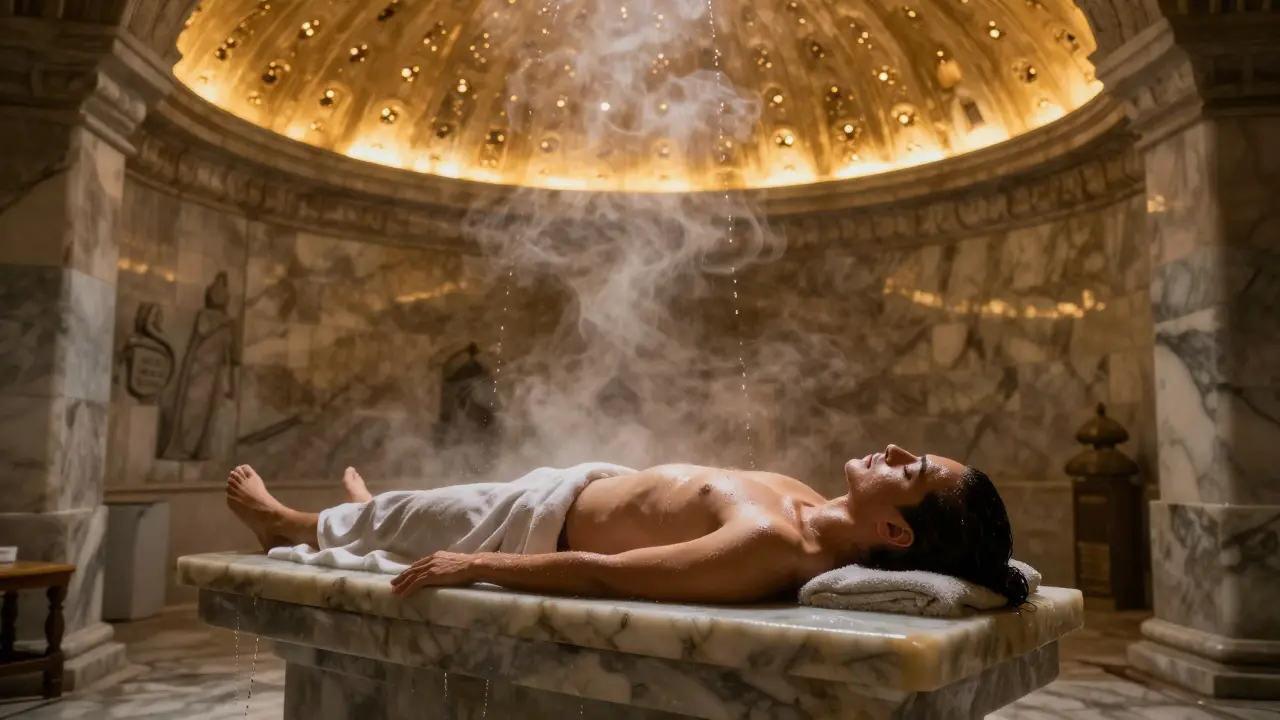
Traditional hammams are built in layers: a cold room, a warm room, and a hot room, each with a specific purpose. The heat builds slowly, coaxing your body into a state of deep release. Steam opens your pores. Warmth loosens your muscles. The rhythm of the experience - sitting, sweating, scrubbing, rinsing - becomes meditative. No phones. No noise. Just your breath and the sound of water dripping.
Unlike a sauna, where dry heat dominates, a hammam uses moist heat. That humidity makes the heat feel gentler, even at temperatures reaching 45°C (113°F). Your skin absorbs moisture instead of drying out. Your lungs take in clean, humid air. Your nervous system starts to quiet down.
Why Your Body Craves This Ritual
Your body is designed to sweat. But modern life - air conditioning, synthetic fabrics, indoor work - suppresses that natural function. When you don’t sweat regularly, toxins build up. Your skin gets dull. Your muscles stay tense. Your stress hormones don’t flush out.
A 2023 study from the University of Ankara found that participants who spent 30 minutes in a traditional hammam showed a 22% drop in cortisol levels - the main stress hormone - within an hour after the session. Their heart rates slowed. Their blood pressure dropped. They reported feeling calmer than after a yoga class or a massage.
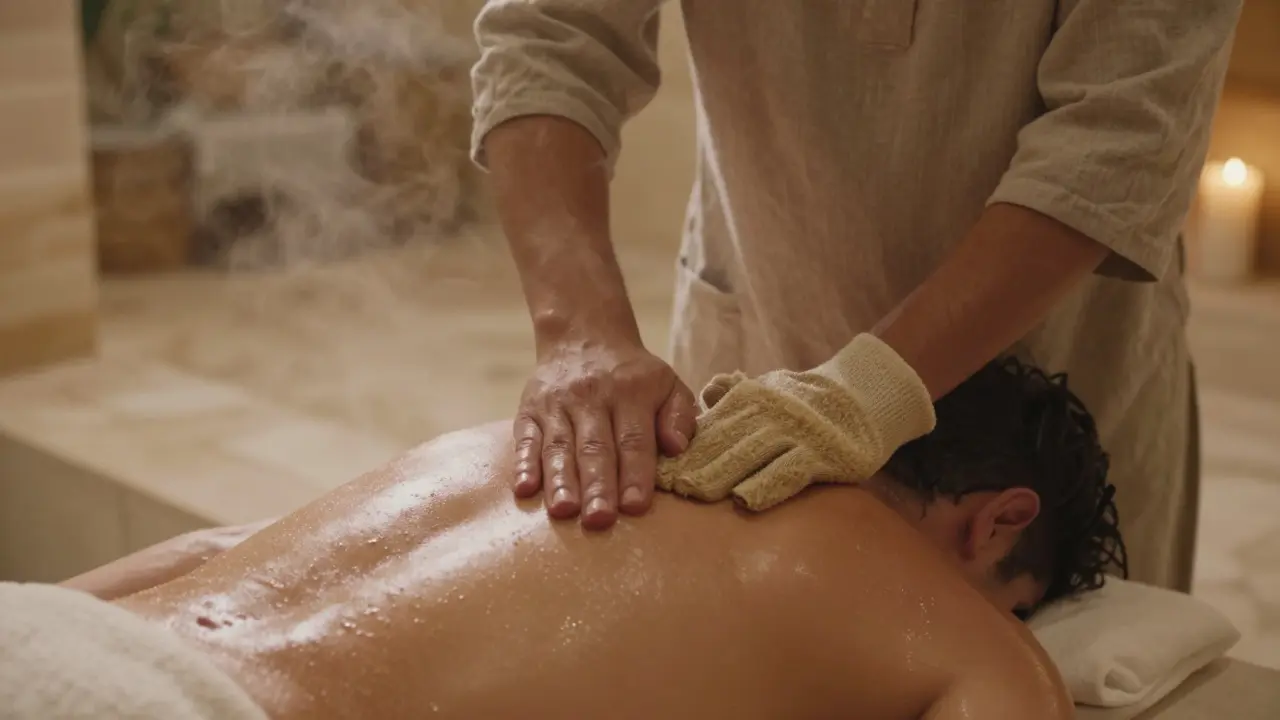
The scrubbing part - done with a coarse kese glove - isn’t just about exfoliation. It’s tactile therapy. The friction stimulates nerve endings in your skin, triggering a release of endorphins. That’s why people often describe the post-hammam feeling as both energized and deeply calm. It’s not a high. It’s a reset.
And the water rinses aren’t just cleaning. Cold water after heat activates your parasympathetic nervous system - the one that says, “It’s safe to relax now.” That’s why you leave feeling lighter, not just cleaner.
The Ritual: Step by Step
There’s no rush in a hammam. The whole experience takes 60 to 90 minutes. Here’s how it unfolds:
- Enter the warm room. Lie on a warm marble slab, called a gobek tas. Let the steam soak into your skin for 10-15 minutes. Breathe slowly. Let your thoughts drift.
- Scrubbing. A therapist - called a tellak - uses a rough glove to scrub your entire body. It’s firm, not painful. Think of it like a deep tissue massage for your skin. You’ll feel every dead cell lift away. Don’t be shy - this is the part most people say changes their skin forever.
- Rinse. Cold water is poured over you in waves. The shock of temperature shifts is invigorating, not jarring. It’s like your body is being reborn.
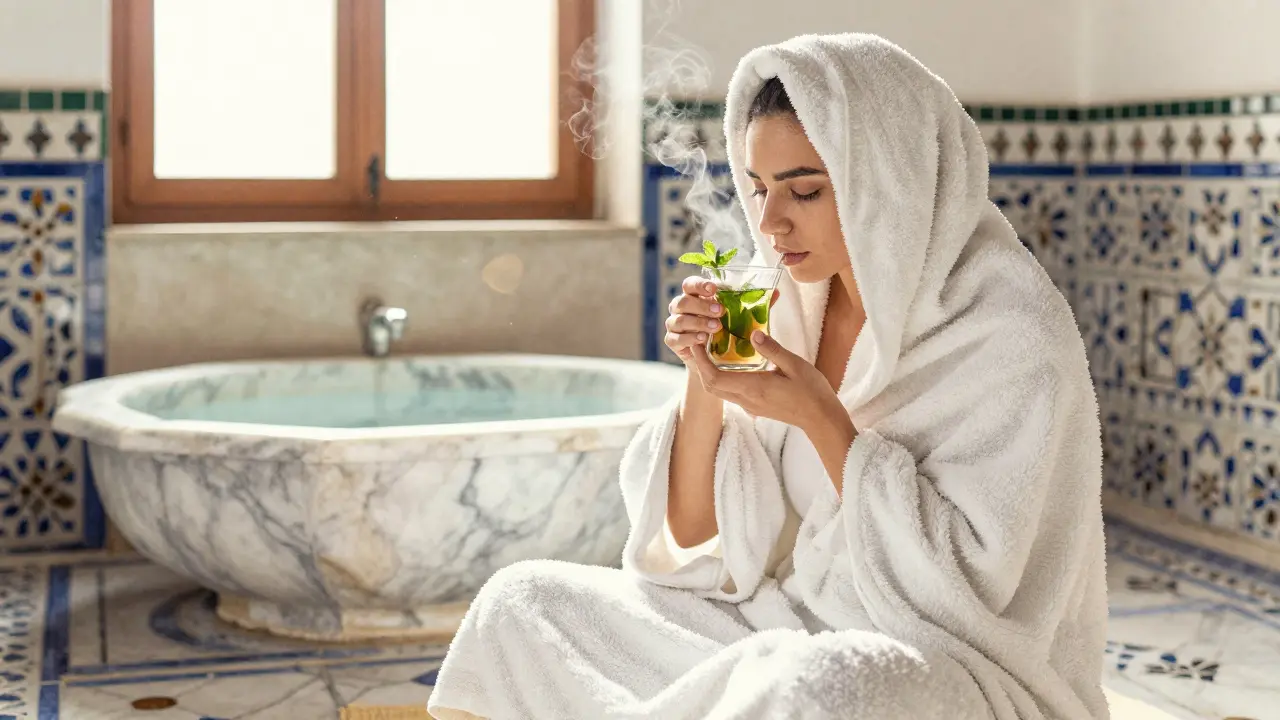
- Rest. You’re wrapped in a warm towel and given mint tea. You lie back again. This time, you’re not just resting - you’re absorbing the calm.
It’s not a spa treatment you book to look good. It’s one you do to feel whole.
What It Does for Your Skin
People come for relaxation. They stay for their skin.
After just one session, most notice their skin feels softer, smoother, and brighter. That’s because the combination of heat, steam, and scrubbing removes layers of dead skin, dirt, and oil that regular showers never touch. The steam also increases circulation to the skin’s surface, bringing nutrients and oxygen where they’re needed most.
People with acne, eczema, or psoriasis often report improvement after regular hammam visits. The heat opens pores and flushes out impurities. The natural soaps used - usually made from olive oil and black soap - are gentle, non-irritating, and deeply hydrating. Unlike chemical exfoliants, the kese glove works mechanically, without triggering inflammation.
One woman in Portland, who’d struggled with chronic dry skin for years, started going to a local hammam once a week. Within six weeks, her dermatologist noticed her skin condition had improved so much she no longer needed prescription creams.
How to Find a Real Hammam Near You
Not every steam room is a hammam. Many spas call their rooms “Turkish baths” but skip the scrub, skip the ritual, skip the soul of it.
Look for these signs:
- Marble floors and walls - not tile or plastic.
- A central dome with small holes letting in light - like a starry sky.
- Black soap and kese gloves used - not loofahs or body scrubs.
- Therapists who guide you through the process, not just hand you a towel.
- No loud music. No flashy branding. Just quiet, warm air.
In the U.S., cities like New York, Chicago, Los Angeles, and Portland have authentic hammams. Some are run by families who’ve brought the tradition from Turkey or Morocco. Others are modern interpretations that honor the original structure. Ask if they use traditional techniques - if they say yes, follow up with: “Do you use the kese glove?” If they don’t know what that is, keep looking.
Who Should Avoid It
The hammam is gentle - but not for everyone.
Avoid it if you:
- Have uncontrolled high blood pressure
- Are pregnant (especially in the first trimester)
- Have open wounds or recent burns
- Are recovering from surgery
- Feel dizzy or lightheaded in hot environments
If you’re unsure, talk to your doctor. But for most people - especially those carrying stress in their shoulders, skin that feels tired, or minds that never shut off - the hammam is one of the safest, most natural tools for restoration.
Make It a Habit
One session feels amazing. Two sessions a month changes your life.
People who make hammam visits a regular part of their routine report better sleep, fewer headaches, and a quieter inner voice. It’s not magic. It’s biology. Your body remembers how to relax when you give it the right conditions.
Try it once a month. Set a reminder. Treat it like a doctor’s appointment - because it is. You’re not just pampering yourself. You’re repairing your nervous system, one steam-filled hour at a time.
What Happens When You Stop
After a few weeks without a hammam, you might notice your skin feels rougher. Your shoulders stay tight. Your sleep gets lighter. Your mind races more at night.
That’s not coincidence. It’s your body telling you it misses the rhythm. The steam. The scrub. The silence.
The hammam doesn’t ask you to change your life. It just asks you to pause. And in that pause, everything else begins to heal.