
The Quick Win: What You'll Get from Gua Sha
- Reduced puffiness around the cheeks and eyes.
- A more defined jawline and cheekbones.
- Relief from sinus pressure and tension headaches.
- Increased blood flow for a natural, healthy radiance.
- Deeper absorption of your favorite facial oils.
How It Actually Works on Your Skin
To understand why this works, we have to look at the Lymphatic System. Unlike your blood, lymph fluid doesn't have a heart to pump it around; it relies on movement and pressure. When fluid builds up, your face looks bloated. By using a tool to gently push this fluid toward the lymph nodes, you're essentially "draining" the puffiness. At the same time, the pressure helps release fascia-the connective tissue that can get tight and pull your features down. When you use a tool to smooth out these tensions, you're encouraging gua sha to act like a natural manual lift. It's similar to how a massage therapist works out a knot in your shoulder, but scaled down for the delicate skin of your face.
Choosing Your Tool: Stone Matters
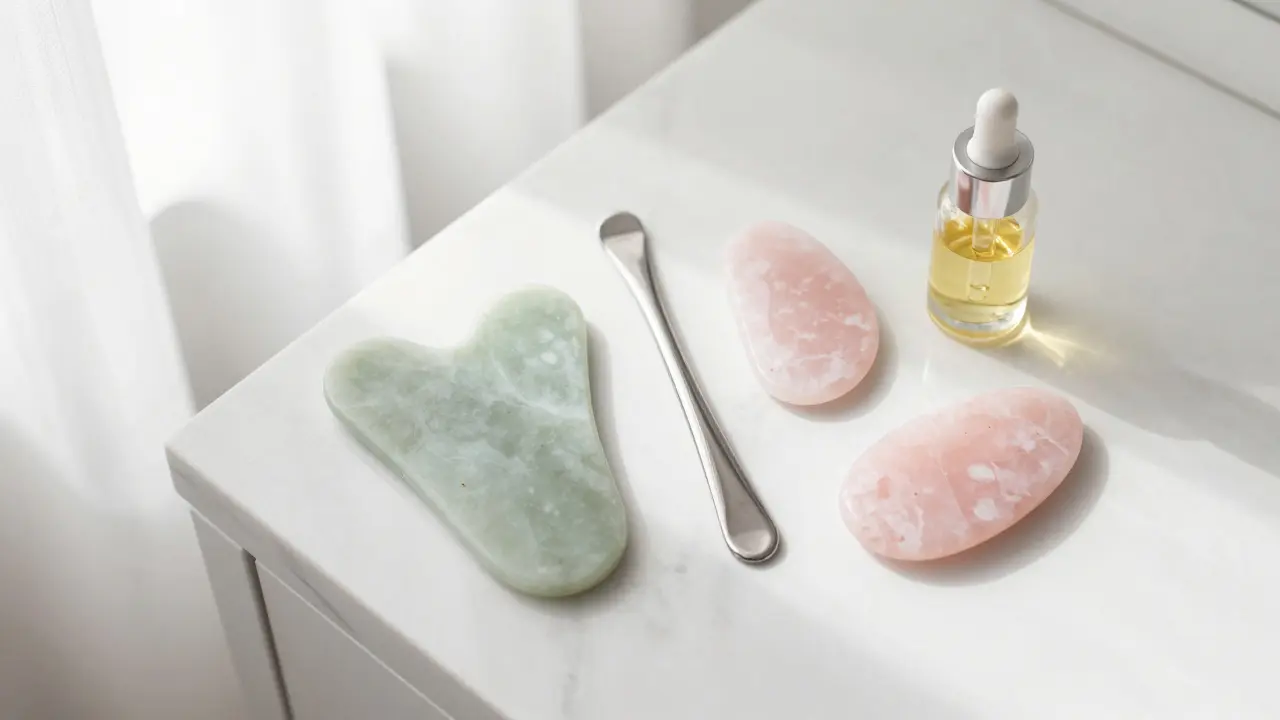
You'll see a lot of different materials in stores, and while they all work, they offer different vibes. The most popular choices are Jade and Rose Quartz. Jade is naturally cooler and is often used for its calming properties, making it great for reducing inflammation. Rose Quartz stays cool longer and is generally softer, which is a win if you have very sensitive skin. Some people prefer stainless steel because it's non-porous and stays icy cold, which is a dream for morning puffiness. The shape is actually more important than the stone. A heart-shaped tool is perfect for the jawline, while a flat-edged tool works better for the forehead and neck.
| Material | Best For | Temperature | Durability |
|---|---|---|---|
| Jade | Inflammation & Balancing | Cool | High |
| Rose Quartz | Sensitive Skin & Calming | Cold | Medium |
| Stainless Steel | Maximum Cooling & Hygiene | Very Cold | Very High |
| Amethyst | Detoxing & Stress Relief | Neutral | Medium |
Step-by-Step Routine for a Sculpted Face
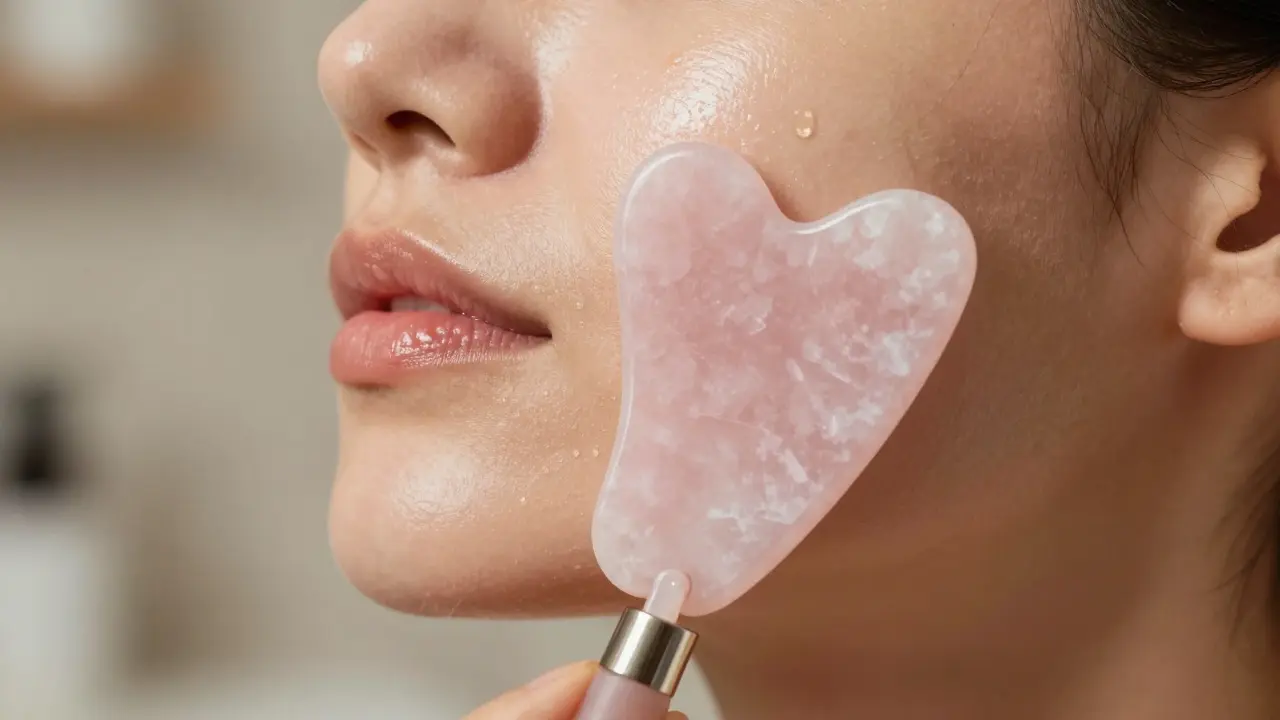
If you just start scrubbing your dry face, you're going to cause irritation or even breakouts. The gold rule is: never use a tool on dry skin. You need a "slip" to allow the stone to glide without pulling the skin.
- Prep the Canvas: Apply a generous amount of facial oil. A lightweight Squalane Oil or Jojoba oil works well because they don't clog pores.
- Open the Gates: Start with your neck. Use the flat side of the tool and stroke downward from the ear toward the collarbone. This "opens" the lymphatic channels so the fluid from your face has somewhere to go.
- Define the Jaw: Use the curved notch of the tool. Hug your jawline and glide from the chin toward the earlobe. Use light pressure-you aren't trying to carve a statue; you're moving fluid.
- Lift the Cheeks: Use the long edge to move from the side of the nose outward toward the temple. This helps lift the nasolabial folds (the lines from the nose to the mouth).
- Smooth the Brow: Use the small end to glide from the center of the forehead upward and outward. This is a lifesaver if you hold tension in your brow.
- Drain the Eyes: Very gently, glide from the inner corner of the eye outward to the temple to clear out morning bags.
Common Mistakes That Ruin the Glow
The biggest mistake is holding the tool at a 90-degree angle. If you hold the stone perpendicular to your skin, you're just pushing the skin around. Instead, keep the tool at a 15-degree angle-almost flat against your face. This ensures you're moving the fluid underneath the skin rather than just dragging the surface.
Another common error is applying too much pressure. If your skin turns bright red or you feel pain, you're going too hard. Facial Gua Sha is about lymphatic drainage, not deep tissue massage. Think of it as a gentle nudge, not a shove. Also, don't forget to wiggle the tool at the end of each stroke-this helps the lymph fluid actually enter the nodes.
Integrating Other Tools: Gua Sha vs. Jade Roller
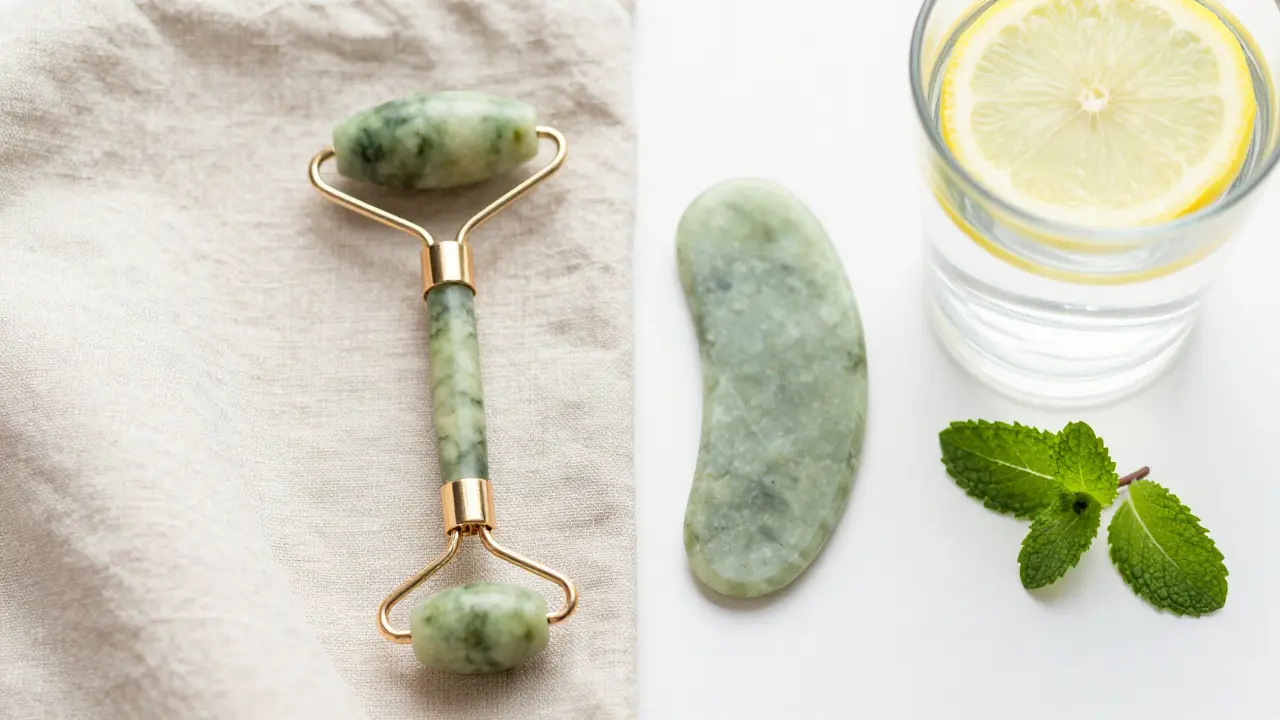
Many people wonder if they need both a Jade Roller and a Gua Sha tool. They serve different purposes. A roller is like a gentle steamroller; it's great for a quick cool-down or pushing a serum into the skin. It's a passive tool. Gua Sha, however, is an active tool. It allows you to target specific muscles and move fluid with much more precision. If you want a "lift," the Gua Sha tool is the one to reach for.
The Lifestyle Connection
While the tool does the physical work, your habits dictate how long the results last. If you eat a high-sodium dinner and drink very little water, you'll wake up with more puffiness than the tool can handle. Drinking plenty of water helps the lymph system flow more freely. Combining this ritual with a Facial Massage once a week can keep the muscles relaxed and prevent the fine lines caused by chronic tension.
How often should I do Gua Sha?
For most people, 3 to 5 times a week is plenty. If you have very sensitive skin or active acne, you might want to stick to twice a week. Overdoing it can actually irritate the skin. Consistency is more important than intensity; a 5-minute daily session is better than a 60-minute session once a month.
Can I use Gua Sha if I have acne?
You should avoid using the tool directly over active, inflamed breakouts. Doing so can spread bacteria or cause further inflammation. However, you can use it on the areas around the acne to encourage lymphatic drainage, which may actually help the skin heal faster by reducing overall congestion.
Does it actually remove wrinkles?
It doesn't "erase" deep wrinkles like a surgical procedure would, but it softens the appearance of fine lines by relaxing the muscles that cause them. By increasing blood flow, it also boosts collagen production over time, which keeps the skin looking firmer and more plump.
How do I clean my Gua Sha tool?
Since you're using it with oils, a buildup of residue is inevitable. Wash your tool after every use with warm water and a mild, fragrance-free soap. If you're using a stone like Jade or Rose Quartz, avoid using harsh chemicals that could degrade the mineral. Pat it dry with a clean towel and store it in a cool place.
Will it cause bruising?
In traditional body Gua Sha, bruising (called sha) is the goal. In facial Gua Sha, bruising is a sign you're using too much pressure. Your face is much thinner than your back or legs. If you see redness, that's normal-it's just blood flowing to the surface. But if you see purple marks, lighten your touch immediately.