
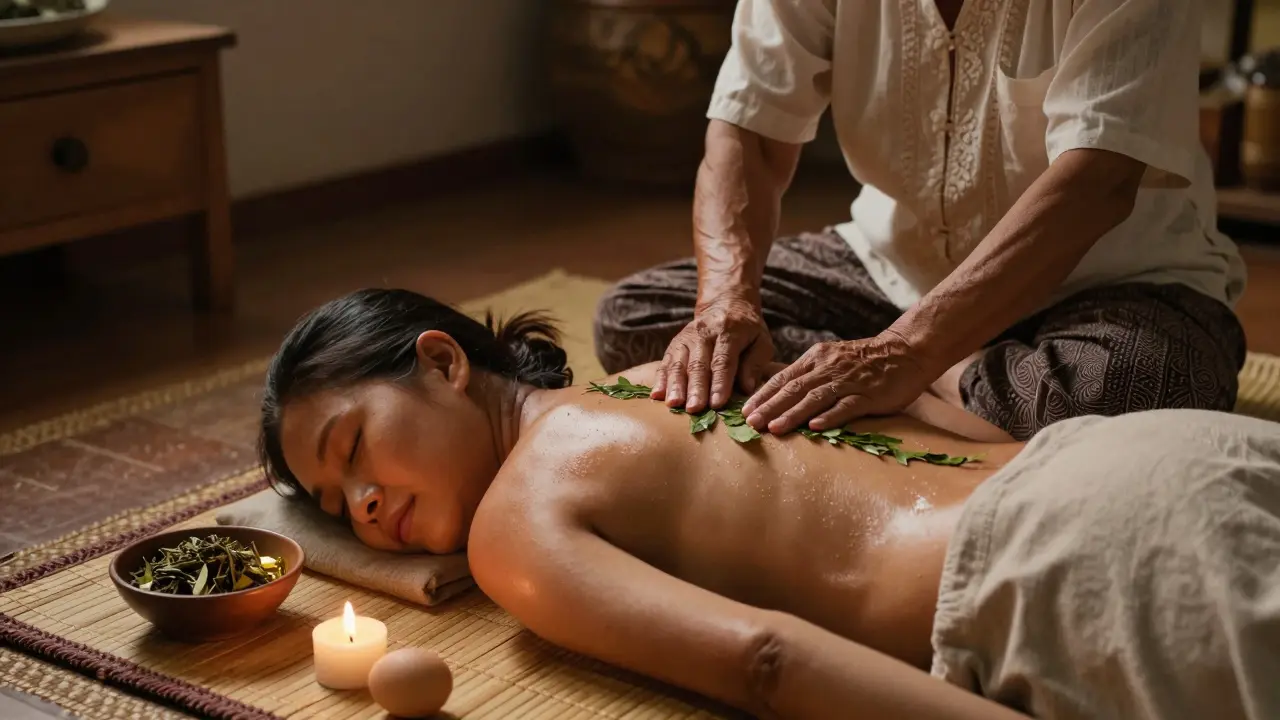
Imagine a healing touch passed down for centuries-not through textbooks or certifications, but through the hands of mothers, grandmothers, and village healers who learned by doing. That’s hilot in its purest form. It’s not just a massage. It’s a full-body ritual rooted in the Philippines’ deep connection to nature, spirit, and the rhythms of the human body.
What Exactly Is Hilot?
Hilot is a traditional Filipino healing practice that combines massage, herbal remedies, bone-setting, and spiritual intention. The word itself comes from the Tagalog verb hilots, meaning "to rub" or "to massage." But calling it just a massage is like calling a symphony a noise. Hilot treats the whole person: body, energy, and soul.
Practitioners, called manghihilot, don’t just work on muscles. They feel for imbalances-areas where energy is stuck, where bones are misaligned, where cold or heat has settled in the wrong place. They use their thumbs, palms, knuckles, and even their forearms to apply pressure, glide, and knead. The goal isn’t relaxation alone; it’s restoration.
Unlike Western massage, which often focuses on tension release, hilot looks for root causes. A headache might be traced to a misaligned neck vertebra. Back pain could stem from a weak spleen or trapped wind. The manghihilot listens with their hands, not just their ears.
How Hilot Works: The Four Pillars
Real hilot follows four core principles, all working together:
- Massage (Paggalaw) - Deep, rhythmic strokes that move blood, release toxins, and calm the nervous system. The pressure varies-from feather-light to firm enough to make you gasp.
- Herbal Applications (Pampalasa) - Leaves like lagundi, sambong, or alpinia galanga are crushed, warmed, and rubbed into the skin. These aren’t just aromatherapy-they’re bioactive. Sambong, for example, contains compounds that reduce swelling.
- Bone and Joint Realignment (Pagsasawi) - This is where hilot gets its reputation for fixing what doctors can’t. Manghihilot use gentle but precise movements to nudge displaced joints, especially in the spine, shoulders, and pelvis. It’s not cracking. It’s guiding.
- Spiritual Cleansing (Pagpapawi) - Energy blockages are believed to come from negative emotions, ancestral spirits, or environmental forces. A manghihilot may whisper prayers, light candles, or use eggs to absorb "bad energy." This part is often quiet, but it’s just as vital as the physical work.
One woman I met in Cebu had chronic lower back pain for eight years. Doctors said it was degenerative disc disease. She tried physiotherapy, injections, even surgery consultations. Nothing helped. Then she went to a manghihilot in her barangay. After three sessions-massage with warm ginger leaves, a spinal adjustment, and a ritual using a raw egg rolled over her body-she walked without pain. She didn’t get an MRI. She didn’t need one.
The Tools of the Trade
Hilot doesn’t need fancy equipment. The tools are simple, natural, and often found in the backyard:
- Coconut oil or olive oil - Used as a lubricant and carrier for herbal extracts.
- Heated stones or metal - Sometimes a heated metal spoon or a warm stone is used to apply focused heat to tight spots.
- Herbs - Fresh leaves, roots, and barks are crushed with a mortar and pestle. Common ones include lagundi (for cough and inflammation), guyabano (for pain relief), and alagaw (for digestion).
- Eggs - A raw egg is rolled over the body to "draw out" negative energy. It’s then cracked open and examined-sometimes the yolk is cloudy, sometimes it has strings. These are interpreted as signs of what was removed.
- Coconut shells - Used for scraping or tapping along meridians to stimulate circulation.
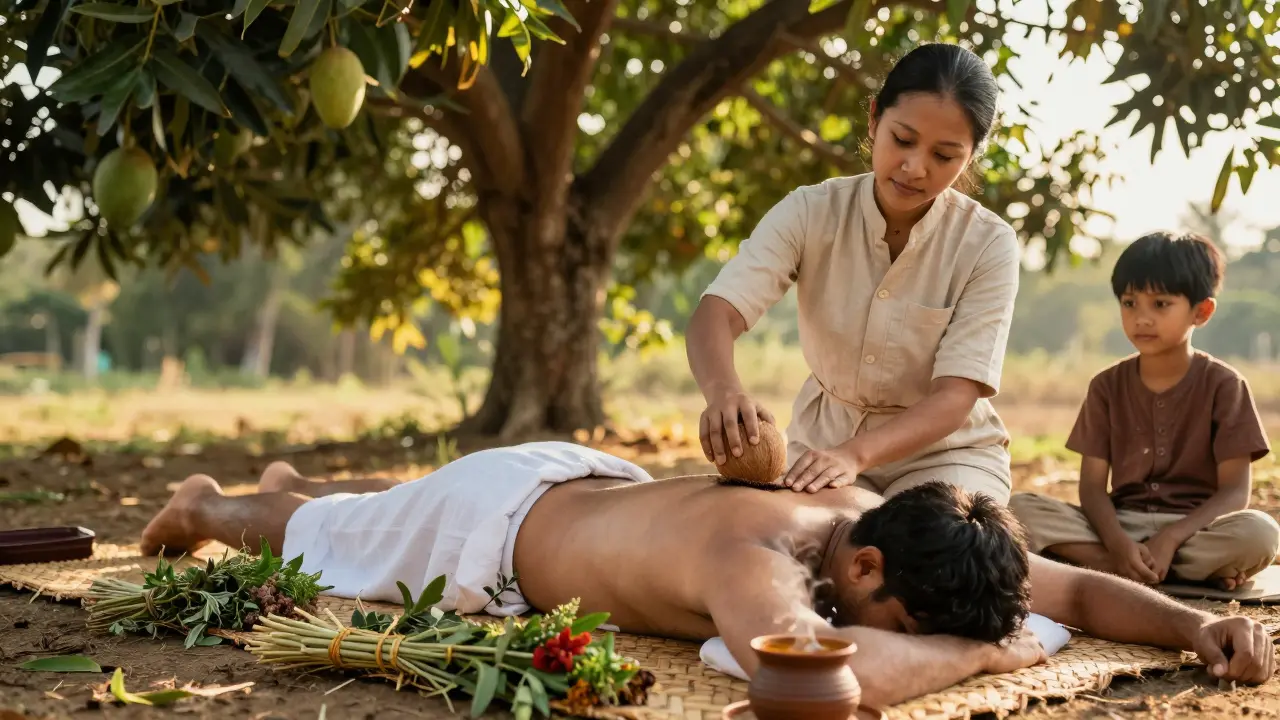
There’s no sterile room. No white coats. Often, the session happens on a mat on the floor, under a mango tree, or beside a kerosene lamp. The environment is part of the healing.
Hilot vs. Other Bodywork Therapies
People often compare hilot to Thai massage, Shiatsu, or Swedish massage. But the differences matter.
| Aspect | Hilot | Thai Massage | Shiatsu | Swedish Massage |
|---|---|---|---|---|
| Origin | Philippines (pre-colonial) | Thailand (influenced by Ayurveda) | Japan (based on Traditional Chinese Medicine) | Sweden (18th century) |
| Focus | Whole person: body, energy, spirit | Energy lines and flexibility | Meridians and pressure points | Relaxation and muscle tension |
| Herbs Used | Yes, central to treatment | Rarely | No | No |
| Bone Adjustment | Yes, core skill | Minimal | No | No |
| Spiritual Component | Often included | Sometimes | Rarely | Never |
| Tools | Eggs, stones, herbs, shells | Hands, feet, elbows | Thumbs, palms | Hands, lotion |
Hilot stands apart because it doesn’t separate physical from spiritual. It doesn’t treat pain as an isolated symptom. It treats the person who carries the pain.
Who Can Benefit From Hilot?
Hilot isn’t just for the elderly or those with chronic pain. It’s used for:
- New mothers recovering from childbirth (to help the uterus return to position and reduce swelling)
- Children with fever or digestive issues (gentle abdominal massage with warm ginger)
- Workers with repetitive strain injuries (truck drivers, farmers, fisherfolk)
- People with anxiety or sleep problems (the rhythmic motion calms the nervous system)
- Those recovering from accidents or falls (bone realignment without surgery)
In rural Philippines, hilot is often the first-and sometimes the only-healthcare people access. A 2021 study by the Philippine Institute of Traditional and Alternative Health Care found that over 68% of households in Visayas and Mindanao used hilot at least once a year for common ailments.
How to Find a Genuine Manghihilot
Not everyone who says they do hilot actually knows how. Look for these signs:
- They don’t advertise on Instagram with neon lights and spa music. Real manghihilot are often quiet, humble, and work out of their homes.
- They use natural oils and herbs you can name and see.
- They ask about your birth, your dreams, your stress-not just your pain.
- They don’t promise miracles. They say, "Let’s see how your body responds."
- They may refuse money at first. In traditional settings, offerings are food, rice, or a favor-not cash.
If you’re visiting the Philippines, ask locals for recommendations. Don’t search for "hilot spa" in Manila. Look for community healers in Batangas, Bohol, or Palawan. Ask: "Saan po ang tunay na manghihilot?" (Where is the real healer?)
What to Expect in Your First Session
Your first hilot session might feel strange if you’ve never experienced anything like it. Here’s what usually happens:
- You lie on a mat, fully clothed in loose, natural fabric.
- The manghihilot begins by placing their hands on your body-no touching yet. They’re sensing your energy field.
- They ask questions: "When did this start? Did you fall? Were you upset?"
- They apply pressure, often in slow circles or long strokes. It might hurt at first-then melt into relief.
- Herbs are warmed and pressed into your skin. You’ll smell earth, spice, and smoke.
- If needed, they’ll gently adjust your spine or shoulder. You might hear a soft pop. No pain.
- They may roll a raw egg over your body. Don’t be alarmed. It’s not creepy-it’s calming.
- At the end, they might give you a tea or a poultice to take home.
Afterward, you might feel tired, emotional, or oddly light. Some people cry. Others sleep for hours. That’s normal. Your body is releasing what it’s held onto.
Why Hilot Matters Today
In a world of pills, scans, and specialists, hilot reminds us that healing doesn’t always need technology. It needs presence. It needs touch. It needs someone who sees you as more than a diagnosis.
It’s also a living archive of indigenous knowledge. As younger Filipinos move to cities and forget their roots, hilot risks fading. But it’s not dying-it’s being rediscovered. In Brisbane, Sydney, and even Toronto, Filipinos are teaching hilot to non-Filipinos, not as a trend, but as a sacred practice.
Hilot isn’t about being "alternative." It’s about being ancient. And sometimes, the oldest ways are the most true.
Is hilot safe for pregnant women?
Yes, when done by a trained manghihilot. Many Filipino mothers receive hilot during pregnancy to relieve back pain, reduce swelling, and prepare the pelvis for birth. The techniques are gentle and avoid deep pressure on the abdomen. Always inform the practitioner you’re pregnant-they’ll adjust the approach.
Can hilot cure serious illnesses like cancer?
No. Hilot is not a cure for cancer, diabetes, or other life-threatening diseases. It can help manage symptoms like pain, fatigue, or stress during treatment, but it should never replace medical care. Many Filipinos use hilot alongside chemotherapy or surgery-not instead of it.
Do I need to believe in spirits for hilot to work?
No. While spiritual elements are part of traditional hilot, many modern practitioners focus on the physical and herbal aspects. The egg ritual or prayers are optional. What matters is the touch, the pressure, the herbs, and the intention behind them. If you’re skeptical, just focus on how your body feels.
How long does a hilot session last?
A typical session lasts between 60 and 90 minutes. Some people come for 30-minute spot treatments for neck or shoulder pain. For full-body healing, especially for chronic issues, longer sessions are recommended. The manghihilot will guide you based on your needs.
Is hilot covered by insurance?
In the Philippines, some private health plans now include hilot under complementary therapies. Outside the Philippines, it’s rarely covered. Most people pay out of pocket-usually between $15 and $40 USD per session, depending on location and experience.
Can I learn hilot myself?
You can learn the basics-like massage techniques and herbal applications-from books or workshops. But true mastery comes from years of apprenticeship under a manghihilot. The intuition, the sensing, the timing-it’s not taught in manuals. If you’re serious, find a teacher in the Philippines or a Filipino community abroad who’s willing to guide you.
Next Steps: Try It
If you’ve ever felt that something deeper than muscle tension is holding you back-hilot might be the key. You don’t need to travel to the Philippines to try it. Look for Filipino healers in your city. Ask at local Filipino markets, churches, or cultural centers. Say you want to experience a traditional hilot-not a spa version.
Go with an open mind. Let your body lead. And if you feel something shift-not just in your muscles, but in your breath, your mood, your silence-you’ll understand why hilot has lasted a thousand years.