
Chair Massage Suitability Checker
Answer a few simple questions to see if chair massage is right for you. This tool is based on information from the article "Chair Massage: A Comprehensive Guide for the Curious" to help you make an informed decision about your wellness.
Ever sat at your desk, shoulders tight as a drum, neck aching from staring at a screen all day, and wished someone could just reach in and untangle the knots? That’s where chair massage comes in. It’s not fancy. It doesn’t need a room with candles and lavender oil. You don’t even need to take off your clothes. All it takes is a sturdy chair, a trained hand, and about 10 to 15 minutes. And yet, it’s one of the most effective ways to reset your body during a busy day.
What Exactly Is a Chair Massage?
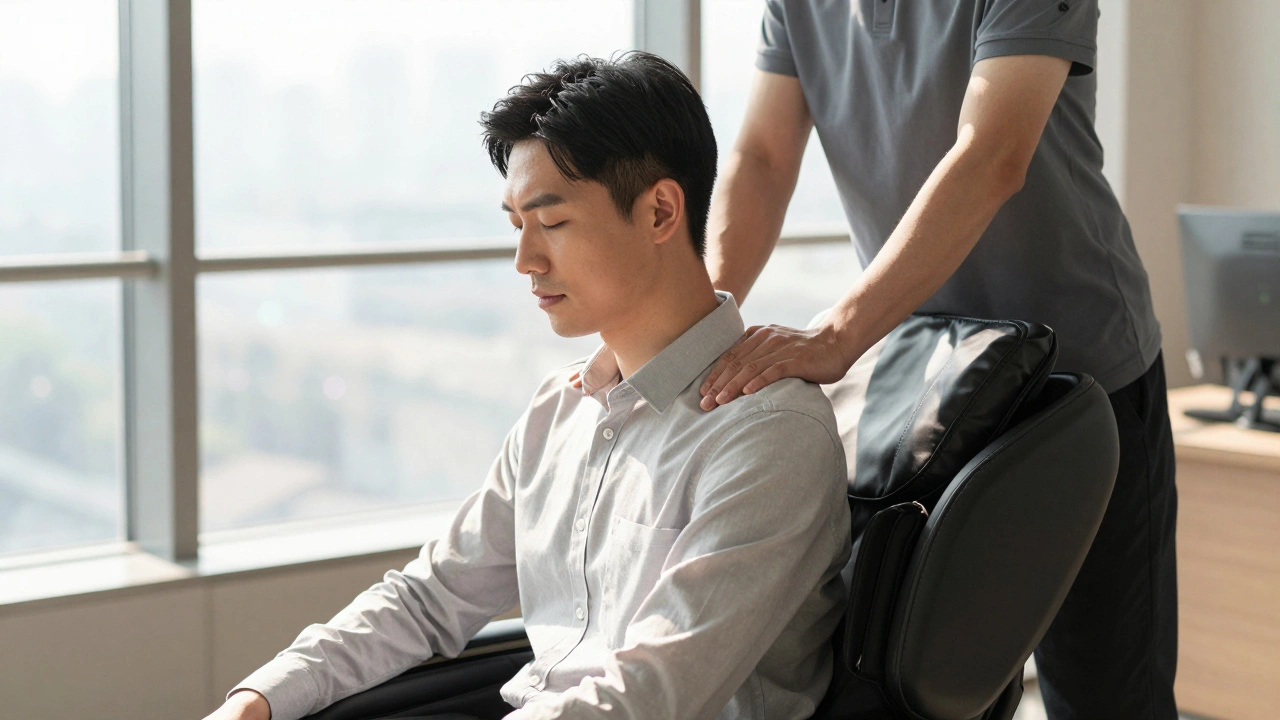
A chair massage is a type of massage performed while you sit in a specially designed chair-usually portable, with a headrest and arm supports. The therapist works through your clothes, focusing on your back, neck, shoulders, arms, and sometimes scalp or hands. No oils. No table. No undressing. Just pressure, strokes, and stretches aimed at releasing tension in the upper body.
This isn’t a deep tissue session or a full-body Swedish massage. It’s targeted. Think of it like a quick tune-up for your muscles after hours of sitting, typing, or staring at a monitor. The technique uses compression, kneading, and friction, often based on Shiatsu and Swedish massage principles. Therapists apply pressure with their thumbs, palms, and elbows, adjusting intensity based on your feedback.
It’s not new. Chair massage started gaining popularity in the 1980s in corporate settings in the U.S., thanks to therapists like David Palmer who brought it into workplaces. Today, you’ll find it at airports, trade shows, health fairs, and even inside office buildings with wellness programs.
Why It Works: The Science Behind the Relief
Here’s the thing: when you sit for long periods, your upper trapezius, levator scapulae, and rhomboid muscles get stuck in a contracted state. Your head leans forward, your shoulders round, and your breathing gets shallow. This isn’t just discomfort-it’s a physiological stress response.
Studies from the Journal of Clinical Psychology show that just 10 minutes of chair massage can lower cortisol levels by up to 31%. Cortisol is your body’s main stress hormone. Lower it, and you feel calmer, clearer, and less tense. Another study from the International Journal of Neuroscience found that office workers who received regular chair massages reported 28% less neck and shoulder pain after four weeks.
It’s not just about muscles. The pressure stimulates the parasympathetic nervous system-the part of your body that says, “It’s safe to relax.” That triggers a drop in heart rate and blood pressure. Your digestion improves. Your mind stops racing. You get a moment of quiet in a noisy day.
Where You’ll Find It (And How to Get One)
Chair massage isn’t locked away in spas. It’s everywhere if you know where to look.
- Corporate offices: Many companies now offer weekly or monthly chair massage sessions as part of employee wellness programs. Ask HR.
- Airports: Major hubs like Heathrow, JFK, and LAX have massage kiosks with chair massage options. Prices range from $10 to $25 for 10-15 minutes.
- Trade shows and conferences: If you’re attending an event, look for wellness booths. Many sponsors offer free chair massages to draw crowds.
- Home services: Some licensed therapists offer mobile chair massage at your home or office. You can book them through platforms like Thumbtack or local wellness directories.
- Self-massage tools: If you can’t find a therapist, handheld massagers or even a tennis ball against a wall can mimic some of the pressure points.
You don’t need a prescription. No insurance covers it-but many employers do, as part of wellness benefits. Some health savings accounts (HSAs) allow you to use funds for massage therapy if it’s prescribed for chronic pain.
What Happens During a Session?
Here’s what to expect if you’ve never tried it:
- You sit in the chair, fully clothed. Most people wear loose shirts or sweaters-nothing tight.
- The therapist adjusts the chair so your head rests comfortably and your arms are supported.
- They start at your shoulders, using firm but gentle pressure to work out knots. You’ll feel a deep, rhythmic squeeze.
- They move to your neck, applying circular motions along the base of your skull and sides of your neck.
- Then your upper back-between your shoulder blades-gets focused attention. This is where most people hold tension.
- Some therapists include gentle stretches of your arms and wrists, especially if you type all day.
- Finally, they might massage your scalp or hands. That part feels like a secret bonus.
The whole thing lasts 10 to 20 minutes. You don’t fall asleep (though some do). You might feel a little lightheaded afterward-normal. Drink water. Stand up slowly. Your body’s adjusting.

Who Should Avoid It?
Chair massage is safe for most people. But there are exceptions.
- Recent injuries: If you’ve had a neck or back injury in the last 6 weeks, skip it until cleared by a doctor.
- Bone conditions: Osteoporosis, spinal fractures, or severe arthritis require caution. Light pressure only.
- Open wounds or rashes: Don’t get massaged over broken skin.
- Pregnancy: It’s generally safe after the first trimester, but only with a therapist trained in prenatal massage.
- Blood clots or cancer: If you’re undergoing chemotherapy or have a history of deep vein thrombosis, talk to your oncologist first.
If you’re unsure, ask the therapist. A good one will ask you about your health before starting. Never feel pressured to go through with it if something feels off.
Chair Massage vs. Other Types
It’s easy to confuse chair massage with other forms. Here’s how it stacks up:
| Feature | Chair Massage | Table Massage | On-Site Massage |
|---|---|---|---|
| Duration | 10-20 minutes | 30-90 minutes | 10-20 minutes |
| Location | Chair, any setting | Massage table, private room | Chair or table, on-site |
| Clothing | Full clothes | Undressed (draped) | Full clothes |
| Focus Area | Upper body only | Full body | Upper body |
| Cost (average) | $10-$25 | $60-$120 | $15-$30 |
| Best For | Quick stress relief, office workers | Deep relaxation, chronic pain | Events, workplaces |
Chair massage isn’t meant to replace full-body sessions. It’s a tool for daily maintenance. Like brushing your teeth-it doesn’t fix cavities, but it prevents them.
Can You Do It Yourself?
You don’t always need a professional. Simple self-massage techniques can help between sessions.
- Neck release: Tilt your head to one side, gently pull with your hand, hold for 20 seconds. Repeat on the other side.
- Shoulder squeeze: Use your opposite hand to pinch and roll the muscle between your neck and shoulder. Move slowly.
- Upper back roll: Place a tennis ball between your back and a wall. Lean into it and roll slowly up and down.
- Hand massage: Squeeze a stress ball or roll a golf ball under your palm.
These won’t replace a therapist’s skill-but they’re better than nothing. Do them for 2 minutes every hour if you’re glued to your desk.

How Often Should You Get One?
There’s no hard rule. But here’s what works for most people:
- For desk workers: Once a week helps prevent chronic tension. Twice a week if you’re under high stress.
- For occasional relief: Once a month keeps you from hitting a breaking point.
- For event or travel: One session before a long flight or big presentation can make a noticeable difference.
Think of it like hydration. You don’t wait until you’re parched to drink water. Same with your muscles.
What to Look for in a Therapist
Not everyone who calls themselves a massage therapist is trained for chair massage. Look for:
- License or certification in massage therapy (NCTMB, NCBTMB, or state-licensed)
- Specific training in chair or on-site massage
- Experience working in corporate or public settings
- Clear communication-they should ask about your pain level and adjust pressure
A good therapist won’t just massage. They’ll ask, “Is this too much?” or “Where do you feel the most tightness?” That’s the sign of someone who cares about your comfort, not just their next appointment.
Real People, Real Results
Jess, a project manager in Chicago, started getting chair massages every Friday after her team hit a major deadline. "I used to come home with headaches and numb fingers. After three weeks of weekly sessions, I stopped needing painkillers on weekends. My sleep got better too. I didn’t realize how much tension I was holding until it was gone."
Mark, a truck driver in Texas, uses chair massage during his rest stops. "I’m on the road 12 hours a day. My shoulders are always locked. A 15-minute session at a truck stop costs less than a coffee, and it lets me drive another four hours without pain."
These aren’t outliers. They’re everyday people using a simple tool to reclaim control over their bodies.
Final Thought: It’s Not a Luxury. It’s a Reset Button.
Chair massage isn’t about pampering. It’s about function. It’s about being able to sit up straight, breathe deeply, and move without pain. It’s a practical, affordable, and immediate way to counter the physical toll of modern life.
You don’t need a spa. You don’t need a budget. You just need to say yes to five minutes of relief. And if you’ve been ignoring your body’s signals-this is your sign to listen.
Is chair massage safe during pregnancy?
Yes, chair massage is generally safe during pregnancy, especially after the first trimester. However, it’s important to work with a therapist trained in prenatal massage. They’ll avoid certain pressure points and adjust positioning to keep you comfortable. Always inform the therapist about your pregnancy before the session begins.
Can chair massage help with headaches?
Yes, especially tension headaches caused by tight neck and shoulder muscles. By releasing those muscles, chair massage reduces the pulling on the scalp and base of the skull that often triggers headaches. Many people report relief within minutes. It’s not a cure for migraines, but it’s very effective for stress-related head pain.
Do I need to undress for a chair massage?
No. One of the biggest advantages of chair massage is that you stay fully clothed. You’ll usually be asked to wear loose, comfortable clothing. The therapist works through your clothes using pressure and movement, so there’s no need for oils or draping.
How long does a chair massage last?
Most sessions last between 10 and 20 minutes. That’s enough time to release major tension in the upper body without taking up too much of your day. Some places offer 30-minute sessions, but the most common and effective length is 15 minutes.
Is chair massage covered by insurance?
Typically, no. Chair massage is considered a wellness service, not a medical treatment. However, if you have a chronic condition like fibromyalgia or chronic neck pain and your doctor prescribes massage therapy, some health savings accounts (HSAs) or flexible spending accounts (FSAs) may allow you to use funds for it. Always check with your provider.
Can I get a chair massage at home?
Yes. Many licensed massage therapists offer mobile services and will bring a portable massage chair to your home or office. You can find them through local wellness directories, apps like Thumbtack, or referrals from your gym or employer. It’s a great option if you’re short on time or prefer the comfort of your own space.
If you’ve ever felt like your body is just holding on too tight-chair massage is your way of letting go. No magic. No hype. Just hands, pressure, and a few minutes of peace.