
Most people think mindfulness means sitting still, breathing deeply, and clearing the mind. But what if true presence doesn’t require silence? What if it’s found in movement, touch, and the quiet rhythm of being with another person-without fixing, changing, or improving anything?
Breema is not a therapy you receive. It’s not a technique you learn to perform on others. It’s a way of being that shows up in how you hold your body, how you breathe, and how you relate to yourself and others. Developed in the 1970s by Jon Schreiber, Breema draws from ancient practices in body awareness, yoga, and Zen, but it doesn’t ask you to become someone else. It asks you to be more fully who you already are.
What Breema Actually Is
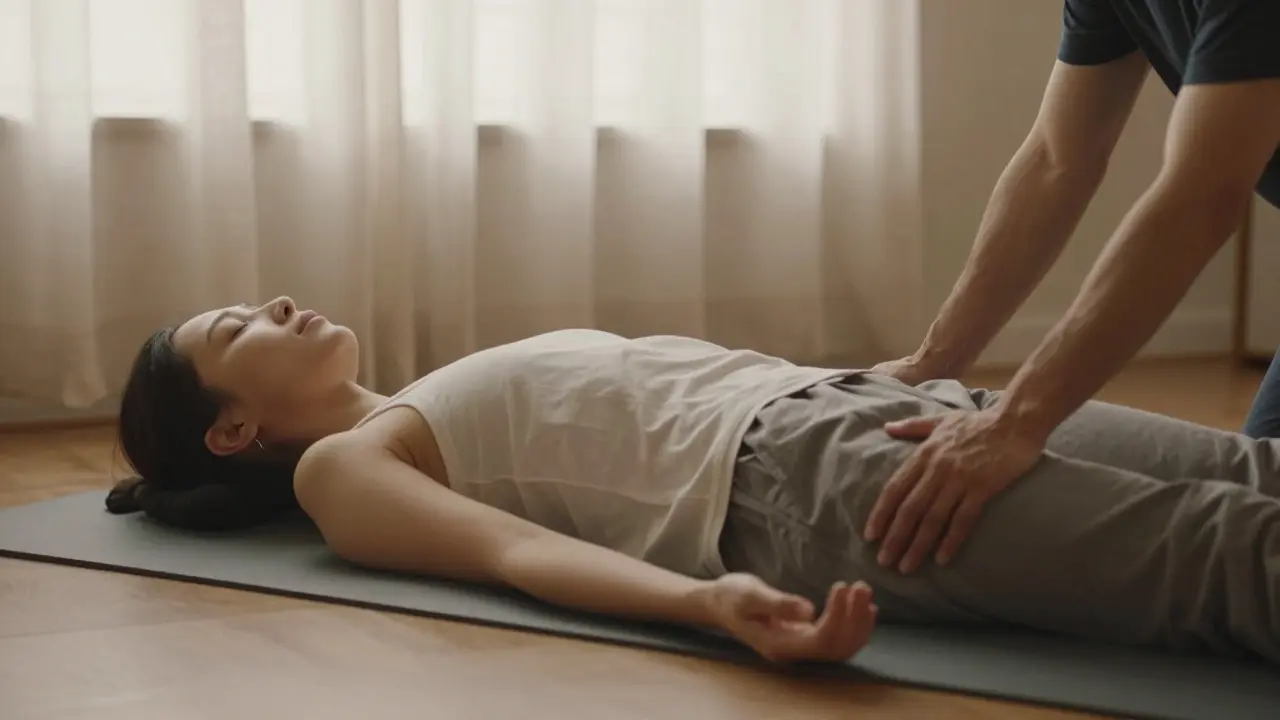
Breema is a system of self-care and bodywork that uses gentle, rhythmic movements. It’s done fully clothed, on a mat, and involves both giving and receiving. There’s no massage oil, no pressure points to hit, no deep tissue manipulation. Instead, the practitioner moves with the receiver’s body-following its natural flow, supporting its weight, and offering steady, warm contact.
The name comes from two words: Bre (breath) and Ma (mother). It’s meant to evoke the feeling of being held by something steady, nurturing, and unconditionally present. The practice is built around nine principles, not rules. These aren’t instructions you memorize. They’re qualities you embody: body-mind connection, no extra effort, mutual participation, warmth, consistency, firmness, full presence, comfort, and no judgment.
These principles aren’t just for sessions. They’re for life. How often do you push through fatigue? Try to fix someone’s mood? Force yourself into a stretch? Breema gently reminds you: you don’t need to do more. You just need to be here.
How It Feels to Receive Breema
If you’ve ever had a massage that left you feeling relaxed but disconnected-like your body was touched but your mind was still racing-Breema is different. There’s no goal of "relaxation." There’s no expectation to feel better afterward. You simply lie there, supported, as the practitioner moves with you, not on you.
One woman in Melbourne, who came after months of chronic back pain, said: "I didn’t expect to cry. But when they held my leg like it was something precious, not a problem to fix, I just let go. I hadn’t felt safe in my body in years."
That’s the quiet power of Breema. It doesn’t treat pain. It changes your relationship to it. You stop fighting your body. You stop seeing it as broken. You start seeing it as a place you can come home to.
How It Feels to Give Breema
Many people assume giving bodywork is about skill-knowing where to press, how long to hold, what technique to use. In Breema, skill is secondary to presence. The practitioner doesn’t "do" anything to the receiver. They move with them, guided by the nine principles.
One of the most surprising things for new practitioners is how much they feel in their own body. You might notice your shoulders dropping. Your breath slowing. Your thoughts quieting. Giving Breema isn’t a job. It’s a practice that heals the giver as much as the receiver.
There’s no need to be strong, flexible, or trained in anatomy. You don’t need to memorize muscle names. You just need to be willing to be present. That’s it. The movements are simple: rocking, stretching, supporting, holding. The depth comes from attention, not effort.
Breema vs. Other Bodywork Therapies
It’s easy to compare Breema to massage, Feldenkrais, or Thai yoga bodywork. But the differences are meaningful.
| Aspect | Breema | Massage | Feldenkrais | Thai Yoga Bodywork |
|---|---|---|---|---|
| Goal | Presence, connection, acceptance | Relaxation, pain relief, muscle release | Improved movement patterns | Energy flow, flexibility |
| Pressure | Gentle, supportive, never forced | Varies-can be deep or light | Very light, passive movements | Firm, sometimes intense |
| Attitude | No judgment, no fixing | Problem-solving, correcting | Learning, re-educating | Channeling energy, stretching |
| Participation | Receiver and giver both active | Receiver passive | Receiver passive | Receiver mostly passive |
| After effect | Grounded, quiet, more at ease | Relaxed, sometimes sore | More aware of movement | Loose, energized |
Breema doesn’t aim to fix what’s wrong. It doesn’t assume you’re broken. It simply invites you to be with yourself-exactly as you are. That’s why it’s so powerful for people dealing with chronic stress, trauma, or burnout. You don’t need to heal to receive Breema. You just need to show up.
Who Benefits Most From Breema?
You don’t have to be sick, injured, or stressed to try Breema. But it’s especially helpful for people who:
- Feel disconnected from their body after trauma or illness
- Struggle with anxiety and overthinking
- Are caregivers, nurses, or parents who give constantly but rarely receive
- Feel exhausted by "self-improvement" culture
- Want mindfulness that doesn’t require sitting still
One nurse in Sydney, who worked 12-hour shifts during the pandemic, started Breema sessions after her therapist suggested it. "I used to think self-care meant a bubble bath or a walk. But Breema? That was the first time I felt like someone saw me-not my job, not my stress, just me. I started doing it at home with my kids. We’d lie on the floor and rock together. No words. Just breathing. It changed everything."
Breema doesn’t ask you to be better. It asks you to be here. And sometimes, that’s enough.
How to Start With Breema
You don’t need special equipment, a studio, or even a teacher to begin. The principles are simple enough to try on your own.
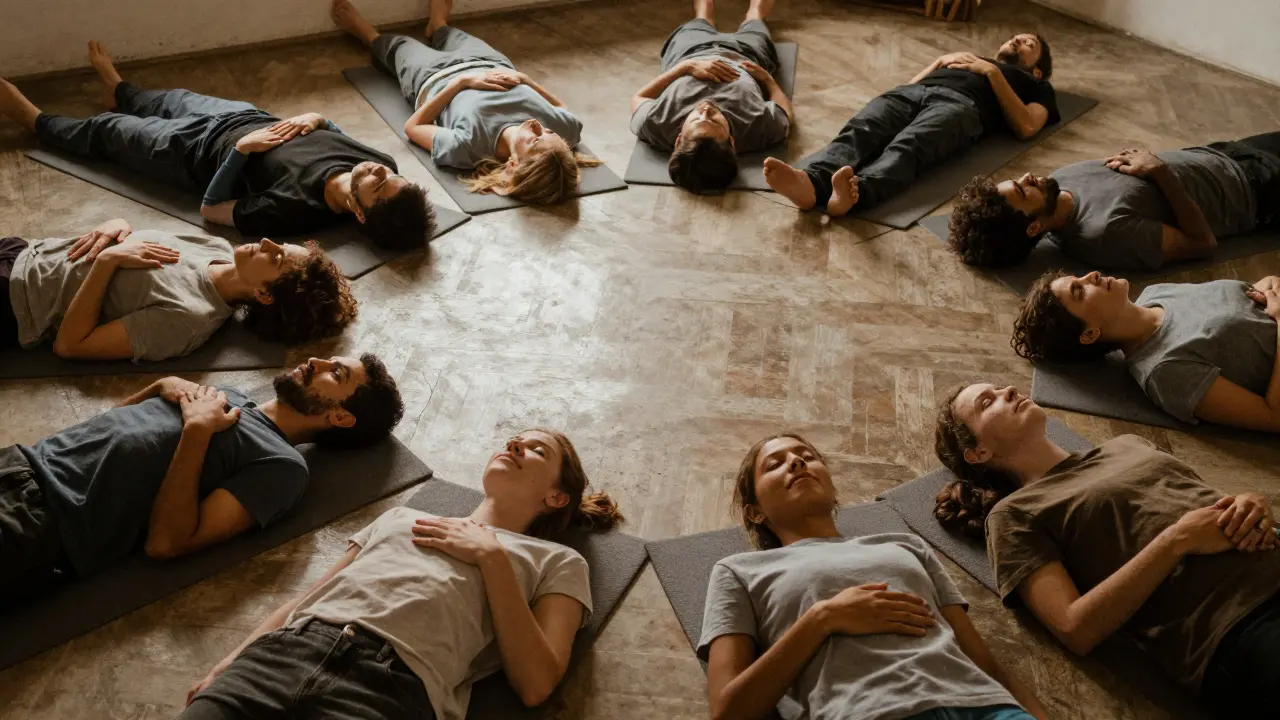
- Find a quiet space. Lie on the floor or a mat. No pillows. Just your body and the ground.
- Let your arms rest by your sides. Let your legs fall open slightly. Don’t adjust. Just let them be.
- Notice your breath. Don’t change it. Just feel it moving in and out.
- Ask yourself: Where do I feel tension? Don’t try to release it. Just notice it.
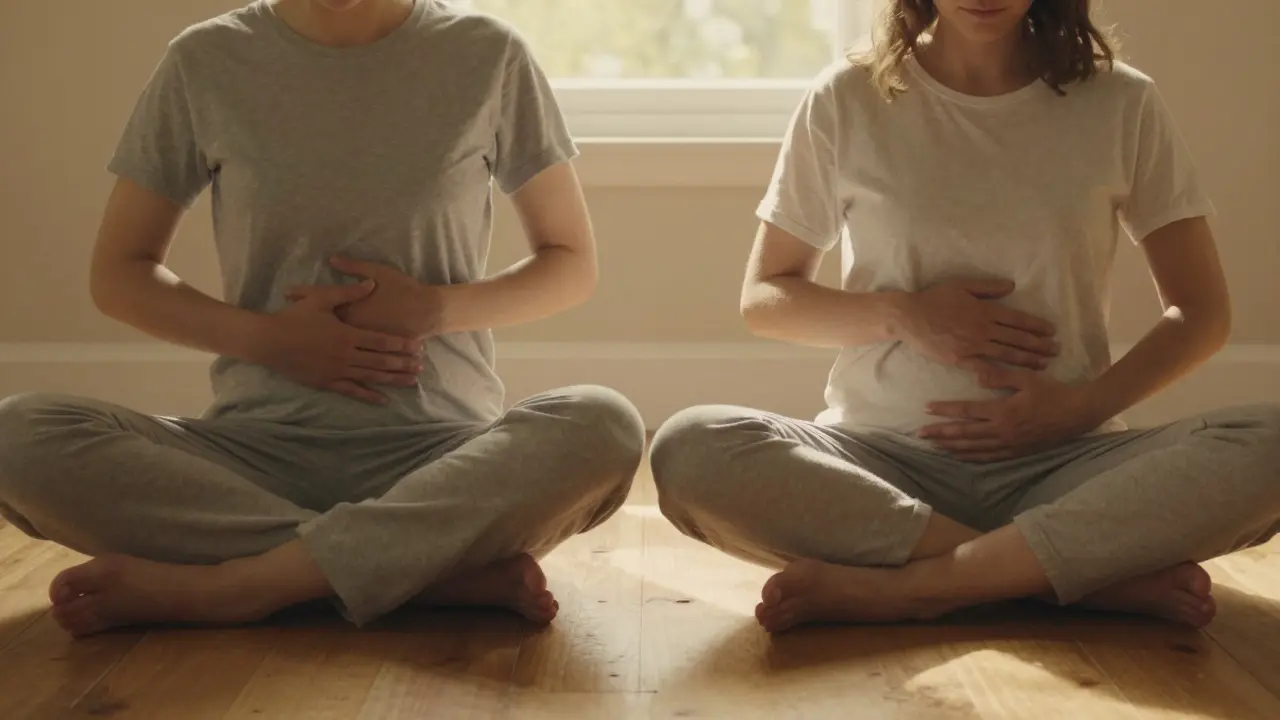
- Place one hand gently on your belly. Let the warmth of your hand sink in. Breathe into it. No effort. Just presence.
- After a few minutes, slowly roll to one side. Pause. Then rise to sit. Notice how you feel.
This is Breema in its simplest form. No technique. No goal. Just attention.
If you want to go further, look for certified Breema practitioners in your area. There are schools in Australia, the U.S., Europe, and Canada. Sessions usually last 60 to 90 minutes. Many offer group classes, workshops, or even online guided practices.
Why Breema Matters Now
In a world that tells us to do more, be faster, optimize every minute, Breema offers something radical: permission to stop.
You don’t need to meditate for an hour. You don’t need to journal every morning. You don’t need to buy a new app or follow a guru. You just need to be held-by another person, by the floor, by your own breath.
Breema doesn’t promise transformation. It doesn’t sell results. It offers presence. And in a time when so many feel isolated, exhausted, and disconnected, presence is the most healing thing we can give ourselves-and each other.
Is Breema a form of massage?
No. Breema is not massage. It doesn’t use oil, target muscles, or aim to release knots. It’s about gentle, rhythmic movement with full presence. The focus is on connection, not correction. You don’t "get worked on"-you experience being supported.
Do I need to be flexible or fit to try Breema?
No. Breema is for every body-whether you’re 18 or 80, whether you move easily or have chronic pain. The movements are adapted to your body, not the other way around. You lie down. The practitioner moves with you. No stretching, no forcing.
Can I do Breema by myself?
Yes. You can practice Breema principles on your own with simple self-touch and awareness. Lying on the floor, breathing, placing your hand gently on your body-these are all Breema. Formal sessions with a practitioner offer deeper support, but the heart of Breema is presence, which you can cultivate anywhere.
How often should I do Breema?
There’s no rule. Some people come once a week. Others come once a month. Some do short sessions at home daily. It depends on your needs. Even one session can shift how you feel in your body. Consistency matters more than frequency.
Is Breema spiritual or religious?
Breema comes from a spiritual tradition, but it’s not religious. There are no beliefs you need to adopt. No chants, no rituals. It’s grounded in the physical experience of being present. People of all backgrounds-atheists, Christians, Buddhists, secular-find it meaningful.
Where to Go Next
If Breema resonates with you, start small. Try the five-minute self-practice. Notice how your body feels when you stop trying to fix it. Then, if you want more, find a certified practitioner. Look for the Breema International website for trained teachers near you. There are also free guided videos online-just search for "Breema self-care practice."
And if you’re someone who gives care to others-parent, nurse, therapist, friend-remember: you can’t pour from an empty cup. Breema doesn’t ask you to be strong. It asks you to be held. And sometimes, that’s the first step toward healing.